
Prominent in Elsecar Holy Trinity churchyard is an stone obelisk grave surrounded by iron railings, belonging to the Davy family. Foremost on the faces is the name Jonathan Davy (1815-1889), a former iron founder, and skilled moulder for cast iron products. Jonathan Davy married Sarah Salt in 1840 and they had many children, including several sons who joined him in working as founders, moulders and stove grate fitters. Working together with his son-in-law Joseph Sheldon, they established an independent foundry at Elsecar in 1869 which would last in various guises through to the 1980s.

Jonathan Davy had originally worked as an iron moulder at the castings department of Newton & Chambers at Thorncliffe ironworks, using green sand casting techniques. In 1867 he was employed on an enormous order for the Pamplemousses Botanical Gardens in Mauritius, (now known as the Sir Seewoosagur Ramgoolam Botanic Garden). A spectacular feat of decorative casting, including 20 tons of gates and railings – the central carriage gates being 24 feet wide and 11 feet high, on posts 12 ft tall, with 2 side gates 6 ft wide by 10 ft tall. The gates survive to this day.
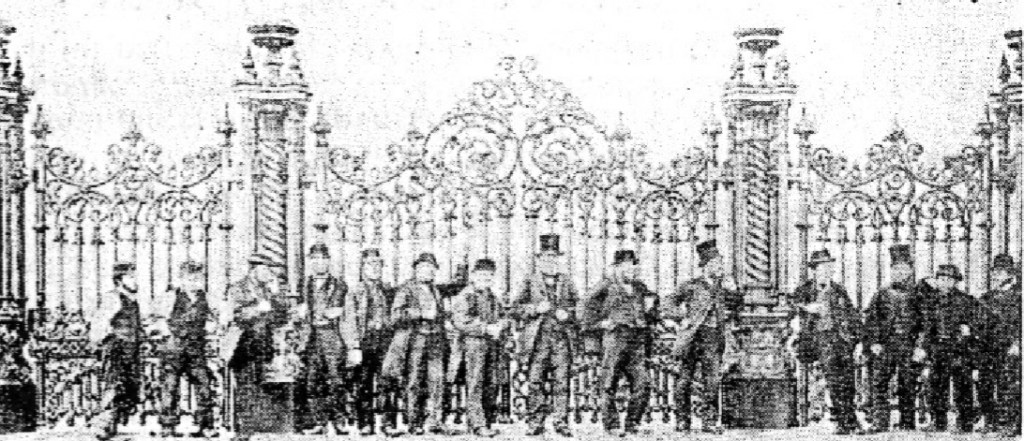
A photograph of those engaged in the work was taken at the time. Others in the group included John Depledge (Head Draughtsman at Thorncliffe) who designed the gates, John Faries (Foundry Manager), William Lax (Foreman pattern maker) and John Sausby who both made the patterns, Ben Sheldon and his nephew John Sheldon (foreman and chief clerk), Charles Butcher (foreman fitter), Sam Hibbs and William Barraclough (cashier and assistant cashier), with Joseph Chaffer, J. Rennie, and H. Woodruff.
Beckett & Davy
Davy appears to have begun a foundry in Elsecar in 1869, working in partnership with John Kenworthy Beckett (1822-1879) under the firm of Beckett and Davy, Engineers and Ironfounders, but the partnership rapidly came to an end, with Jonathan Davy continuing the foundry business. Beckett, an iron turner at Hoyland, and later based at Wentworth later worked as an engine turner for the Midland Iron Works.
Davy, Lax & Co
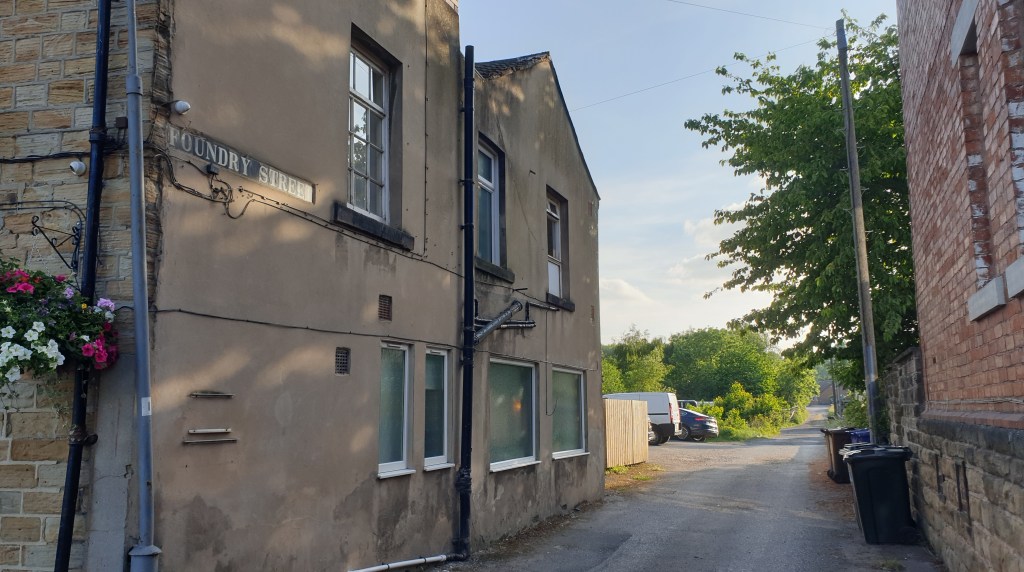
In 1869, Jonathan Davy and William Lax who had also moved away from Mortomley near Chapeltown, commenced in partnership. Established at Stubbin, in the village of Elsecar, their wirkd was located on what is now aptly known as Foundry Street. In 1870 a serious accident occurred at the new Elsecar foundry when one of Jonathan’s sons, Mark Davy, suffered serious facial burns and was taken to the Eye Dispensary at the Infirmary in Sheffield. By 1871 Davy was listed as employing 11 men and 5 boys. The partnership came to an end in 1876 when Lax set up his own family foundry business, William Lax & Sons, nearby.

William Lax & Sons
In 1876 William Lax (1821-1899) established his own family foundry business, W. Lax & Sons, close by Davy’s concern on Foundry Street. William’s son, also William Lax, took over management of the foundry in 1900, after his father’s death. The firm focused on stove grates in the main. William Lax J.P. (1851-1940) became a prominent citizen in the village, being a member of Hoyland Urban District Council for over 20 years, and a magistrate on the Barnsley Bench for the West Riding of Yorkshire. The family lived at 44 Foundry Street for many years. William’s sons Denis Lax (1882-1961) and William Lax (1885-1970) also worked for the company.
J. Davy & Company
In 1876 Jonathan Davy and his eldest sons Edmund, Mark and John worked in the newly independent family business. J. Davy & Co. would come to be a fixture in Elsecar for light iron castings, providing kitchen ranges, stoves and drainage goods, as well as supplying local collieries and business with a range of bespoke cast iron goods.

The business continued to grow. From the late 1870s the family purchased land and built properties (including 14-40 Foundry St, and 6-16 Church St amongst others) to rent to the growing colliery population in Elsecar and Hoyland. The family were also prominent in the Elsecar, Wentworth & Hoyland Gas Company on Wath Road, Jonathan purchased further shares in the company at auction in 1887, and members of the family acted as directors for many years.
By 1881 Jonathan Davy was employing 23 men and 9 boys. In 1885 Mark Davy (1845-1885) passed away. After their father’s death in 1889, first Edmund (1842-1912) and John (1843-1920), and later especially Fred (1859-1913) took a lead in the business. It remained a family business, with several generations of their descendants engaged. In 1908 the company was formalised as a limited company, J. Davy & Company (Elsecar) Limited consisting of shares to the value of £4,000.
Edmund Davy‘s sons Clive (1876-1955), Percy (1879-1955) and Harold Morton (1884-1971) were active in managing the company for many years – as can be seen in the order books in the company archive (Ref: SY-309-B Elsecar Foundry) now held at Barnsley Archives. H. Morton Davy was company chairman at the time of his death, after which his son Morton Ryan Dennis Davy (1920-2006), known as Ryan Morton Davy) took over as Chairman until the winding up of the foundry and formal closure of the company in 1982.
Whilst much of the Cardigan works site was reused as a garage after the foundry closed, in later years the roof of the workshops was removed and relicts of old machinery could be seen.

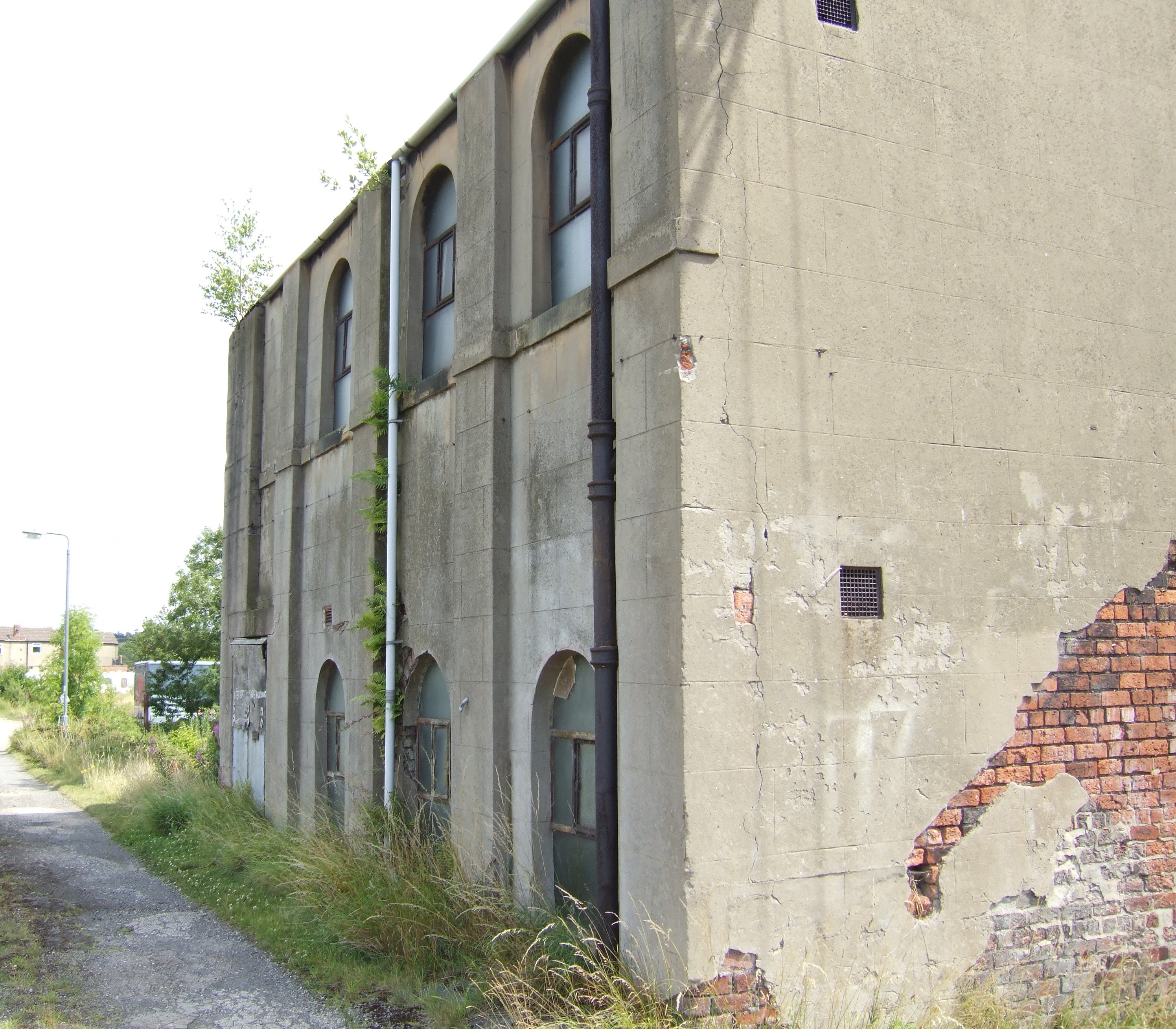


In the late 2000s, after many years of static decline, new plans for redevelopment of the site emerged, and in 2023 a planning permission request for the demolition of the surviving foundry site were submitted. It will be interesting to see whether Foundry Street ten years from now shows traces of its long history of independent metal working.
Drainspotting
The quirk of cast metal good is that they can survive in situ for long periods, even whilst other features may come and go. This is particularly true of drain good, manhole covers and the like, which Davy’s Elsecar Foundry came to be especially associated with in its later years. This leads to an interesting – if niche – pastime when out and about – trying to spot relics of the past in the products of the former foundry.

Drainspotting, as it has been termed, may not excite the senses of all readers, but does offer a surprising array of industrial designs to track down – the shapes, sizes, patterns and textures of the metalwork lids, covers, pipes and ancillary castings which can hide in plain sight, and are in fact the legacy of a now lost business and indeed way of life in Elsecar.
The familiar ‘Davy lozenge’ shape is a prominent design element throughout the locality of Elsecar, but also in South Yorkshire and beyond, and if you choose to take up the pursuit, you may be surprised how many and how varied are the examples that are to be found.
In 2019 Barnsley Metropolitan Borough Council adopted ‘Elsecar Conservation Area Best Practice Design’ as a Supplementary Planning Document (SPD) which local planning authorities can use as material considerations when planning applications are considered, it features a specific references to these essentially Elsecar products:
10.9.8 Historic drain covers usually carry the name and location of the foundry that made them, and sometimes a date. The Davy Foundry in Elsecar made drain covers and rain water goods from the 1870s until the 1980s. Many of their covers still survive in the village, including in back yards and gardens. Other covers and grates were also made locally, including at the Milton Foundry. These are an important part of the village’s industrial and social heritage and should be retained and reused.
Elsecar Conservation Area Best Practice Design, BMBC, November 2019

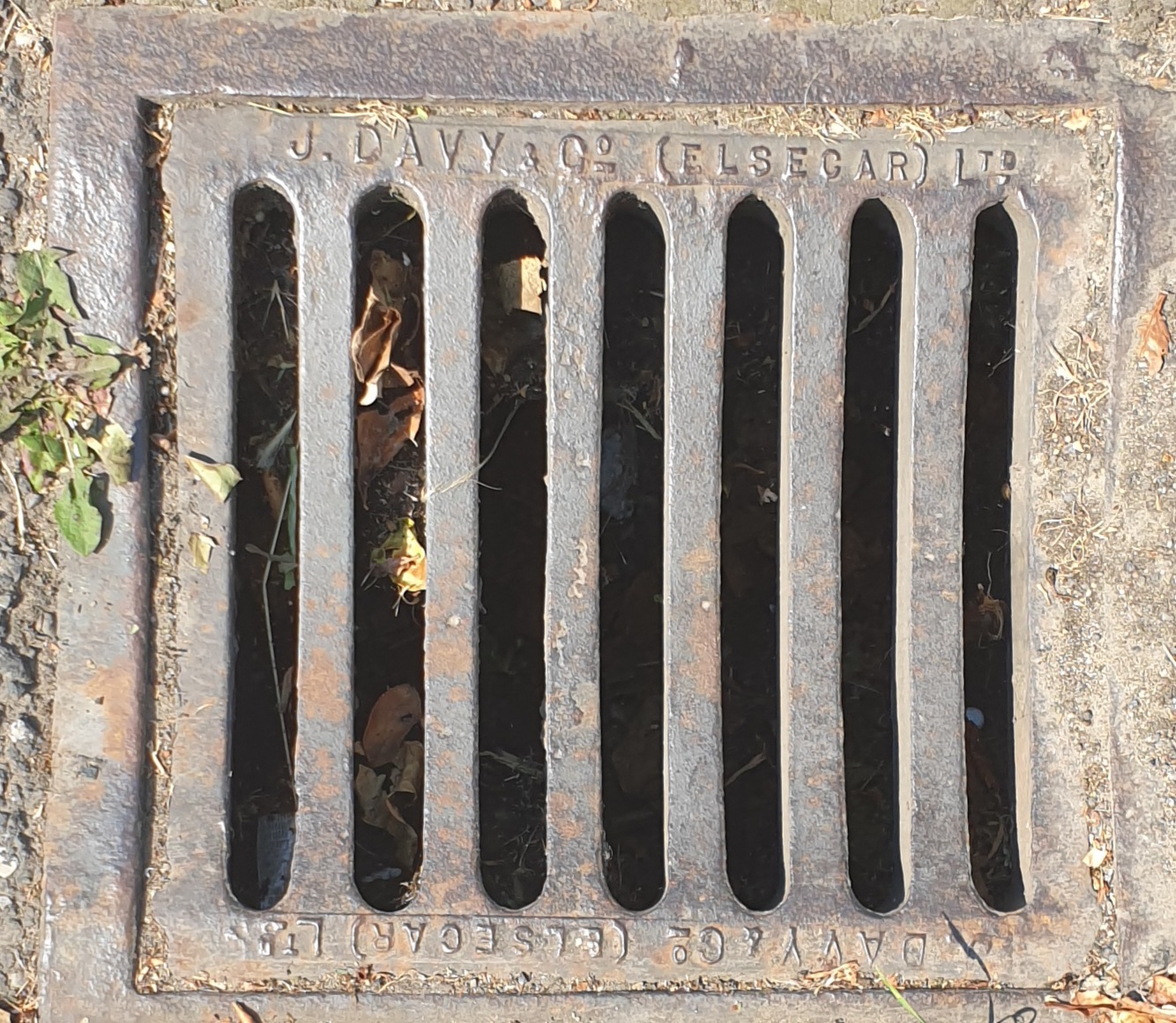
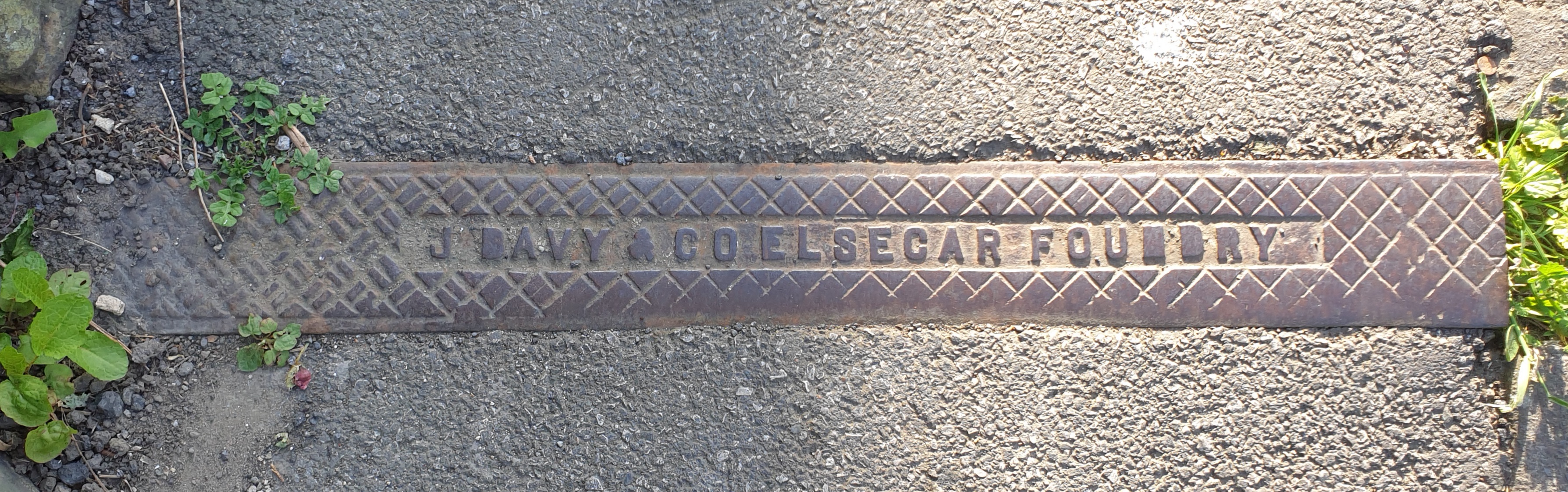

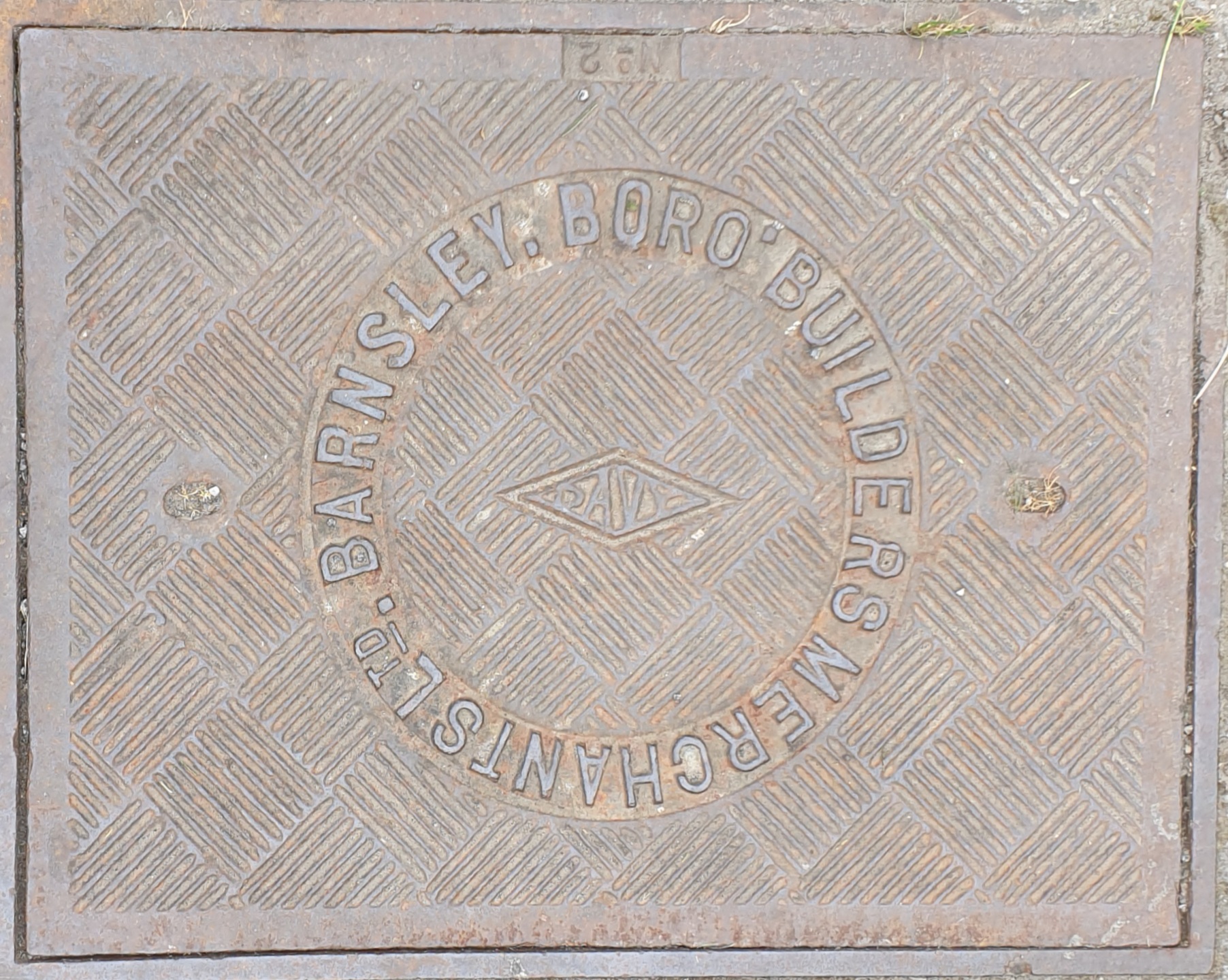
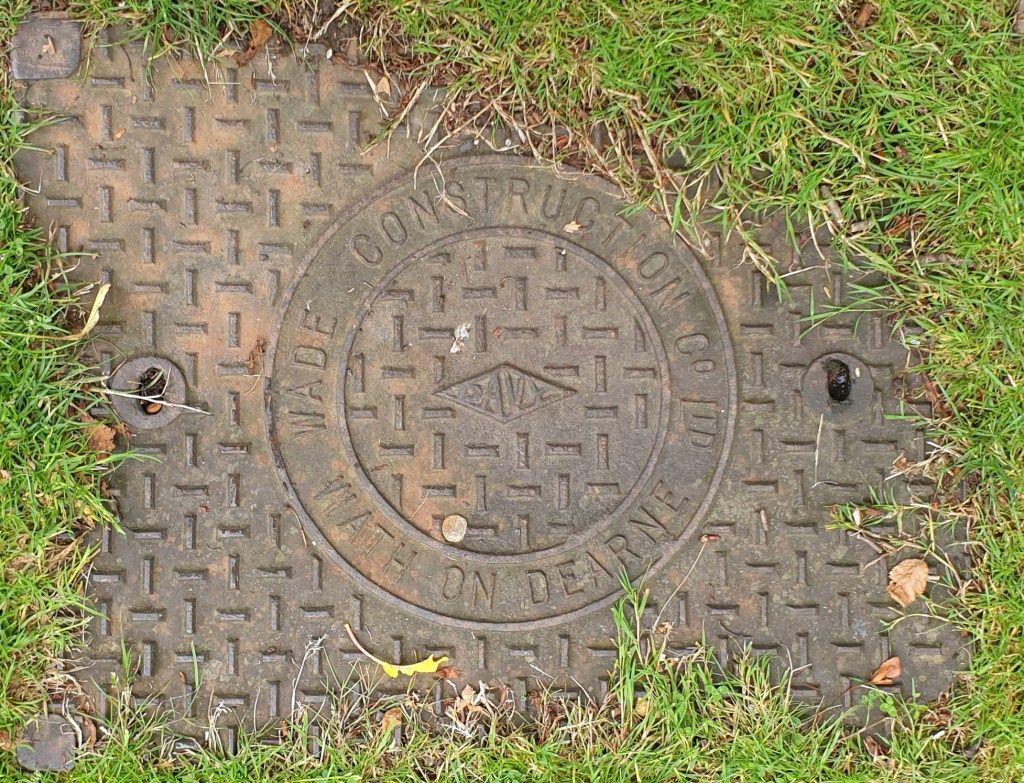


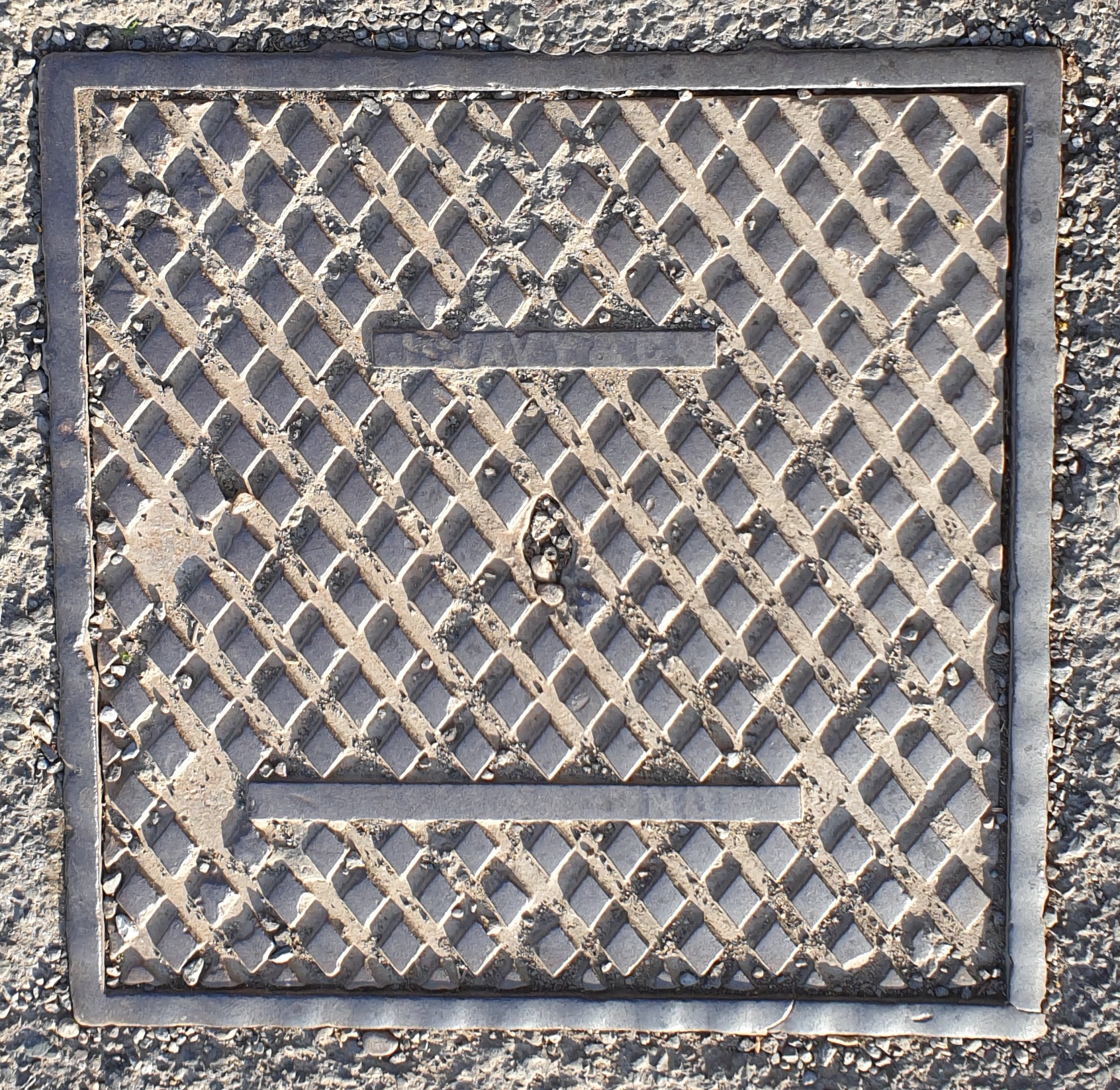


Further history of the development of the designs and manufacturing techniques is being investigated, but we welcome examples being suggested.
 Friends of Hemingfield Colliery