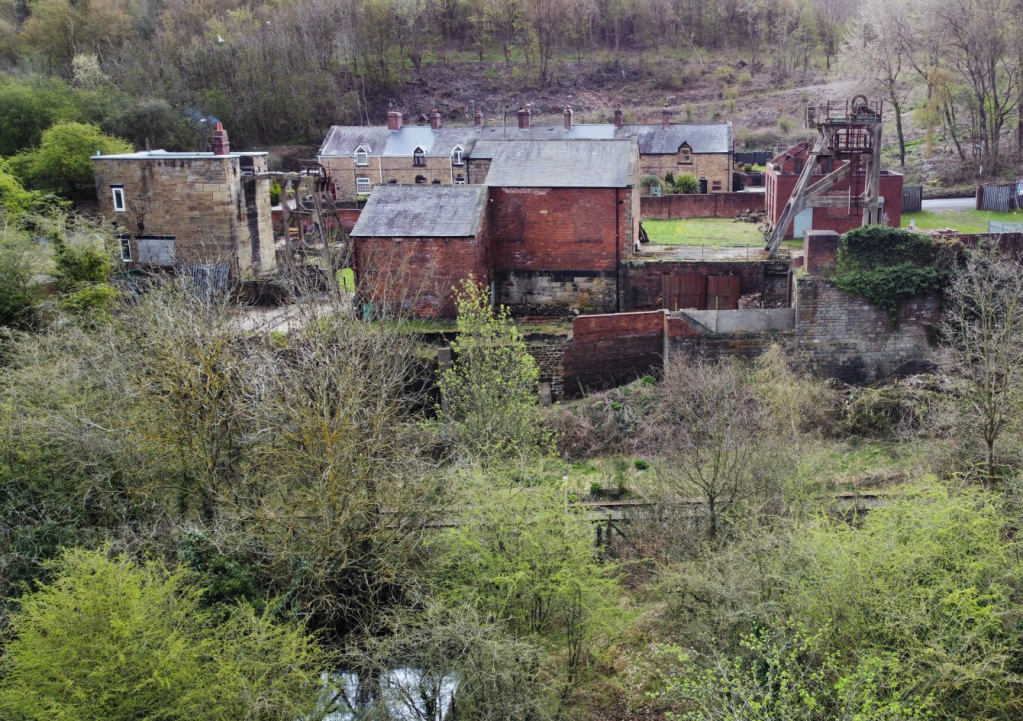
150 years ago on Monday 6th December 1875, a terrible explosion ripped through the underground workings 230 yards beneath the surface at Swaithe Main Colliery, near Worsbrough, near Barnsley. A second explosion had also likely been triggered by the first.
239 men and boys were at work underground at the time, and altogether the disaster claimed 143 lives, although the specific cause was never ascertained.
The explosion killed horses and men, flame burning a number of victims and charring the wooden props, as well as blasting coal tubs (corves) and other debris and causing roof falls blocking parts of the workings. Two of the first rescuers also succombed to afterdamp.
We remember them and the real dangers of working the Barnsley Coal seam in the 19th Century, just as was worked at Hemingfield Colliery, Lundhill and the Oaks which all saw disasters in the 1850s and 1860s.
Late March ran rapidly into into April as the Friends held their first full Open Day of the year in 2025: Easter Sunday. It was a lovely day, with perhaps the best of the Sunny weather over the long bank holiday weekend. But the volunteers had been kept busy in the weeks building up to the open day itself as you will see.
South Yorkshire’s Community Foundation
Once again we owe a huge thanks to South Yorkshire’s Community Foundation in supporting our activities on site, without them this year we would not have been able to hold an Open Day.
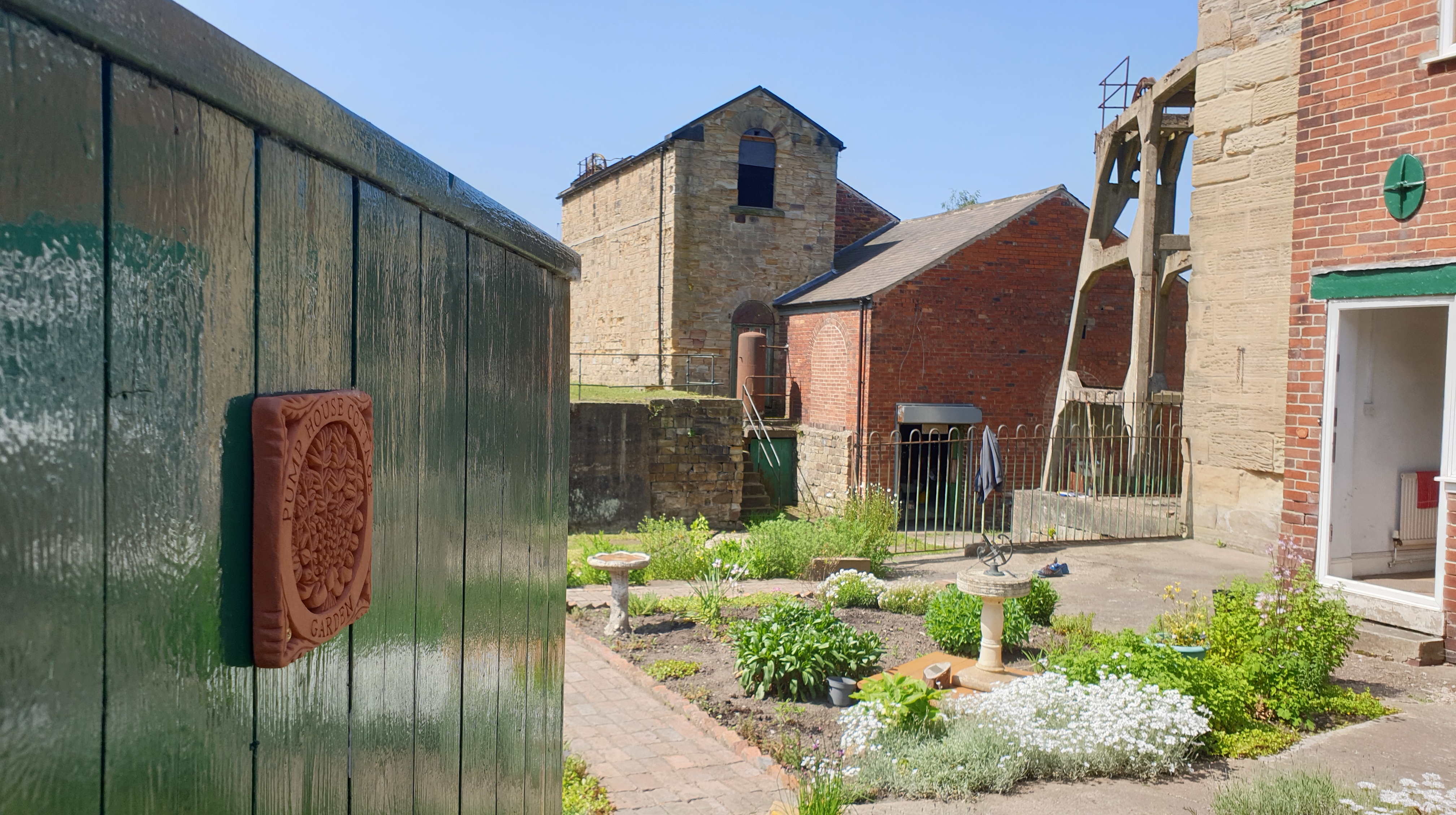
Pump House Cottage Garden, Saturday 15th March 2025 (Photo credit: Paul Moon)
Regular volunteers Paul, Janet & Jeff and Andy were on site on Saturday 15th March 2025. Thanks to support from South Yorkshire’s Community Foundation we can open the gates and operate on site with volunteers and members of the public.
Spring time tidying was very much the order of the day, clearing the garden flower beds and paths of Pump House Cottage. So much for the flora. As for the fauna, scarcely a minute had passed on site before a kestrel was spotted high up on the main headgear.
The 12th December is a dark day in history for Barnsley. The catastrophic loss of life which occurred when there were a series of underground explosions at the Oaks Colliery, near Hoyle Mill.
View of Oaks Colliery at the time of the first explosion, published in the Penny Illustrated Paper, Vol.XI, No. 273, 22nd December 1866, p.397
On this day in 1866, 158 years ago, the first fateful explosion took place, to be compounded by a second explosion the following day as a search party explored the workings.
It was an event of regional, national and, indeed, international importance, with reporters being despatched from far and wide to report on a disaster the horrific nature and scale of which only became clearer over time.
Mr Montay, the London correspondent for the French newspaper Le Petit Journal set off for Barnsley by train on 14th December, arriving at the pit just before 1am on 15th December, he reported on a continuous procession of local people, miners, engineers, magistrates thronging the route to see if it was still possible to save a life, with thousands of people clamouring to learn the fate of the men underground.
Une procession continuelle, une longue file de paysans, de mineurs des pays voisins, d’ingénieurs, de magistrats encombraient la route.Tous tendaient au même but, tous allaient voir s’il n’y avait pas un-suprême effort à tenter pour sauver, ne fût-ce qu’une seule vie.
Le Petit Journal, Tues 18th December 1866, p.3
Others came to provide spiritual and emotional support, alongside local clergy including non-conformist preacher and friend of the poor from Rochdale, John Ashworth.
Ashworth’s short diary entries reveal in simple detail the shock and impact of the event:
Wednesday, Dec. 19. Visited the Oaks Colliery, scene of the explosion at Barnsley; conversed with Mrs Winter, Barker, and Cartwright; dreadful, dreadful, pit still burning, in which 300 persons are buried…
Thursday, Dec. 20. Felt very sad all day from the scenes of yesterday; the burning shaft is always before me…
Friday, Dec. 21. Received a letter from [James] Barker, Barnsley, giving particulars of his terrible search for his father and three brothers, after the explosion: all dead
Reproduced from Calman, A.L., Life and Labours of John Ashworth, Tubbs and Brook, Manchester, 1875, pp.120-121
He later wrote up his experiences in one of many collected short pieces published as Strange tales from humble life, entitled ‘Sad Story’ he described visiting the grieving families:
My next call was on the mother of James Barker ; the dear mother for whom he prayed when he found his three brothers amongst the dead. She resided at No. 3, Ash Row, Hoyle Mill. In this row of stone buildings, there are thirty dwellings, and, sad to relate, twenty-eight out of the thirty had one or more of the family amongst the dead. The angel of death had indeed visited these homes, and a great cry, like the cry of Egypt, had gone up to heaven. Groups of children, many of them too young to understand their loss, were playing about the doors.
‘A Sad Story’, Strange tales from humble life, 3rd Series, 1867, p.142
Investigation
Attending the subsequent Coroner’s Inquest at the time, Joseph Dickinson, a government Mines Inspector reported:
…the first explosion took place on the 12th of December, when 340 work-persons were employed in the colliery, of whom only six have survived the injuries, making the loss of life 334 by that day’s explosion. In addition to this, 27 persons, of whom four belonged to the colliery, and 23 who were volunteers, were killed by a succession of explosions (arising as it would appear from the pit having been set on fire by the first explosion), which commenced on the following morning whilst the workings were being explored for the purpose of rescuing any persons who might have survived and the bodies of those who had perished.
Joseph Dickinson, writing from Pendleton, Manchester, 7th February 1867.
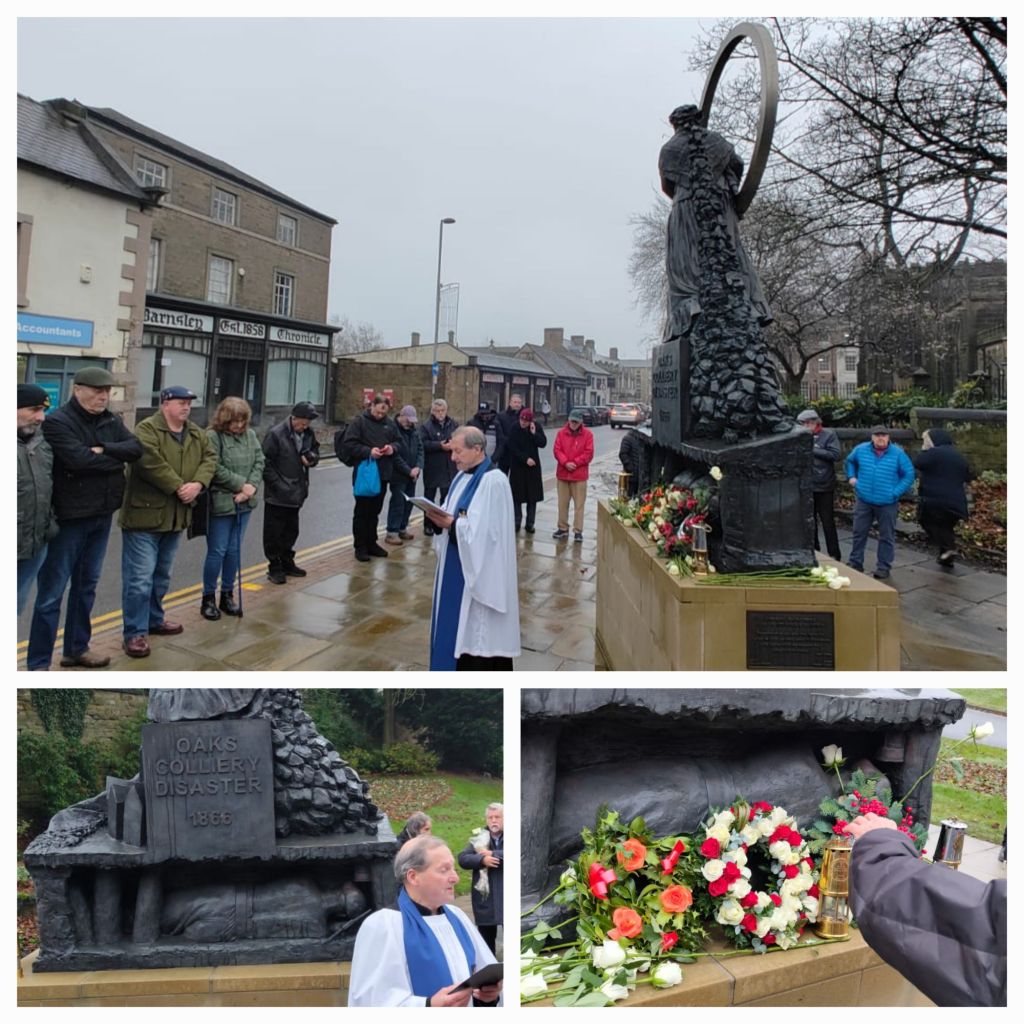
Returning to the present day, an outdoor service took place at the Oaks Colliery Disaster mining memorial sculpted by Graham Ibbeson, on Church Street in Barnsley town centre which was inaugurated in 2016.
Photographic collage of memorial service in Barnsley, 12th December 2024 (Photo credit: Paul Moon)
The Friends of Hemingfield Colliery were pleased to attend the solemn and reflective service.
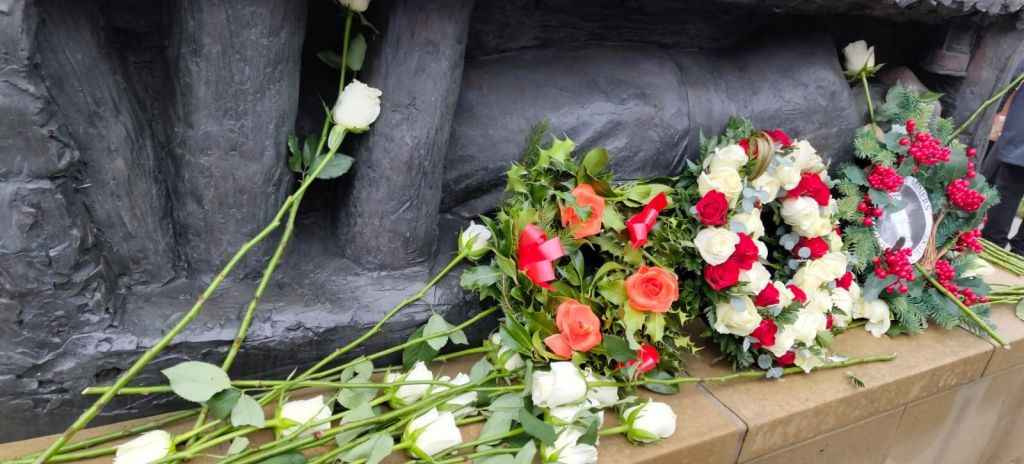
Flowers laid at the memorial
Attendees laid a white rose on the memorial in a poignant tribute to the lives lost so long ago. We will remember them.
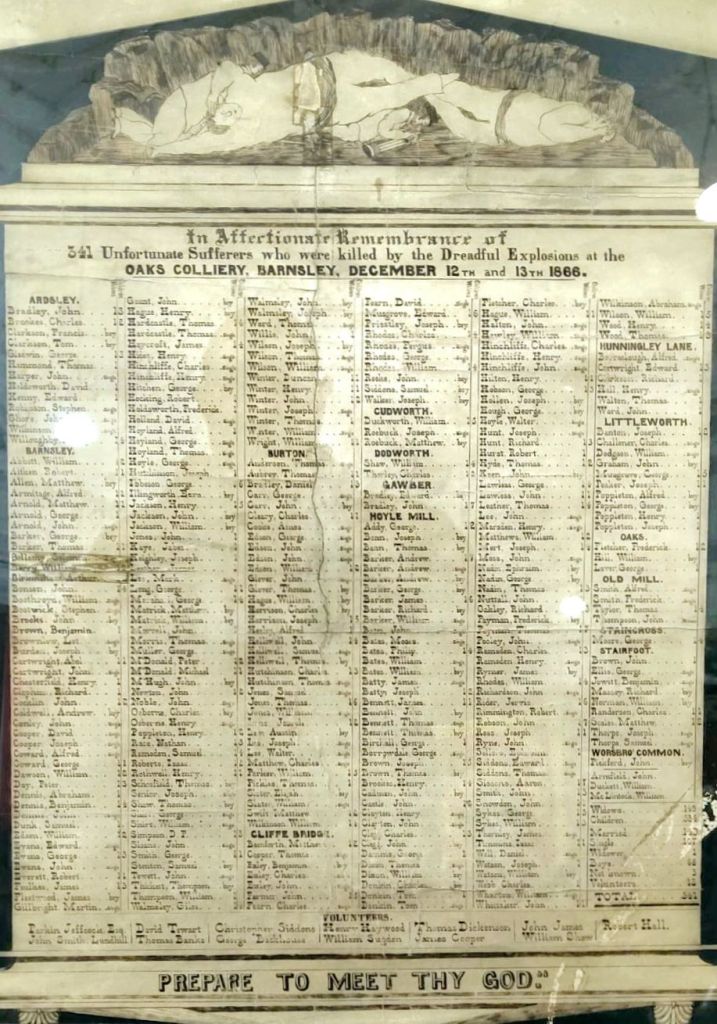
A memorial roll of names of some of the victims of the 1866 Oaks Colliery disaster (Photo Credit: Paul Moon)
What a month! Mostly highs, with the odd low; new life on site, beautiful weather, a new monarch, and lots of activity from the Friends of Hemingfield Colliery, as we completed work on our National Lottery Heritage Fund project Hemingfield’s Hidden History. The project has reunited the colliery site – pumping station and pump house cottage, and enabled a transformation of our understanding of the history and importance of the surviving buildings. Working together with others, we have uncovered more of the stories of the communities around the pit, at Elsecar and Hemingfield, and connected with a new generation of young people on the heritage and biodiversity of the former colliery site today .
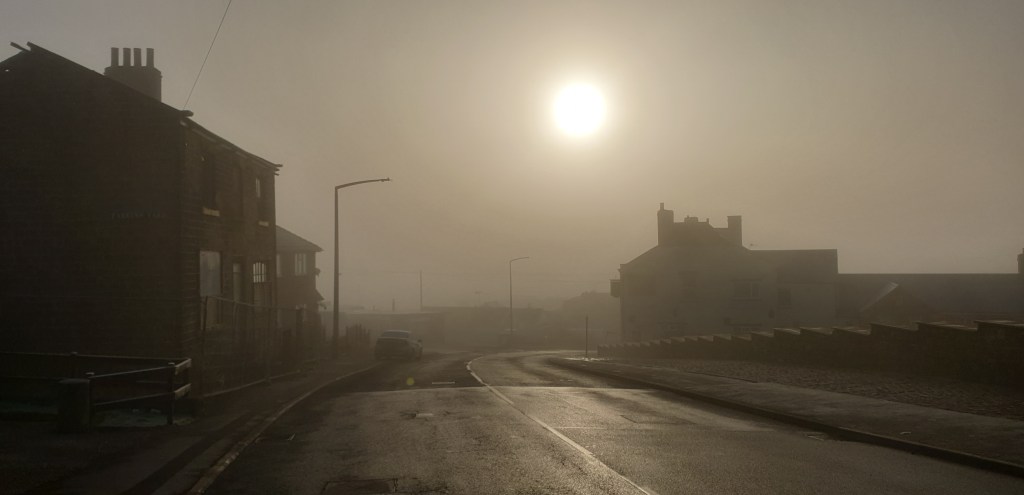
Chimney smoke rises as the Friends seek shelter on Easter Monday, 10th April 2023 (Photo Credit: Simon Hollis)
April 2023 saw a host of activities on site, as the weather tried, time after time, to confound and confuse. For the Friends it was a month of Open Days at Easter; of gardening and tidying, and of preparation for better days to come, or at least better weather on the many working days to come.
A new year and another chance to make further progress on site, saving and sharing our mining heritage. Weather permitting, of course. The Friends demurred on the 14th as the weather was poor, but by the 21st they were eager to meet up and dive into planning activities for the year ahead.
This blog covers highlights from this year, ranging from achievements on site, community engagement and covering some of the goals we may like to achieve in 2023.
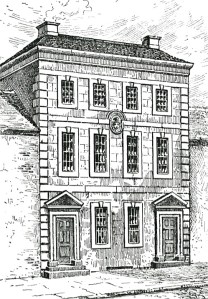
Illustration of the second Cutlers Hall in Sheffield, built 1725, demolished 1832, from Robert Eadon Leader [1839-1922], History of the Company of Cutlers in Hallamshire, in the County of York, Volume 1, Sheffield: Pawson & Brailsford, 1905, p.184
At 10 o’clock in the morning, on Wednesday 29th August 1792, the Company of Proprietors of the Navigation of the River Dun held a meeting at the Cutler’s Hall in Sheffield.
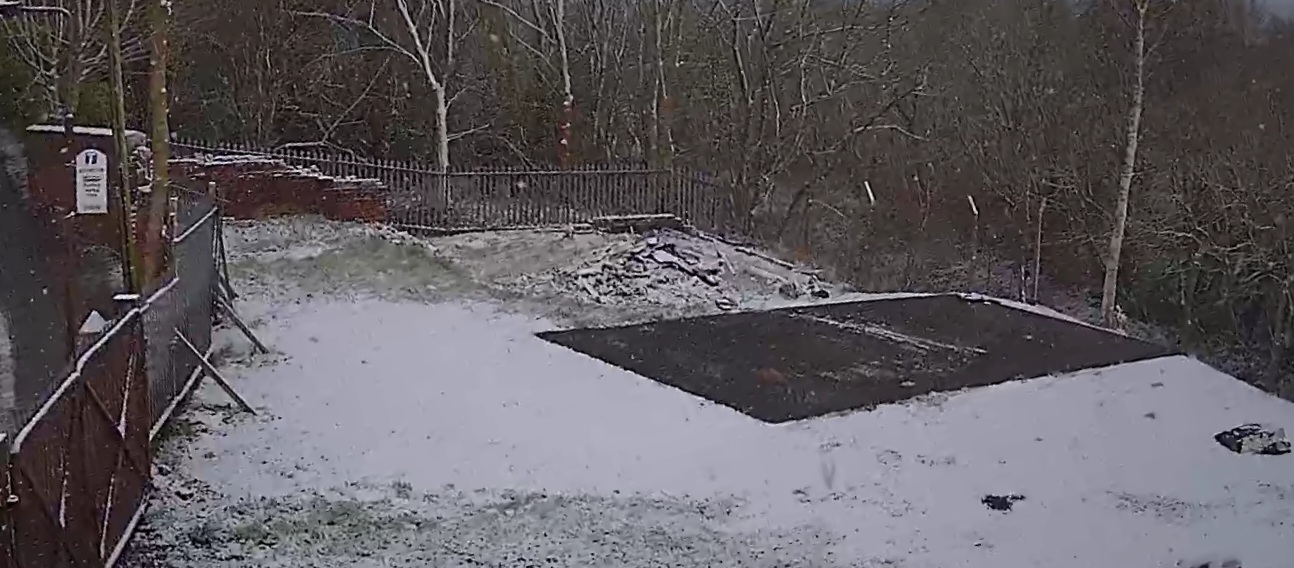
2 seasons in one day: snow in the morning of 31st March 2022
Picking up from our previous update at the end of March, you might be forgiven for thinking that the seasons had jumped, with winter returning, as snow fell on site on the morning of 31st March; the pit briefly donning a white cloak, before warmer air, and the green shoots of Spring began to emerge more fully.




 Friends of Hemingfield Colliery