June. A beautiful time of year. The first steps of summer, without the school holidays. When the sun’s heat brings plants, people, and other wild-life out into the longer light of day.

Bright and beautiful

Intense greenery fills the scene, yet also blocks out the light. A pleasure for the Friends of Hemingfield Colliery to spend time on site – even if we might prefer the cool safety of indoor shade.

Tall flowers beckon the bees, as birds hatch, fledge, and fly high. And not so high. For many years swifts have nested in the cool interior of the burned-out surface haulage engine house. This partly roofless building still provides shelter for nesting birds, although this year the nest came unstuck- happily with no negative results – as two chicks clung to some old odds and sods, silently awaiting the return of their parents.

Wall-work
The Friends of Hemingfield Colliery shifted up a gear in June, as the long hot days tend to curtail the hours of heavy work in the heat of the day. Regular volunteers John, Paul, Jamie, and Paul stuck at their task, starting at 9.30 a.m. on Saturdays to get some extra work in before the sun drove everyone indoors.
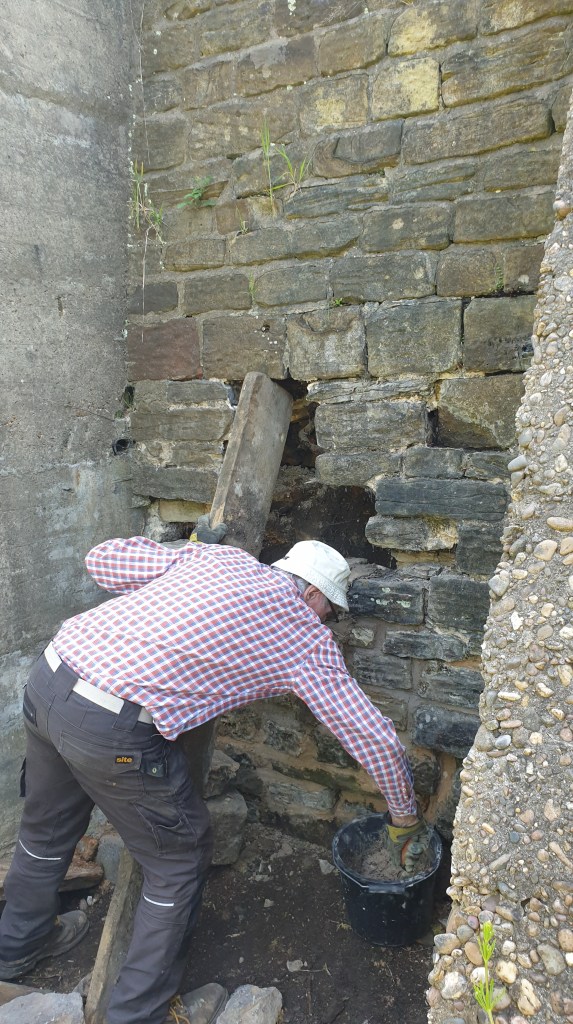
Work on repairing degraded stonework on the rear retaining wall continued, focused between the two concrete buttresses. Water damage and sandstone lamination had led to some collapse in this section, which had worsened after last winter, so the well-trained crew got stuck in on removing the crumbling stone, and years of root growth in the rubble fill, before reinforcing and rebuilding the wall over several weekends.
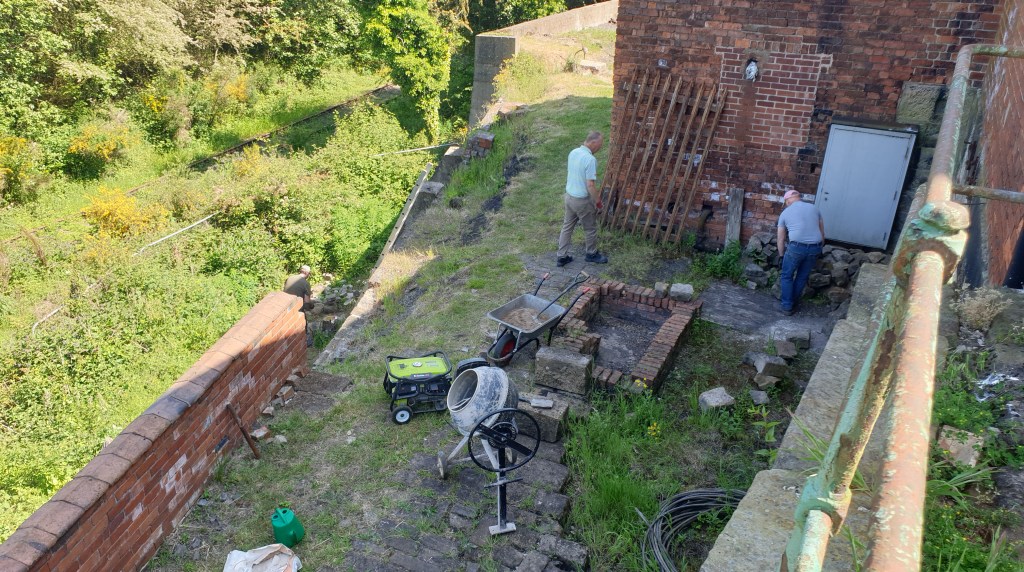
The mixologists worked wonders with mortar and cement. The improvement is tangible and builds on the confidence gained from previous stone wall repairs, as the Friends practice heritage building skills with stonework and lime mortar pointing.

A space to think (and feel at peace)
The changing seasons continue to bring new delights and unexpected surprises in the garden of Pump House Cottage. Although June was certainly dry at times, the undaunted gardeners continued to weed, tidy, and plant anew, with water from the pit’s very own water butts keeping things moist and lively.

Regular volunteers Janet and Jeff have transformed the garden, and with it, brought new life and interest to the Pump House Cottage side of the colliery.

Thanks to the National Lottery Heritage Fund Project Hemingfield’s Hidden History, Pump House Cottage has a new lease of life, and reuniting it with the rest of the site has meant that the pit can be experienced as a whole for the first time in very many years – as well as providing a space for the Friends and volunteers to work from, shelter in, and create spaces for displays and new exhibitions, something we are looking forward to expanding as the cottage continues to be repaired and cleaned up inside.

In June the Friends also received the final evaluation report on the Friends’ work during the National Lottery Heritage Fund Project. Based on feedback from the Friends, volunteers past and present, external partners, including Historic England, Barnsley Council and others, it is a record of work undertaken and the progress of the group and the site and provides a useful review of how far things have developed – and what lessons and opportunities there are to take forward.

Although many challenges remain after years of water ingress, the repaired roof and new paintwork make it a comfortable space, and the Friends have new interpretation materials inside, as well as new promotional materials for the group, together with some objects and research materials to assist in sharing the story of the pit.
Visits and views
In June the Friends welcomed a range of visitors to the site, including retired former miners who had worked in the Yorkshire coalfield, and a special visit from Germany where the coal mining industry was wound down in the mid 2010s.
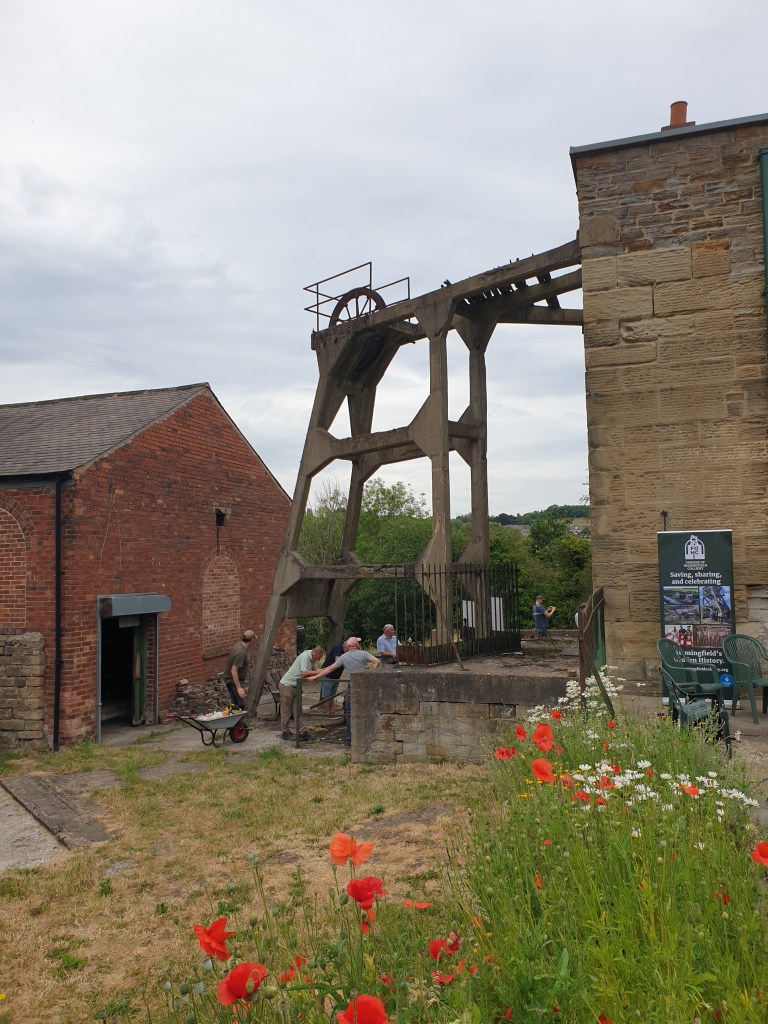
Visitors are always welcome, sharing their knowledge, memories and insights, as well as bringing a new eye to the colliery site. In this blog post we share some images from these visits.

Waterway wanders in June
At this time of year the Knoll Beck flows thin, but steadily, past the pit, through the Hemingfield basin culvert, accompanying the abandoned Elsecar branch of the Dearne and Dove canal, before reaching the river Dearne proper. A local poet of national renown, Ebenezer Elliott (1781-1849) captured the spirit of this place in a sonnet in the mid-1800s. Describing the sights around the river and acknowledging his friend, Barnsley poet Thomas Lister (1810-1888), author of the Rustic Wreath:
From cloud-swept Snowgate, Dearne ! now swift, now
slow,
Thou comest, playing still a busy tune ;
And while rich woodbines braid the locks of
June,
And wild hedge-roses in her bosom glow,
That tune is sweet. On, sky-fed Wanderer, go !
Waste not at monkish Burton this bright hour ;
Pass Darfield's meads, and many a blossom'd
bower ;
Bid Wath good night ! and sleep at Conisbro',
In Don's cold arms. Here, scarcely heard to lisp,
Thy waters bask in' evening's purply gold.
And round thy lilies — fresh, blush-tinged, and
crisp —
Linger, as loth to leave this loveliest scene —
Bard of the Rustic Wreath ! my tale is told ;
I stand again, where thou hast often been.
- Sonnet by Ebenezer Elliott (c.1840)
On 12th June 1909, the Sheffield and South Yorkshire Navigation Company conducted an official inspection of their waterways, including the then active Elsecar Branch of the Dearne and Dove Canal. Starting from the Elsecar end of the branch, the tour passed along 6 locks, by a number of bridges:
- Elsecar Great Central Railway Goods Station
- Elsecar Basin
- Earl Fitzwilliam’s Footbridge
- >Elsecar Top Lock>
- >Cobcar Lock>
- Cobcar Bridge
- >Elsecar Low Lock>
- Hoyland Colliery Siding BRIDGE
- Hemingfield Colliery Basin
- >Tingle Bridge Lock>
- Tingle Bridge
- >Hemingfield Lock>
- Smithy Bridge
- >Hemingfield Low Lock>
- Cortonwood Colliery Basin
- Lundhill Bridge
- Brampton Road Bridge
In June 2023, only Cobcar Bridge, Tingle Bridge, Smithy Bridge and Brampton Road bridges remained, with only Smithy Bridge largely unchanged from the late 1790s. Gypsy Marsh bridge was added with the Dearne Valley Parkway. Lundhill Bridge was about to be reinstated after vandalism caused its closure in 2022. Even an abandoned canal has an afterlife…


 Friends of Hemingfield Colliery
It has been amazing, as an onlooker, to see the transformation at this historic site.
The volunteers work steadily and achieve remarkable results.
The garden in particular is an absolute cascade of summer colours.
It is also involved with the local school children who have created some beautiful artwork.
Pay them a visit and see for yourself
Well done all
Sue Sutherland
LikeLike