View of Hemingfield Colliery, Saturday 22nd February 2025
After several false starts due to the weather in January, and only the stoic efforts of our regular volunteer Paul braving the elements with several small groups up until now, regular volunteers finally returned to site on Saturday 22nd February 2025 to ‘begin’ the year. And what a lovely day!
Mild and Merry
We must have been in luck, as the preceding and succeeding days were certainly not without their cold, wet, and miserable moments, but Saturday was bright, blue skied and even – dare we say – sunny.
A strange unexpected light in the sky suggested a break in the Winter doldrums (photo credit: Andrew Jones)
A slow march to March
Outside Pump House Cottage, the ground was slowly returning to life.
Crocuses limbering up (photo credit: Andrew Jones)
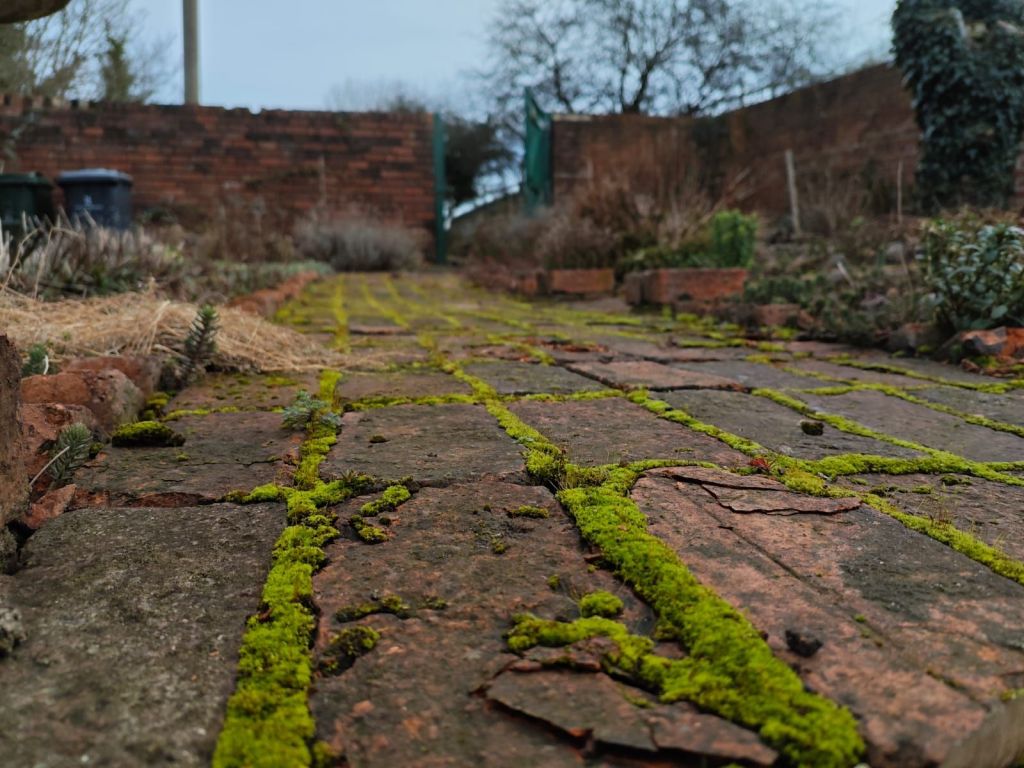
Spring uncoiling itself from the tangle of a seemingly neverending Janu-ebruary. The brick paths in the garden, frost-crackled, and thickly lined with moss, guide everyone to the new life emerging. Some colour at last.
Grounded – Pump House Cottage garden (photo credit: Andrew Jones)
Bulbs planted last September are slowly emerging, ready to welcome folks back on site.
Snowdrops peeking out from the earth. (photo credit: Andrew Jones)
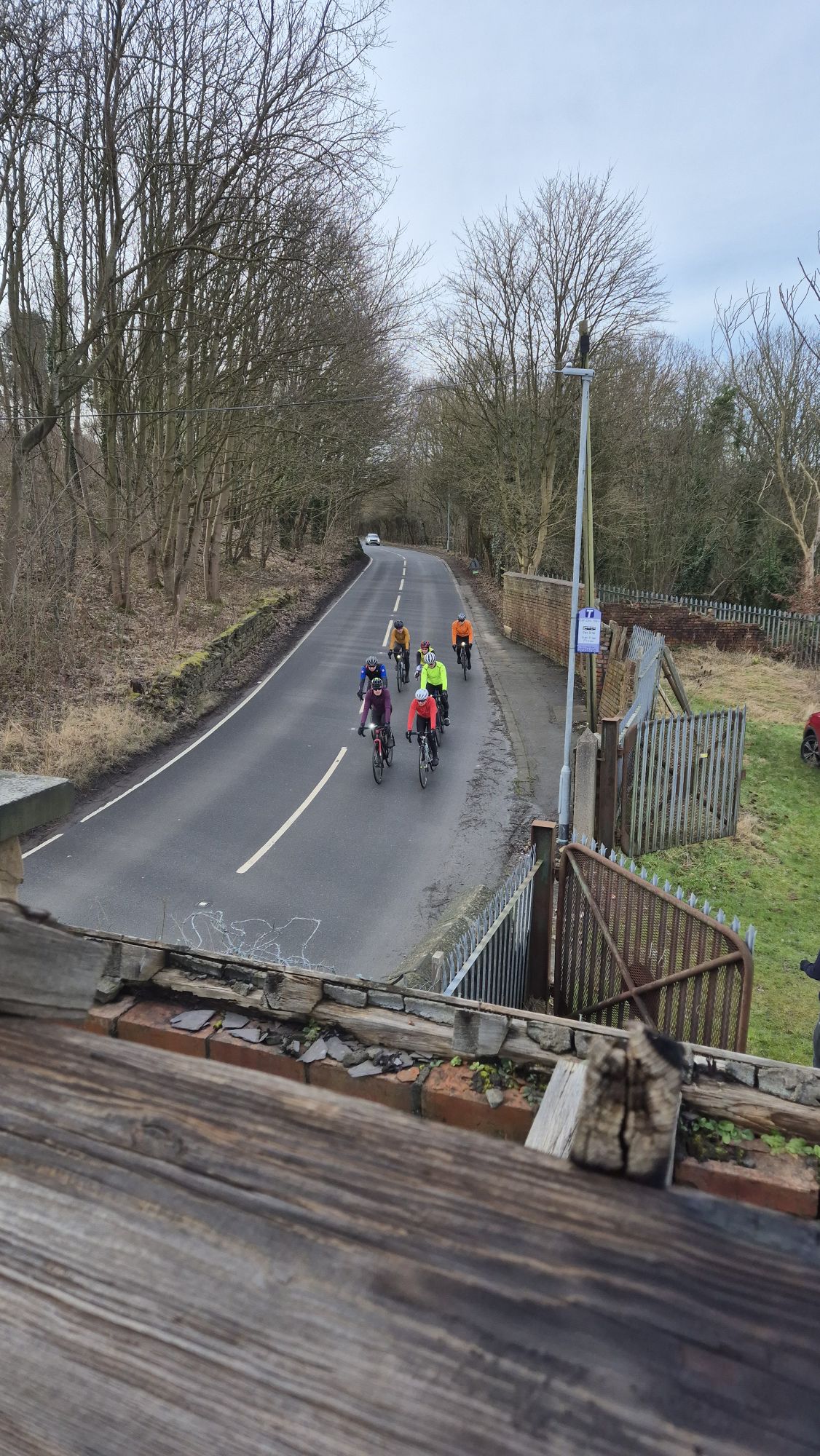
In the sky above a buzzard swooped over the Elsecar Main muck stack, high behind Pit Row. Everyone seemed to be making the most of the first decent day for quite some time – the sky was busy with flights of birds and flying machines of various descriptions, whilst the road was filled with passing cars and cyclists out to enjoy the conditions.
Rooftop view of Wath Road, a group of cyclists out on tour…
The day itself was a fairly quiet one. Volunteers John, Paul, Andy, Andrew and Chris taking time to wish one another a hearty Happy New Year (it still counts in February, honest) and catch up with the year’s events – both near and far in an increasingly volatile world. Checking in with Site Manager Glen, there are plans for projects for the year ahead – working with the local authority and Historic England on ways of repairing and maintaining the site and the many challenges of its historic buildings.
Lundhill Colliery Disaster, 1857
We could not let the weekend go without acknowledging an unhappy anniversary – the Lundhill Colliery Explosion of 19th February 1857.
Lundhill Colliery explosion, showing the air shaft on fire, Illustrated Times, Vol.4, No.97, p.136
168 years may not be a round number for a commemoration, but the passage of so many years still does not meet the scale of the disaster when 189 miners – men and boys – were killed by a huge explosion at around half-past twelve on that tragic Thursday.
How the disaster unfolded
The pithead view of Lundhill Colliery after the explosion (drawn from a photograph), Illustrated Times, 7th March 1857, Vol. 4, No.98, p.156
The official report into the explosion was made by the Yorkshire Inspector of Mines, Charles Morton, who introduced the event simply as Accident No.11 in the Tabular List:
On Thursday morning the 19th February 1857, about 220 men and boys went to work in this pit; and soon after midday a terrific explosion occurred, which involved a sacrifice of life unparalleled in the annals of coal mining. … from some unknown cause, an astounding and devastating explosion was suddenly experienced.
Charles Morton, Reports of Inspectors of Coal Mines, 1857, pp.134, 136
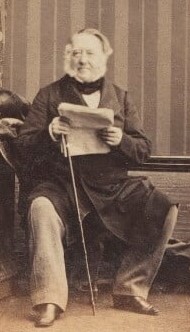
For a brief description of the colliery, we are fortunate to have the words of an eminent engineer who rapidly attended the disaster, and helped to organise the recovery work, Mr Nicholas Wood, an expert engineer from Newcastle.
Nicholas Wood (1795-1865) by Camille Silvy, albumen print, 4 May 1861 NPG Ax52851 (CC BY-NC-ND 3.0)
“Two pits, or shafts, have been sunk to the Barnsley bed of coal, one used as a downcast, eleven feet four inches diameter, and the other used as an upcast, nine feet three inches diameter from the surface to the Abdy seam, and ten feet diameter from thence to the coal.
There is also another pit sunk to the Abdy seam, on which is a pumping engine to pump the water from that seam ; but there being little water in the Main coal, it is drawn to bank in tubs. The depth of the downcast pit is 216 yards 2 feet, and of the upcast 214 yards 2 feet 7 inches, the latter being a little on the rise of the coal, and thirty-three yards distant from the upcast. The ventilation of the colliery was effected by these two pits, a furnace being placed at the bottom of the upcast shaft…“
(Woods, N. ‘An account of the explosion of fire-damp at the Lundhill Colliery’, Trans. North of England Institute of Mining Engineers, Vol.V, 1856-7, pp.231-274
What went wrong?
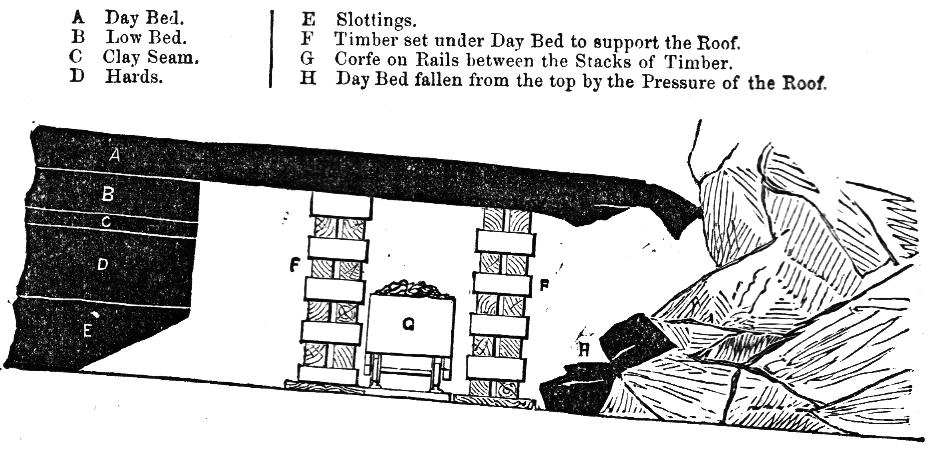
Multiple causes appear to have come together – the way of working the coal, unsafe lighting practices (candles and uncapped safety lamps), and possibly negligence as supervisors were absent at lunch time. Added to these the gaseous nature of the workings, where falls of roof could release explosive gas, and the tragedy seems perhaps all too likely.
Diagram showing a section of the working of the Barnsley coal seam at Lundhill Colliery – coal being undercut and loaded into a tub (G). The coal face consisting of different strata, labelled B-E advances to the left, with the roof (A) supported by timber chocks (F) and the waste (worked out) areas collapsing to the right (H). (From Edmund Hedley’s ‘The Lund Hill Colliery Explosion. A Lecture, 28th Sept 1857, Published in Bristol Mining School Lectures, 1857, published in 1859)
The explosion led to flame shooting up the air shaft and up to 100ft high. The coal winding shaft was also in disarray, with the cage, chains and winding rope having been thrown up into the top pullies and headgear. Disentangling the chaos, it was three hours after the explosion, before several mining engineers could attempt to descend the shaft. Progress was slowed by obstructions, but at the pit bottom 20 survivors, all burned burned or injured by the force of the blast, were found and raised to the surface.
Survivors being brought to the surface at Lundhill Colliery, Illustrated Times, Vol.4, No.97, 28th February 1857, p.1
The fire was spreading underground as the coalface itself was alight. The engineers made rapid checks, exploring the chaotic scene 400 yards into the workings places, but all signs pointed to the dark truth that there would be no more survivors. With gas present and a second explosion an imminent danger, they returned to the surface, exhausted at 7.30pm that night.
View of the pit yard at Lundhill, showing the flames up the air (furnace) shaft and crowds gathering, Illustrated London News, Vol.XXX, No.848, 7th March 1857, p.1
In order to prevent further explosions, it was agreed to seal up the shafts to suppress the conflagration. With the assistance and concurrence of an assembly of mining engineers, the decision was also made to direct water into the pit, to flood it and put out the fire, and so deter further burning of the coal underground and the loss of the workings.
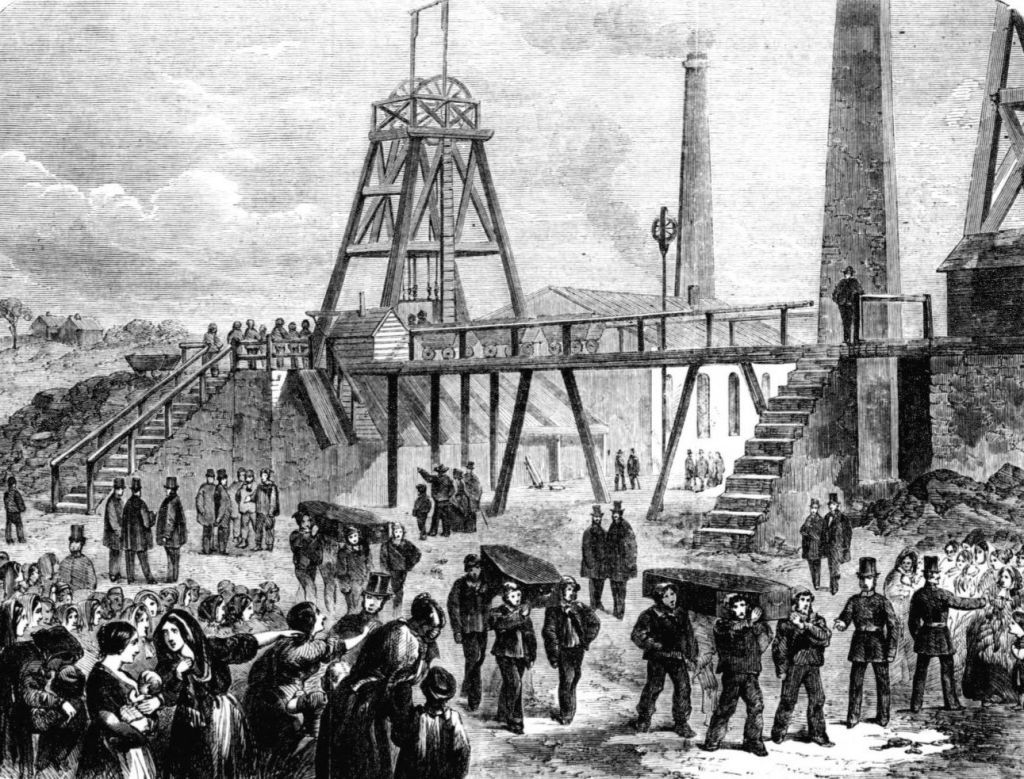
Illustration depicting the recovery of bodies from Lundhill Colliery after draining the pit flooded to quench the fire, Illustrated Times, Vol.4, No.108, 16th May 1857, p.309
Covering the shafts to block the flames in the Barnsley seam took quite some time. The temperature of the air in the shaft, and of the water flooding the workings was closely monitored over the following weeks to assess whether the fire was under control. The horrific scale of the losses would lead to a grim and horrifying task a month later when the water was drawn and pumped out and the bodies of so many dead men, boys and pit ponies were removed.
Lundhill and back again
We recognise their sacrifice, and the dangers faced by all local Victorian coal miners as they sank shafts down to, and worked out the Barnsley coal seam, the same seam worked at Hemingfield which had experienced its own explosion in 1852.
View up the Elsecar Branch of the Dearne and Dover Canal from Lundhill Bridge – Gypsy Marsh bridge carries the Dearne Valley Parkway over the waterway, 22nd Feb 2025
Lundhill is only 20 minutes walk away, so in the afternoon, the group decided to make their own small memorial journey, and it made for an enjoyable, reflective journey. The regular volunteers walked down from the pit to Tingle Bridge, and down to the former tow path along the now-abandoned Elsecar branch of the Dearne and Dove Canal to Lundhill.
Friends of Hemingfield Colliery volunteers exploring the Dearne and Dove Canal overflow en route to Lundhill, 22nd Feb 2025
This canal branch transformed the fortunes of this part of South Yorkshire – firstly providing a vital transport link to Elsecar (New Colliery) from 1798. Other pits followed soon after, and Hemingfield (1842) preceded Lundhill (1853).
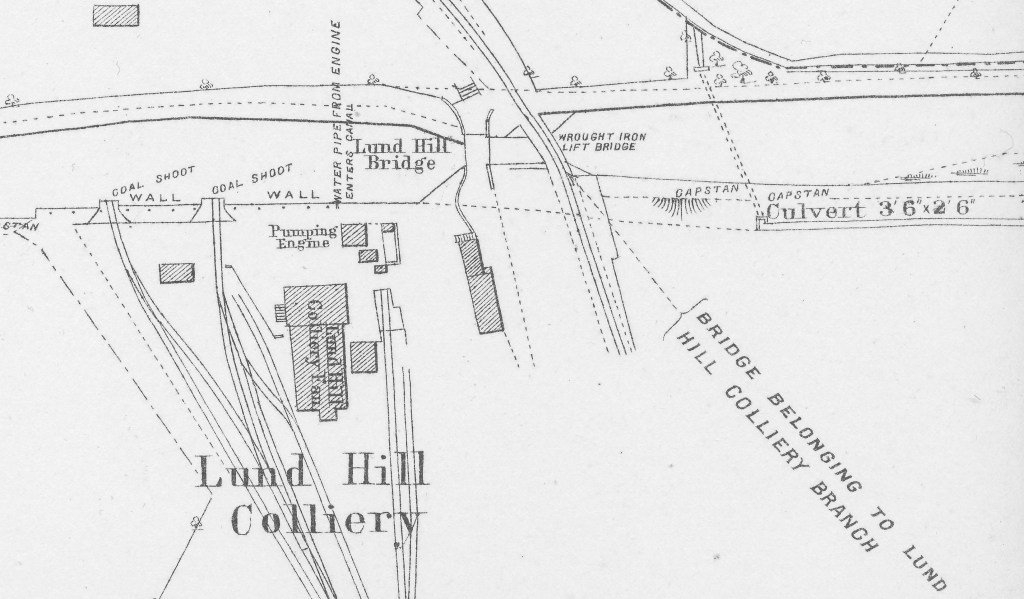
Detail from 1890s plan of the Elsecar Branch of the Dearne and Dove Canal, showing the Lundhill Colliery canal connection, footbridge and railway branch lift-bridge which connected to the main colliery site some distance away (Courtesy private collection)
Both shared a common connection to the Humber via the Dearne and dove, Barnsley and other Canals, as well as the River Don Navigation. Thousands of tons of coal were shipped out from both pits.
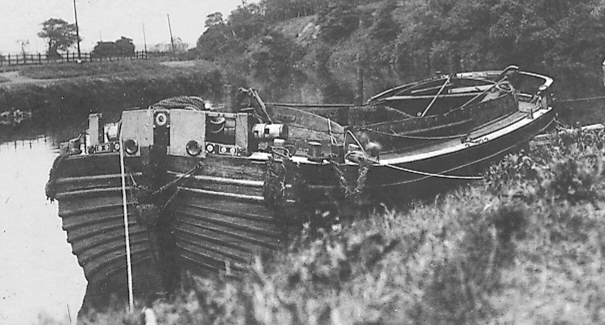
View of a Humber keel, HGVs of their day, on the Barnsley canal (courtesy private collection)
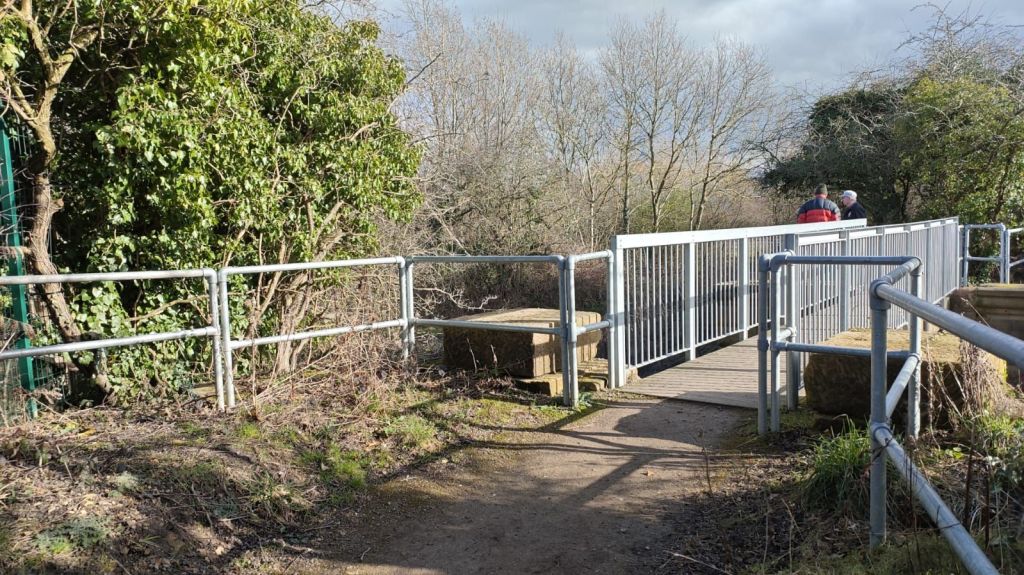
The group paused at Lundhill Bridge (recently replaced) and looked over the fence at the heavy stones marking the staithe, or coal shoot for the Lundhill colliery where large Humber keels were loaded with coal from wagons sent down a tramway from the main working shafts.
Crossing Lundhill bridge – where Lundhill Colliery’s canal loading shoots and railway branch once operated (photo credit: Andrew Jones)
Continuing on, the group walked along the footpath skirting Greenlands farm, and the new Hillies View housing estate, before pausing to look down to the Lundhill Tavern which is really the sole survivor of the collection of buildings connected with the working of Lundhill pit.
Family and Friends rush from Lundhill Row towards the colliery, Illustrated Times, Vol.4, No,97, 28 Feb 1857, p.1
It stands alone, in the shadow of the modern Dearne Valley Parkway, at the bottom of Beech House Road and Lundhill Road, just across from the overgrown footpath where Lundhill Row once stood – a row of houses where in 1857 the horror of the explosion was soon realised – leaving 90 women widowed and over 200 children left without a father.
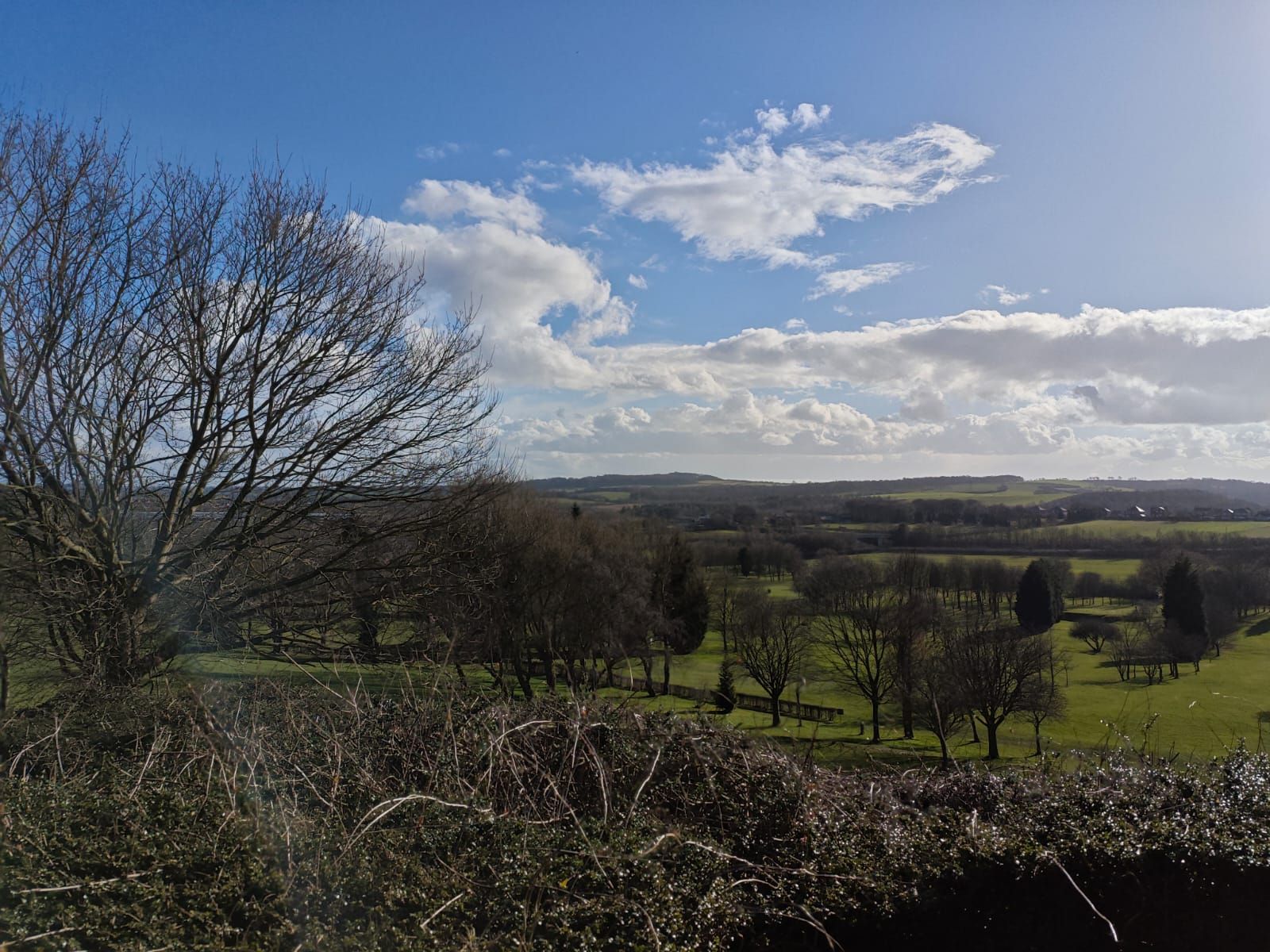
View out across the Hillies golf course, over the site of Lundhill Colliery (photo credit: Andrew Jones)
Crossing the road, the group followed the pavement, up to the footpath and on across the grassy bank, over to Wentworth View, where Hillies Golf Course is located – which covers the site of the former Colliery. Its hill-top position provided great views over the landscape on such a mild and sunny day.
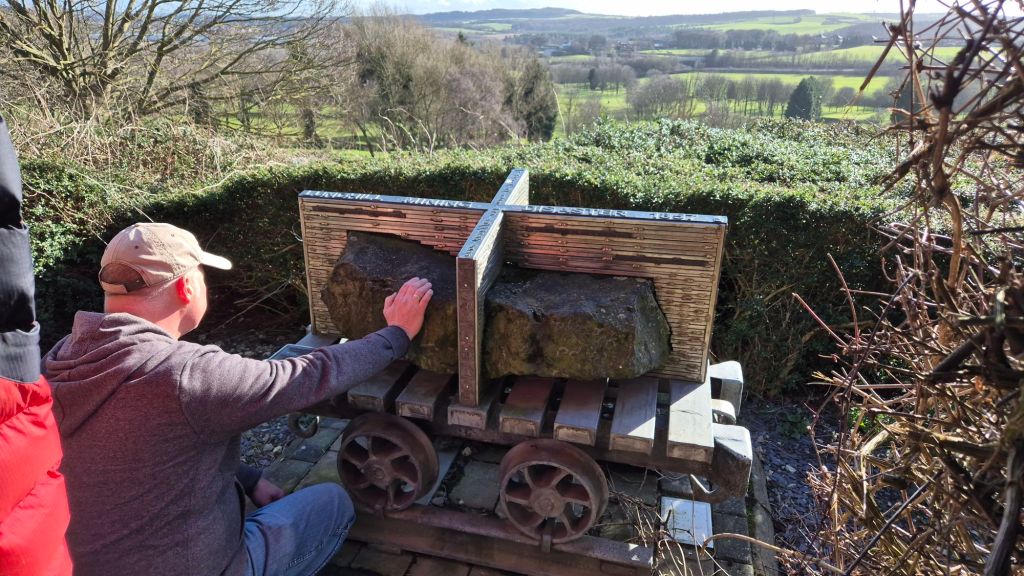
The Friends admire the Lundhill Colliery Explosion memorial and pause for reflection, 22nd Feb 2025
At the rear of the Hillies clubhouse, the Friends spent some time admiring the modern mining memorial to the 1857 disaster, pausing for some silent reflection, before returning back over to Hemingfield to close a most interesting day.










 Friends of Hemingfield Colliery
Thank you for another fascinating, well researched and impressively illustrated newsletter, Jane
LikeLike