
Regular volunteers Paul, Janet & Jeff and Andy were on site on Saturday 15th March 2025. Thanks to support from South Yorkshire’s Community Foundation we can open the gates and operate on site with volunteers and members of the public.
Spring time tidying was very much the order of the day, clearing the garden flower beds and paths of Pump House Cottage. So much for the flora. As for the fauna, scarcely a minute had passed on site before a kestrel was spotted high up on the main headgear.

Meanwhile, over on the other side of the site, over the pumping shaft headframe, perched another feathered friend.
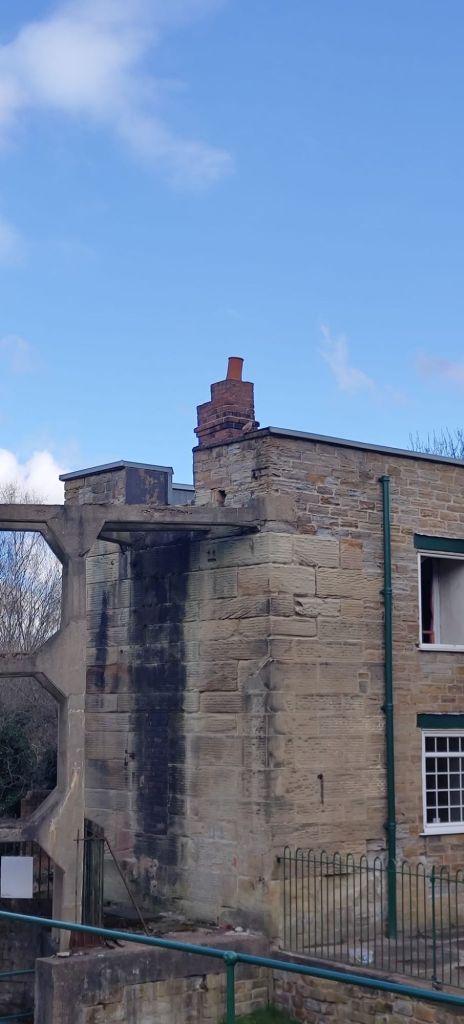
Within the next half an hour volunteers spotted a buzzard, a robin, a blue tit, a great tit, an (unknown) gull, 2 male pheasants (down on the railway), and a grey wagtail, to name but a few.

Truly we are surrounded by nature – trees cover the landscape from up high on the Elsecar Main muck stack, and all along Wath Road, and down to the Elsecar Branch of the Dearne and Dove Canal, over the Knoll beck. Spending so much time outdoors surrounded by nature, one’s mind naturally tends to observe (to see, but also hear), to try to identify, and also to record the wildlife round about.
Why Barnsley, Naturally Speaking
Naturalists in Barnsley have a long and proud tradition, easily the most prominent and popular was Thomas Lister (1810-1888), poet, postmaster and longstanding President of the Barnsley Naturalist and Scientific Society. His work recently inspired Poet Laureate Simon Armitage as part of the Eldon Street Heritage Action Zone activities, and led to the unveiling of a blue plaque opposite the Town Hall.
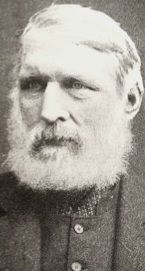
Over many years Lister made regular ornithological reports on the birds spotted locally. In 1881 at the meeting of the British Association for the Advancement of Science in York, he gave a paper “On the birds which have bred in the Barnsley and South Yorkshire District” which sounds rather dry, to be a scientific list, but in fact provides a beautiful description of this patch of ‘God’s Own County’.
Lister compares the changes seen since a similar list on the birds of the West Riding had been collated by Dr William Farrar (1800-1852) in 1844.
“The district of his observation was chiefly between the Calder on the north, and the Don on the west and south, with the Dearne, its tributary, flowing through the middle region by Barnsley, the central point of observation.
The country extends in a series of well-wooded undulations from the magnesian limestone on the east at about 300 feet of elevation to the millstone grit, from 1,000 to 1,700 feet, which it attains at Black Tor, north of Sheffield.
The birds may be said to be characteristic of the varied districts, from the sub-alpine regions west of the Pennine range, or great back-bone of England, where moorland birds predominate, the woodlands and cultivated grounds in the centre frequented by our resident birds and migratory warblers, to the lower tracts beyond the magnesian limestone in the south-east of the Riding, where birds of the marsh and tidal rivers mingle with the inland birds.
The late Dr. Farrar might well speak of the neighbourhood of Barnsley as very favourably situated for the observations of the ornithologist. Its diversity of aspect, rich woodland scenery, and extensive fresh-water reservoirs, together with the deep naturally excavated brooks of its vicinity, afford that variety which assured the student of this branch of natural history a rich field for cultivation.
Though no large river flows through the centre of this extensive district, the Don being on its outskirt, art has supplied canals, fresh-water reservoirs, and sheets of ornamental water in the parks, which afford food and protection to the water birds, and by that means they add both to the beauty and liveliness of the landscape.
Since Dr. Farrar’s time yet more extensive reservoirs have been constructed to supply the Barnsley Corporation Works at Ingbirchworth, the Dewsbury and Sheffield Works at Broadstone, Dunford, and the Rivelin Valley, which have furnished many instances of rare birds visiting their scenes. Some breed there, and more may be tempted, as very fair protection against destroying gunners is afforded.
The following are among the birds that breed in the district :- Falcons, 7 varieties ; owls, 4 ; shrikes, 2 ; fly-catchers, 2 ; thrushes, 4 ; warblers, 18 ; tit-mice, 6 ; wagtails, 3 ; larks, 2 ; pipits, 2 ; woodpeckers, 4; creepers, 3 ; cuckoo, 1 ; kingfisher, 1 ; swallows, 6 ; pigeons, 3; pheasant, 1 ; partridge, 1 ; grouse, 4 ; plover, 2 ; heron, 1 ; snipes, 7 ; rails or crake, 3; swimmers, 5; goatsucker, 1 ; divers, gulls, 2 ; buntings, 3 ; finches, 11 ; starling, 1 ; crows, 5.
The Naturalist, journal of the Yorkshire Naturalists Union, Vol. VII, No. LXXVI, November 1881, pp.58-59
Which birds have you spotted lately, dear readers?
Of course, the opening of RSPB Dearne Valley Old Moor Reserve site from 1998 massively improved the range of wetland environments available locally. Located just a short walk down along the canal, it has reed beds, wader scrapes, hedgerow, meadows and wet grassland providing habitats for many species. Spring arrivals of migrant birds will continue in the months ahead, so we will have chance to return to this theme.
 Friends of Hemingfield Colliery