Warm weather continued into June, as nature’s pollinators revelled in their constant gardening on site.
Ostensibly a quietish month as we plan for the Autumn open days and await permissions for restoration work on our scheduled monument site and the listed Pump House Cottage.
Again, we are exceptionally grateful to South Yorkshire’s Community Foundation for their support this year which has helped us with site insurance to open for visits and prepare displays and activities with our volunteers.

And that said – plenty to report, both good and bad as you will see!
Blooming beautiful
A recurring pleasure and delight on site is to see the life in Pump House Cottage garden, fruits of the labours of our regular volunteers Janet & Jeff.
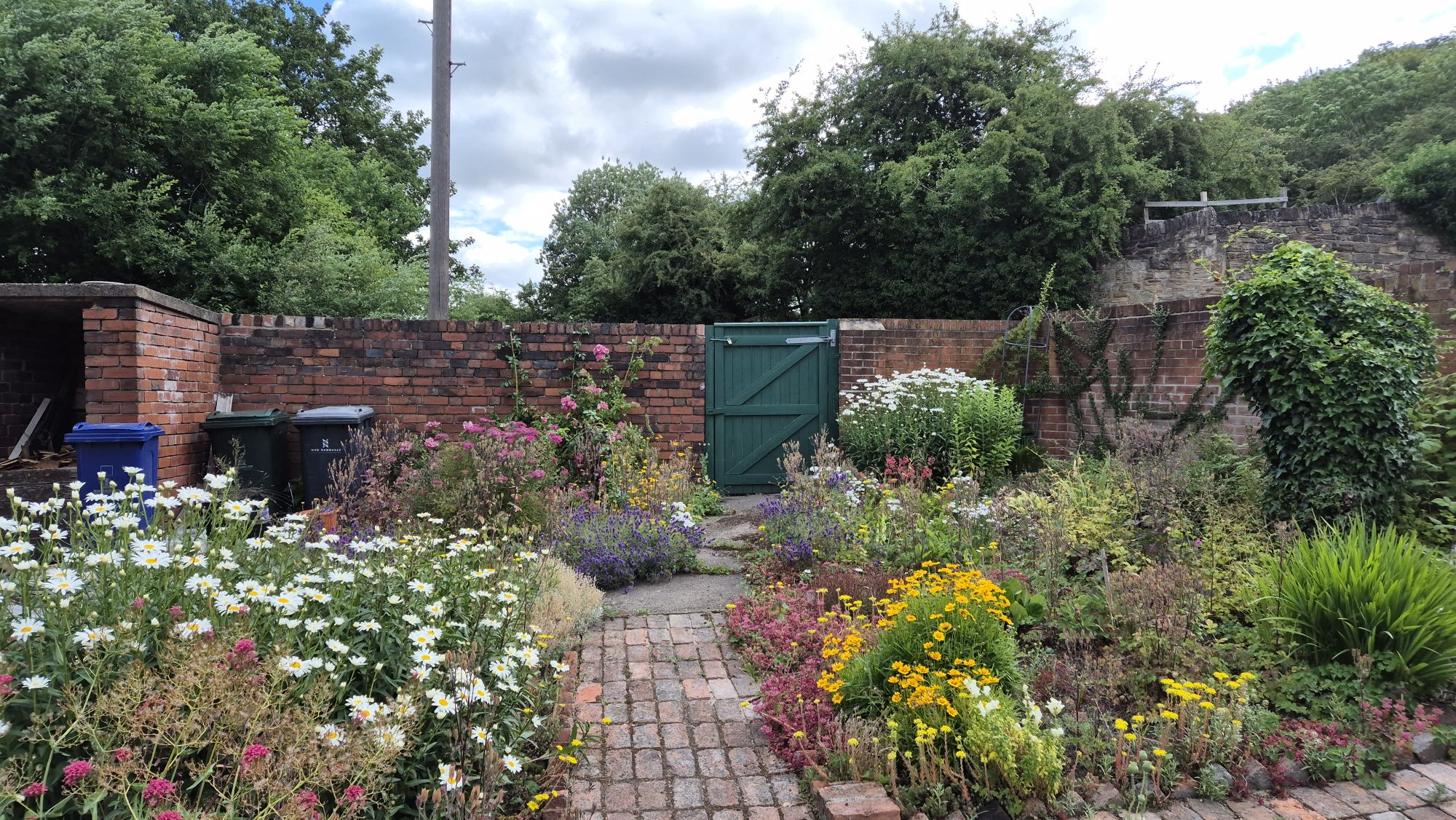
Miracle grow is not neccessary when a hot sun-assisted season kicks in, providing bees and insects with a welcome harvest, and volunteers and visitors with a sight for sore eyes.
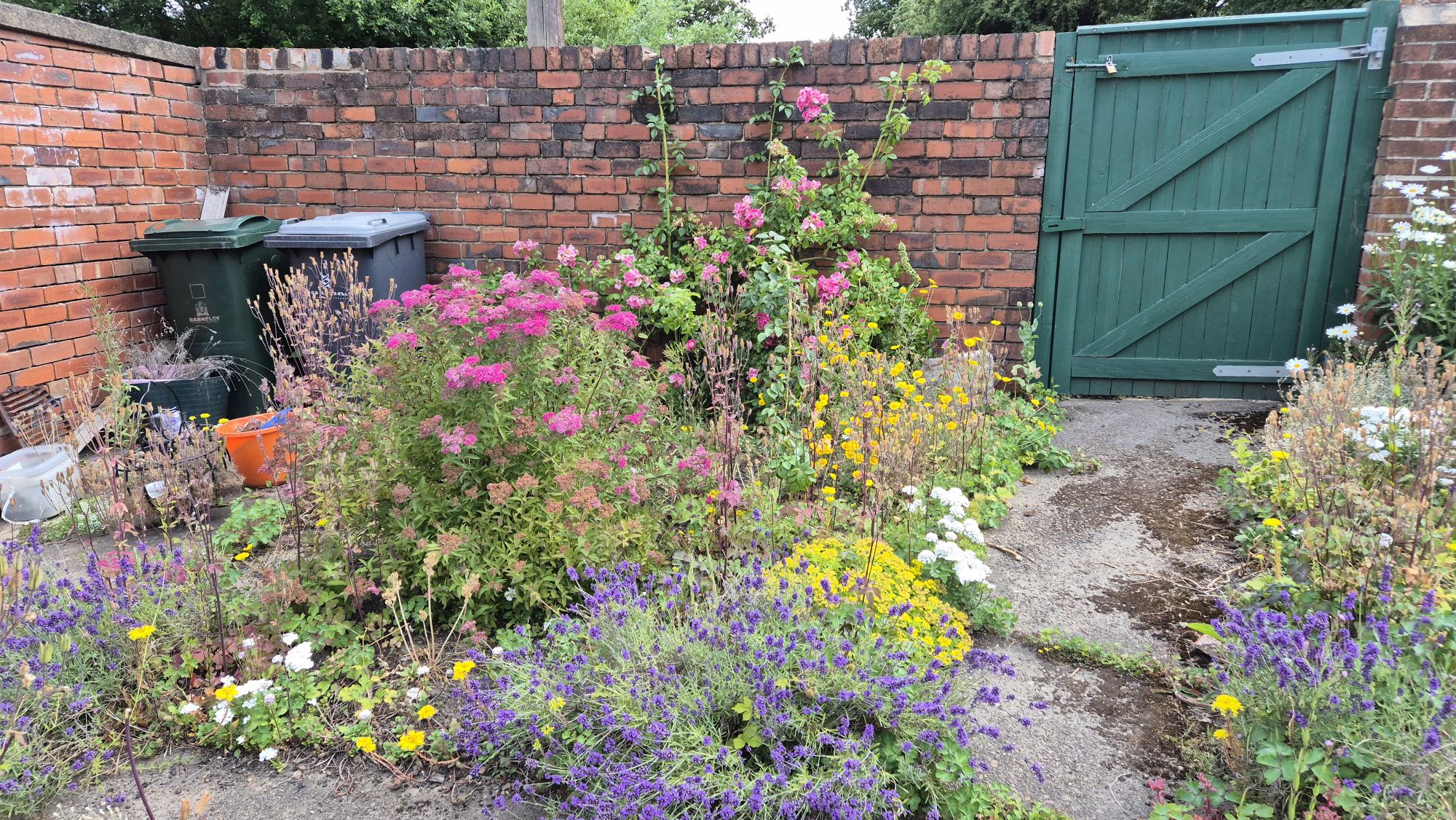
Spending days on site, mostly seeking the shade in June it must be said!

Further afield, up the hill in Hemingfield, we were also delighted to see the FoHC hanging basket looking well opposite Hemingfield green. Many thanks to ‘Mr Hemingfield’ Ian Boot for helping to arrange these beautiful baskets which are surviving the heat very well.

Pole position – again!?
June 2025 brought more action out front, on Wath Road with the arrival of a new telegraph pole. Avid readers of the blog may remember our previous March update commenting on the telegraph pole outside the main entrance, connecting the telecoms manhole covers to the houses on Pit Row.

A tree had been growing between the old pole and our wall, levering it over bit by bit, and forcing the old pole to lean and wobble. Removal of the tree relieved some pressure, but also caused the wall to lean further back.
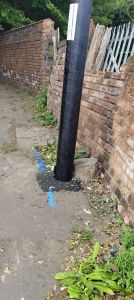
A temporary fix earlier in the year has now led to the wholesale replacement of the pole on 19th June, with a new pole with an unctiously dark creosoted surface, but reusing the old lettering and numbers.
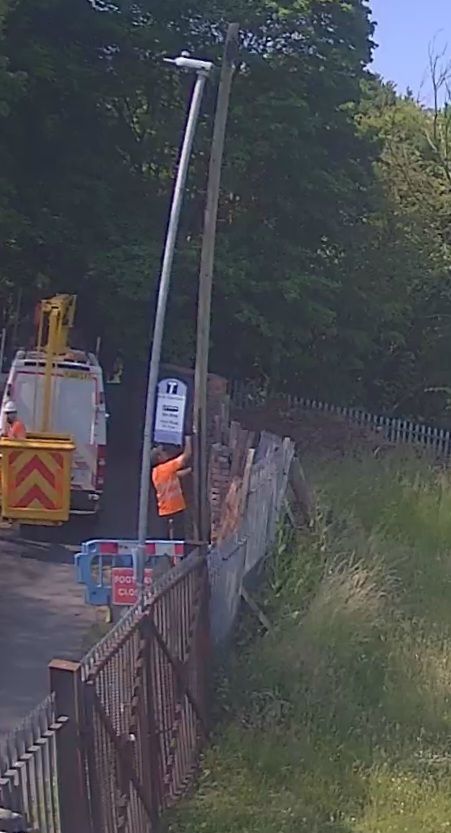
However the removal and digging of the hole for a new pole has again disturbed our wall, weakening it further and causing a section to lean further back.
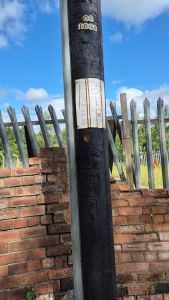
We continue to look to repair and rebuild the boundary wall now these changes have been made, but would warmly welcome support from a skilled bricklayer?
Ticking over
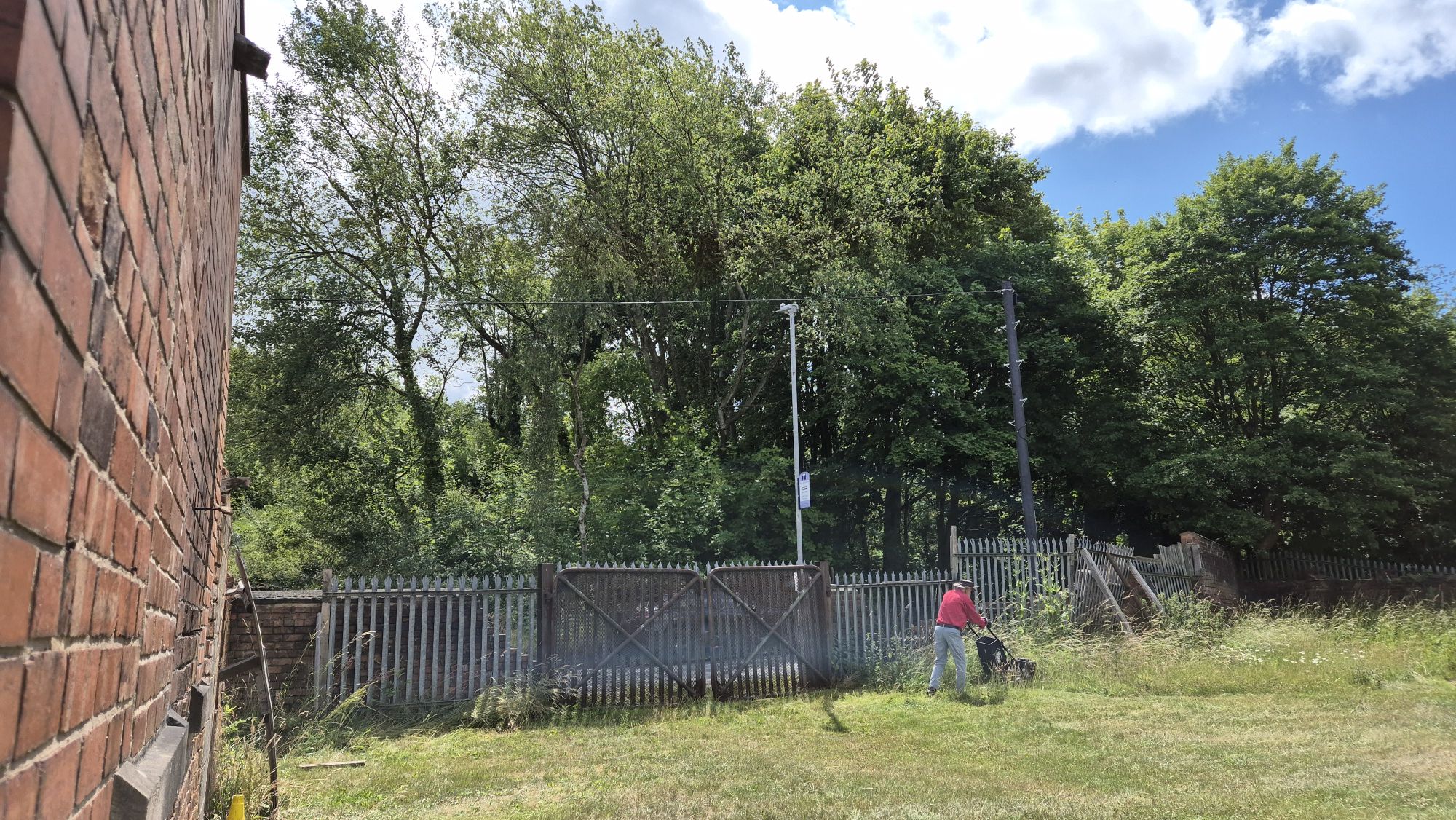
In a hot month, volunteers have been visiting site to keep it in trim, but mostly this is the time of year we let the grass grow on the top yard.

An exception is made for the main entrance and car park area, which was getting somewhat tropical by the end of the month, so on Saturday 28th, it was given a bit of a snip by regular volunteer Andy.
Out n’ about
Earlier in June, on Thursday 5th, the Friends went into Barnsley to the Miners Hall of the NUM to listen to Barnsley Civic Trust‘s talk, ‘Five Shillings Per Day’: The 1819 Yorkshire Miners’ Strike, by Dr Joe Stanley. 2025 marks 150 years of the NUM offices so it was a great setting for a talk on the origins of combination movements. Presented in partnership with Barnsley Archives and Local Studies. The talk is now available on Youtube:
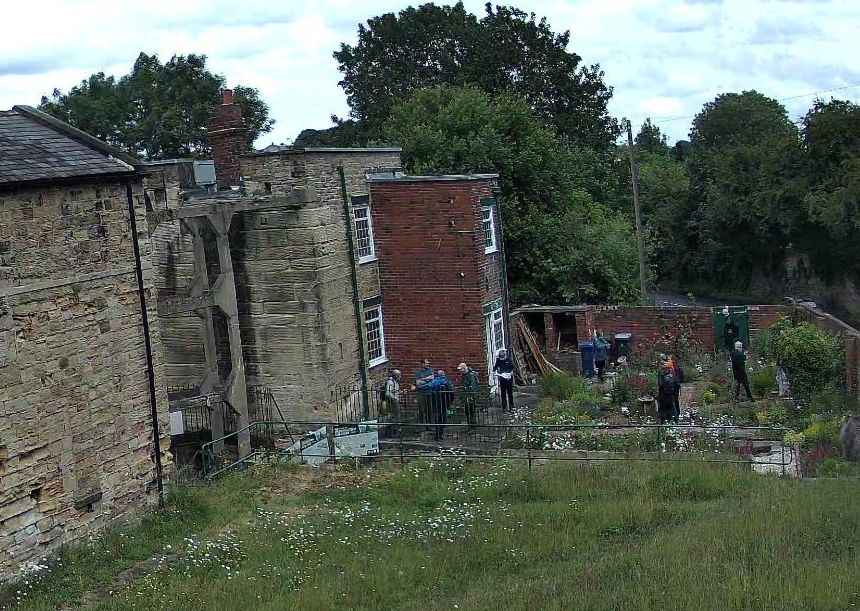
Back on site on the 7th June, site manager Glen and regular volunteer Paul welcomed visitors from the Penistone Line Partnership walkers group as they walked down the Trans Pennine Trail.
Art n’ about
Regular volunteers Paul, Janet and Jeff also attended Milton Hall on Wednesday 18th June to join in consultations on a new artwork, consisting of several sculptures, which will be placed at Elsecar railway station, thanks to support form Northern Rail, South Yorkshire Mayoral Combined Authority, Barnsley Museums and Barnsley Council’s South Area Team.
Artist Patrick Murphy is being commissioned to produce the sculptures, and the workshop was designed to seek input from members of the local community, to produce new works which celebrate the local heritage and will enhance the station.
Alan’s archives
During the month, we were also pleased to catch up with an original volunteer, living in the West Midlands. If anyone deserves the moniker Mr Hemingfield Colliery, it surely must be Alan Hill, who has been interested in the site since the 1970s, taking important photogrpahs which have been incredibly useful to understanding the history of the site.
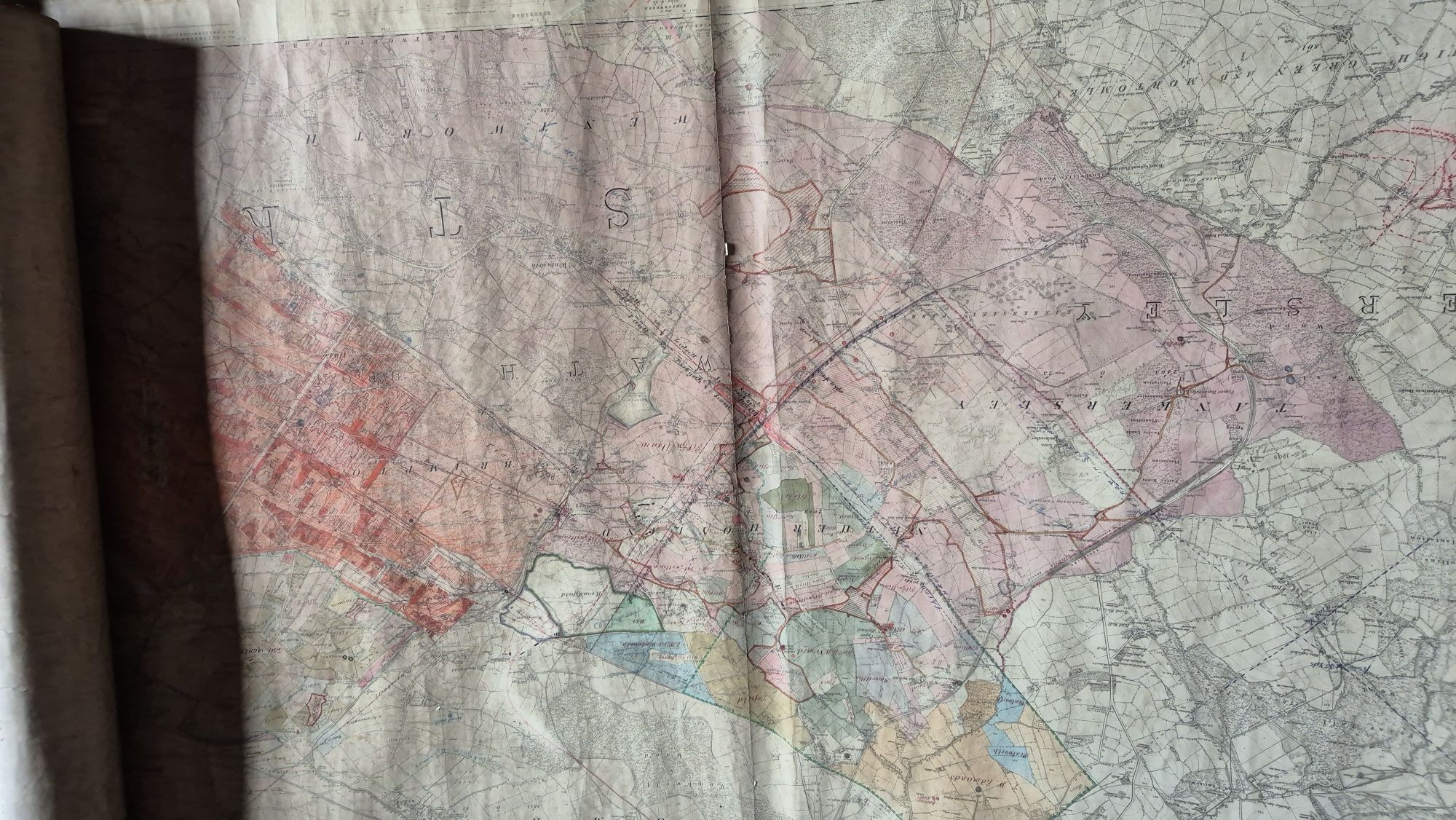
In the 1980s he wrote in support of the work of the Cortonwood and Elsecar Project, the local group which was a precursor to Barnsley Council purchasing what later became Elsecar Heritage Centre.
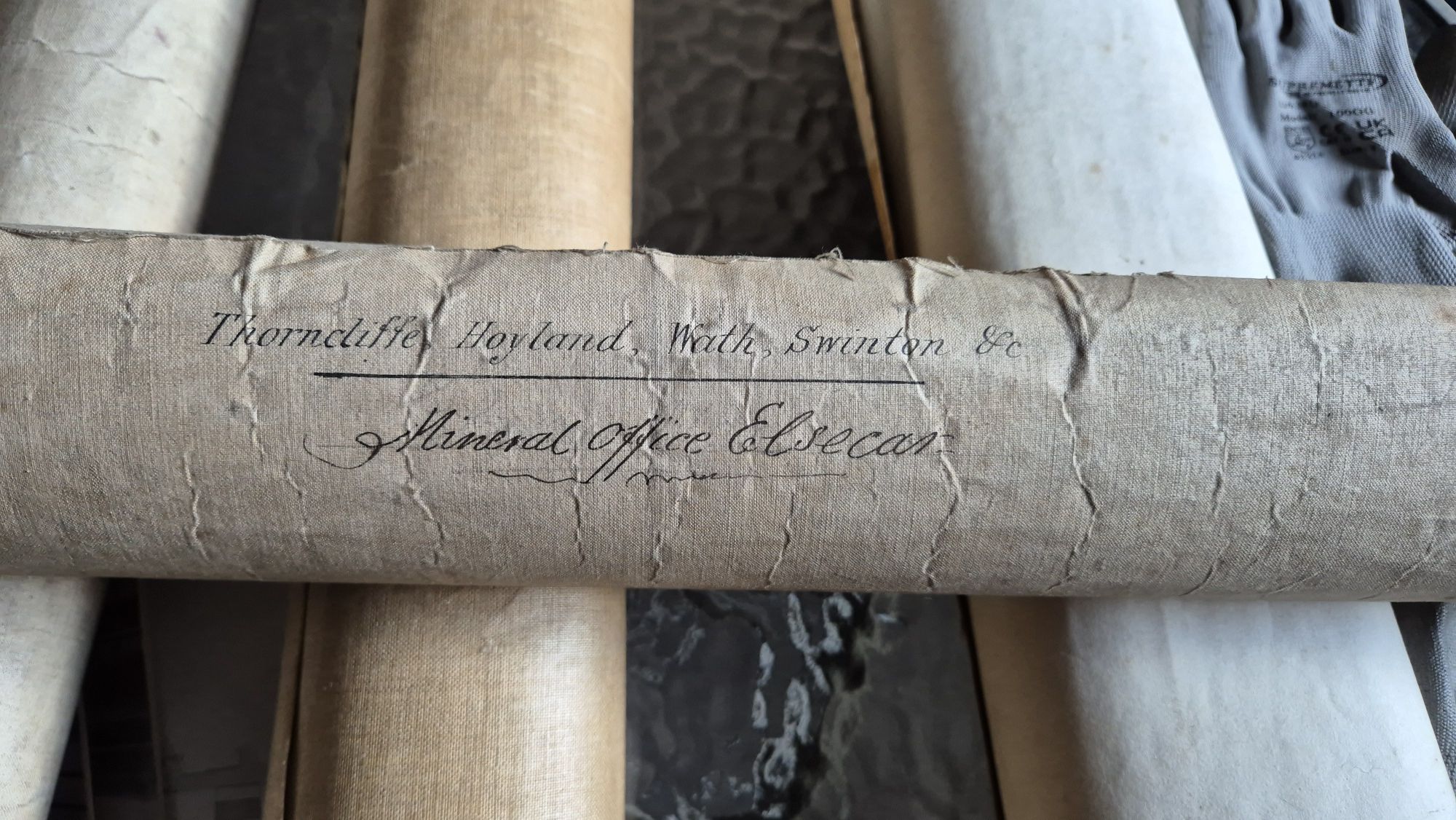
A noted mining historian and author of the South Yorkshire coalfield, Alan kindly dropped off some archival materials into the care of the Friends which will be useful in further enhancing our understanding of the coal workings in and around Elsecar, Hemingfield and over towards Rawmarsh.
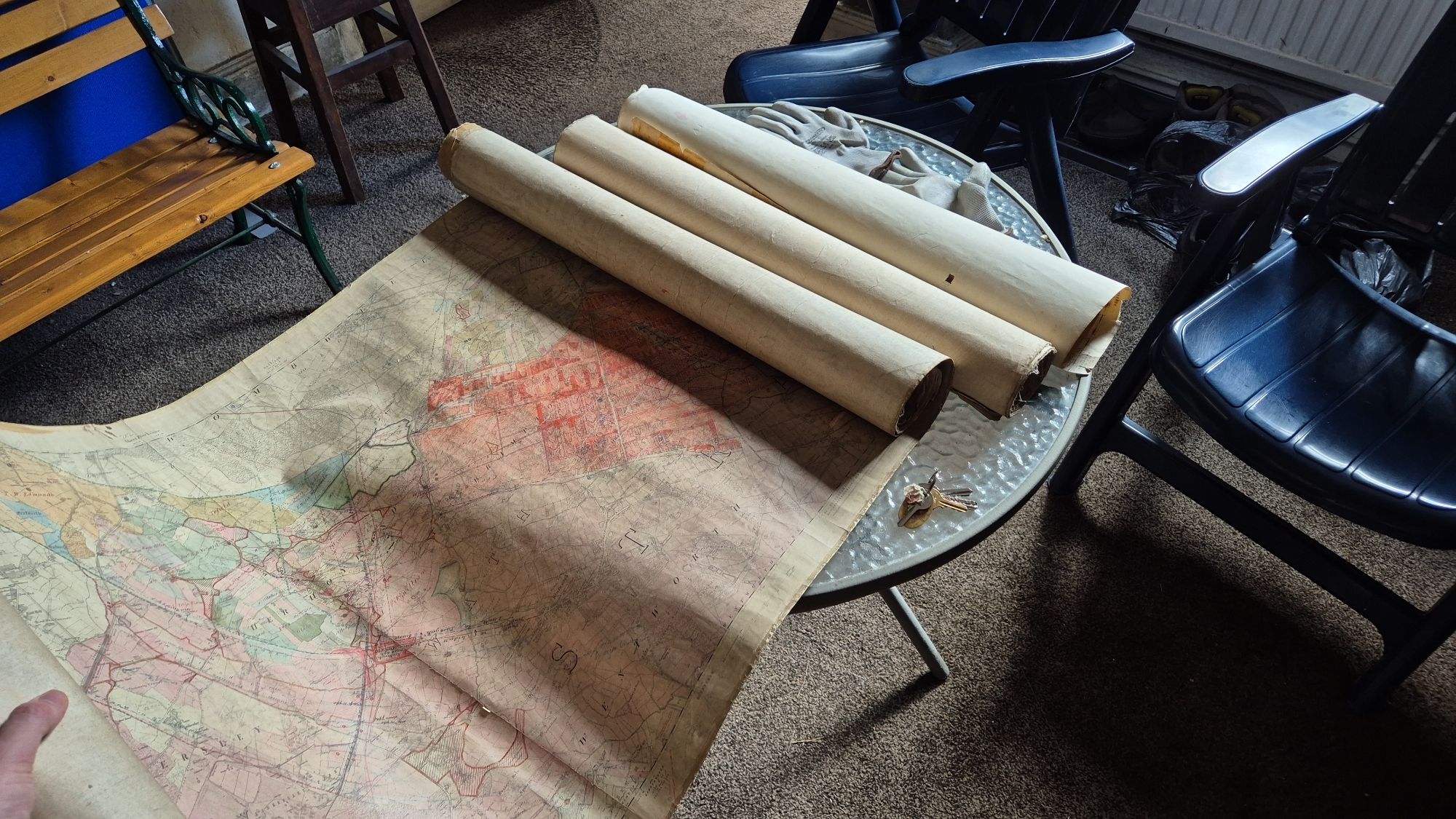
Many thanks to Alan!
Leaving your mark
There are many ways of leaving a mark in history and in constructive ways to benefit our local heritage. Graffiti, however, is certainly not always one of them!
In June, we found that a small group of youths had trespassed on site and tagged the shutters on the top switchgear building.
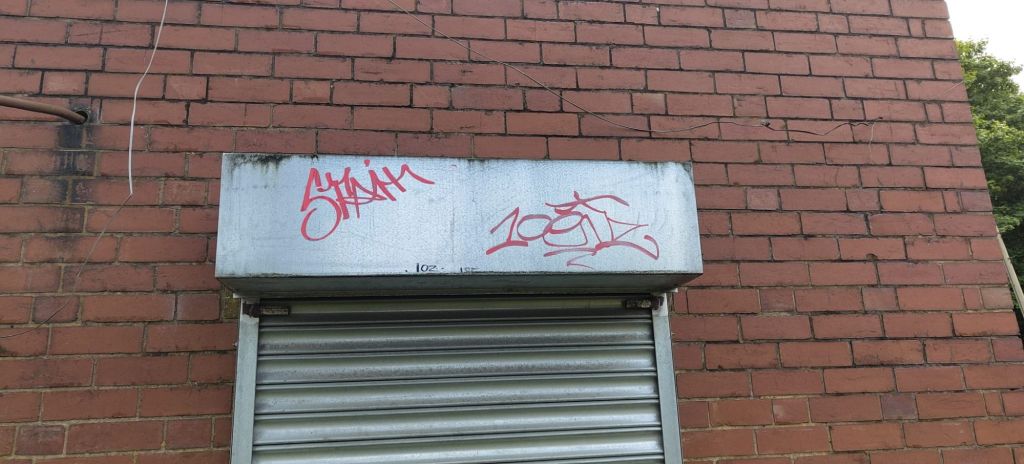
Details of the individual tags may look familiar…

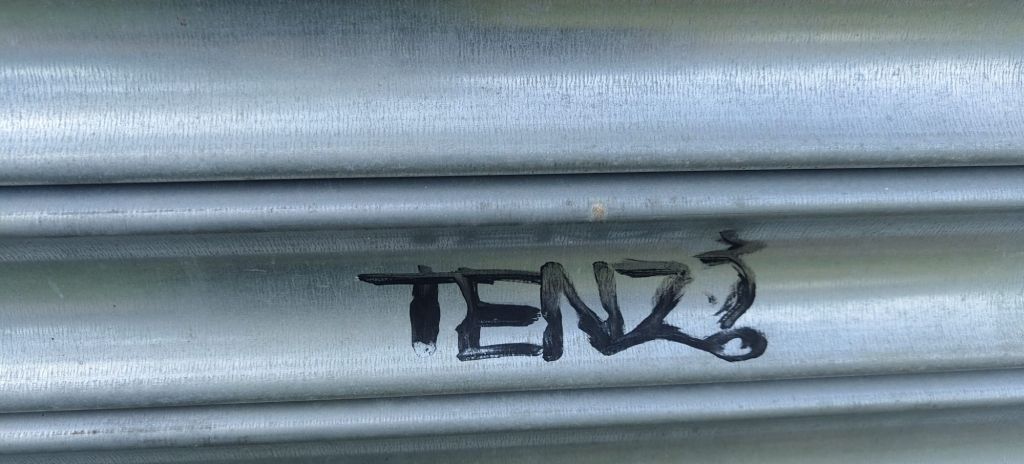
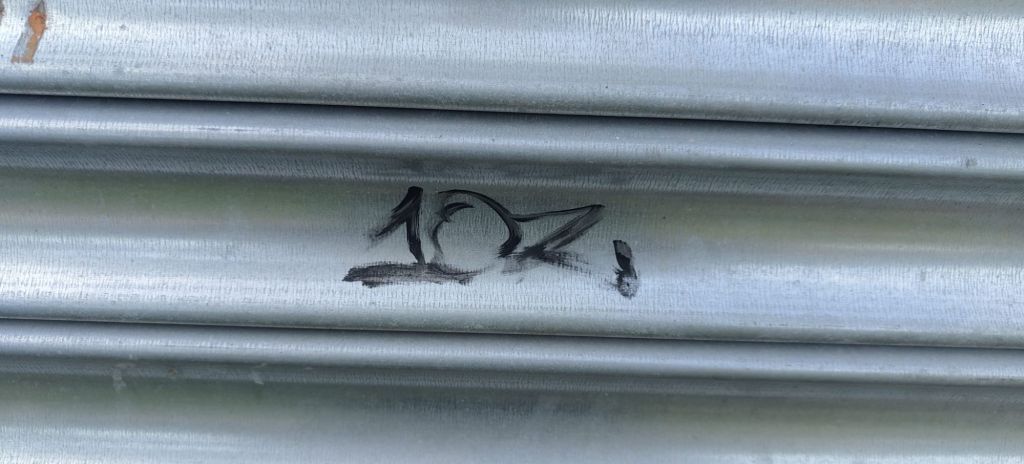
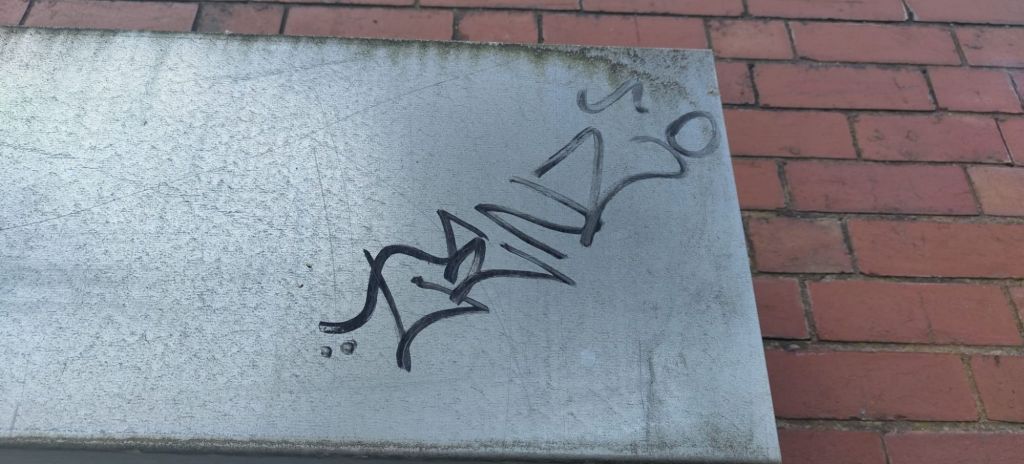
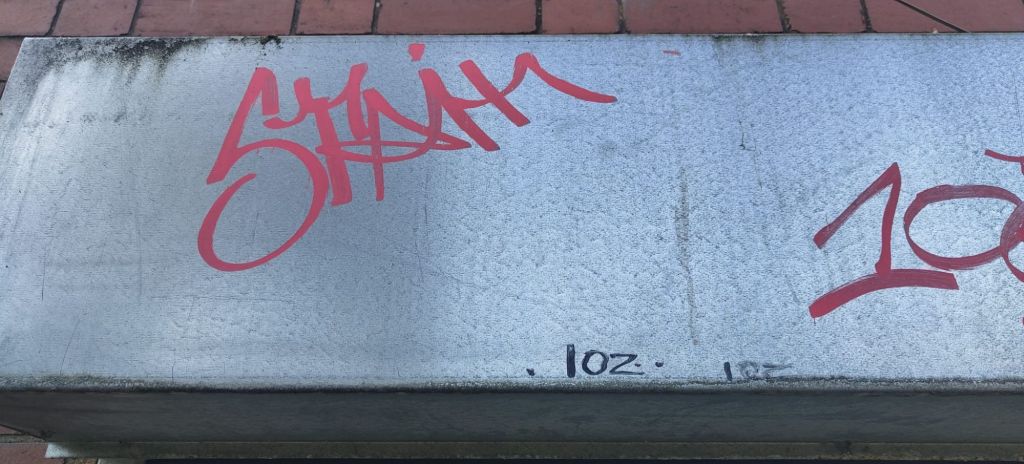
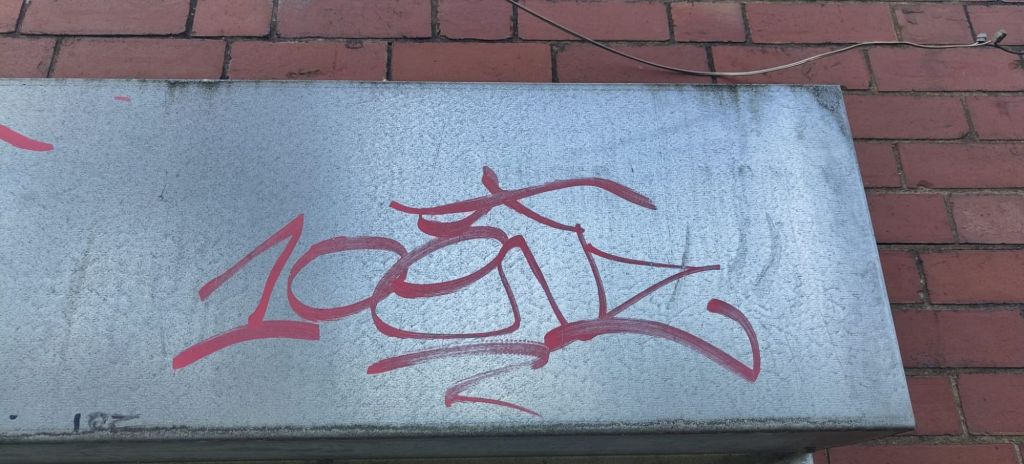
We are no strangers to graffiti as vandalism (and simple egotism?), as last year’s siding of the canalside interpretation board also happened in June.
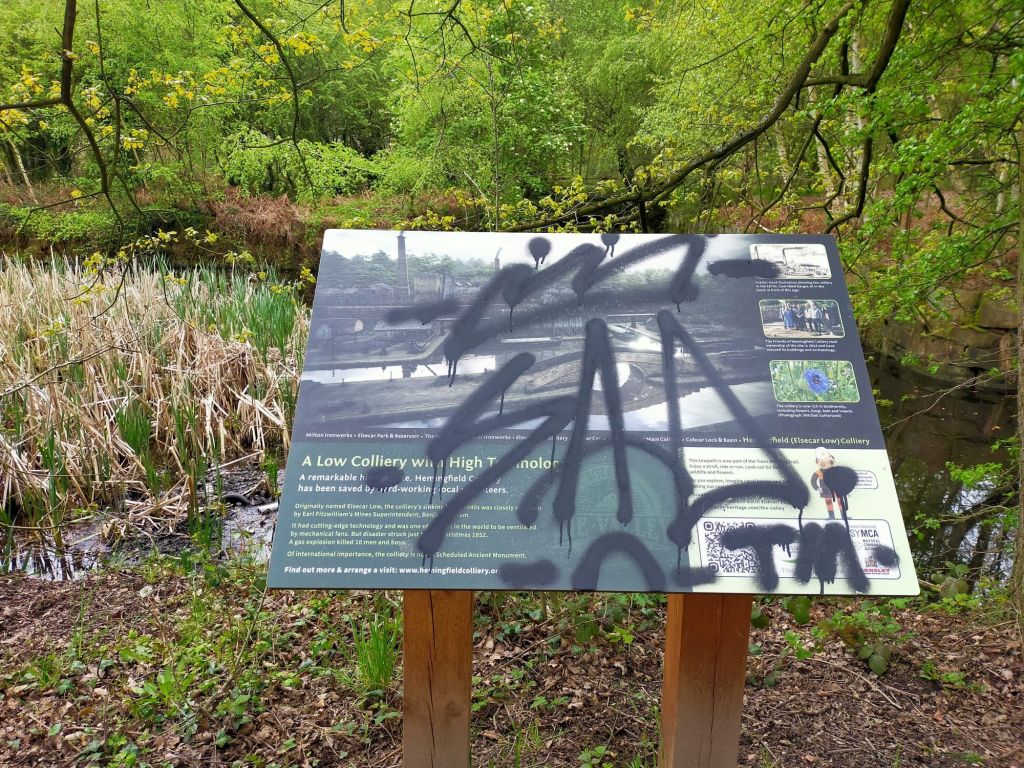
Thanks to the care and commitment of our regular volunteers, the latest tagging has been cleaned away. However this is heritage crime, in addition to trespass, and we would much rather people got in touch if they wanted to visit. Thefts and vandalism only set back our efforts to preserve the site for future generations.

June connections in time
A brief miscellany of some historic June events over the years, linking coal, iron and industry and Elsecar with Staffordshire, Lincolnshire, and Shanghai!
Staffordshire new starts – June 1848
This advertisement eventually led to the arrival of the Dawes brothers, William Henry and George, at Elsecar in 1849, securing demand for Earl Fitzwilliam’s coal at Elsecar pits, and ironstone from the new deep pits at Skiers Spring (around what is now Lidgett Garage). This was all before the railway came to Elsecar.
To IRONMASTERS, and Manufacturers of Steam-Engines, Boilers, Castings, Rails, Bar Iron, &c., &c.
MILTON IRON WORKS.
To BE LET, for a term of 21 Years, and may be entered upon the First of October next, all those Old-established Iron-Works, called “THE MILTON IRON- WORKS,” situate near to the Elsecar Coal-Field and the Tankersley Park Ironstone Grounds, and at a convenient distance from the Manufacturing Towns of Sheffield, Rotherham, and Barnsley, in the County of York.The Works consist of-
TWO BLAST FURNACES, with every requisite Appendage:-
FORGE and MILL, with Puddling and other Furnaces, Chafery for Drawing Uses, Rolling and slitting Mills, &c., capable of Manufacturing from 90 to 100 Tons of Finished Iron per Week :-
FOUNDRY, with Pits, Drying Stoves, and every requisite Apparatus for making Engine Work, and Castings of every description, to the extent of 100 Tons per Week :-
ENGINE-FITTING SHOPS, with Lathes, Boring and Planing Machines, Boiler Makers and Smiths’ Shops, and every requisite for carrying on Engine and Railway Work to a large extent :-
Together with an ample supply of ELSECAR COALS, and TANKERSLEY PARK and SWALLOW-WOOD IRON-STONE, on terms to be agreed upon.
The Works possess at present excellent Canal and River Communication, and will shortly have the advantage of the South Yorkshire Railway.

Lincolnshire Links June 1860
The Dawes’ success at Elsecar, Milton and their other ironworks in Derbyshire and the West Midlands, would lead to the exploration of new ironstone fields around Frodingham and Scunthorpe in North Lincolnshire.
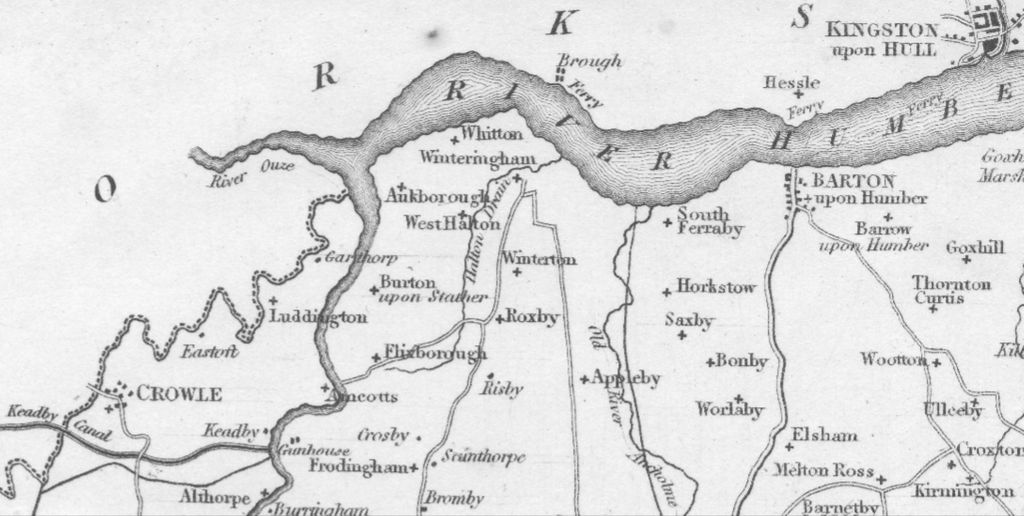
The ironstone was initially brought to Elsecar by canal, right past Hemingfield pit, but the Dawes looked to the future and supported a railway connection to the River Trent (later bridged between Gunhouse (Gunness) and Keadby), in what would later be taken on under the Trent Ancholme and Grimsby Railway Company.
TRENT and ANCHOLME RAILWAY.
To RAILWAY CONTRACTORS.
NOTICE is hereby given, that Messrs. W. H. and G. DAWES of the Milton and Elsecar Iron Works, near Barnsley, Yorkshire, will be glad to receive TENDERS for CONSTRUCTING portion of the intended RAILWAY, from the Trent Side, nearly opposite the Terminus of the South Yorkshire Railway at Keadby, to certain point on Scunthorpe Flat, in the township of Scunthorpe Lincolnshire, upon the estate of Charles Winn, Esq. the length being about 4½ Miles. Plans and Specifications of the Work may be seen on and after the 18th day of June 1860, and every other necessary information may be obtained at the Offices Mr. JOHN ROSEBY, Mining Engineer, Brigg, Lincolnshire, whom Tenders will be received up to the 21st of June.Messrs Dawes do not bind themselves to accept the lowest or any Tender.
Mr. Roseby will attend at the house of Mr. Bowskin, at Burringham Ferry at Ten o’clock in the Forenoon on the 21st of June, for the purpose of showing any person wishing to become Contractors the Grounds, and giving every other necessary information.
Brigg, 5th June, 1860.Messrs Dawes do not bind themselves to accept the lowest or any Tender.
Mr. Roseby will attend at the house of Mr. Bowskin, at Burringham Ferry at Ten o’clock in the Forenoon on the 21st of June, for the purpose of showing any person wishing to become Contractors the Grounds, and giving every other necessary information.
Brigg, 5th June, 1860.Stamford Mercury, 15th June 1860
The first blast furnace in Scunthorpe was built by the Dawes – and Scunthorpe ia the site of the last remaining blast furnaces in this country.
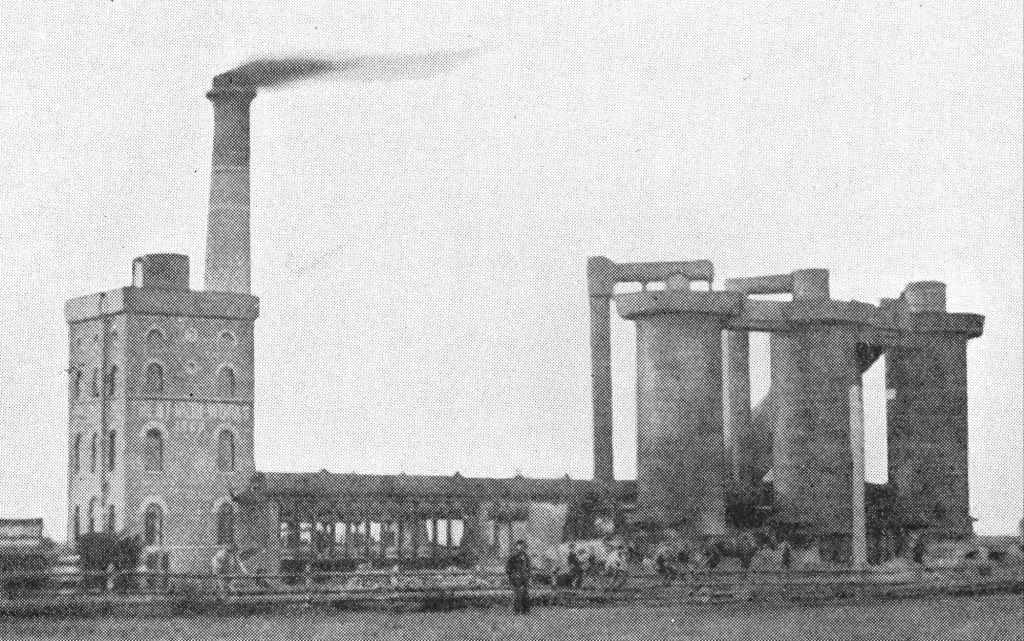
Elsecar and Hoyland as industrial showpieces for Chinese visitors – June 1875
An agent commissioned by the authorities in Shanghai was sent to Europe to look at industrial development and technologies which might be adopted in China. Of course why not stop off in South Yorkshire?
OPENING OUT OF EXTENSIVE COAL MINES IN CHINA.
During the present week, Wang-Ching-Yong, an Imperial Commisioner from China, visited the South Yorkshire colliery district, with a view of examining the most modern and powerful machinery used in drawing coal and carrying on the work in connection with large collieries. It appears that the Imperial Commissioner visited the district at the instance of the Chinese Government, who are about to open out some large coal-mines in that pountry. He was accompanied by John Bourne, Eq. C.E. of London, Consulting Engineer […]
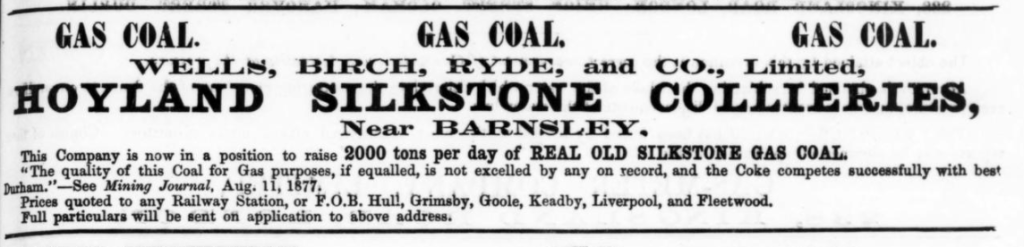
The party next visited the Milton Iron- works, belonging to Messrs. W H. and G. Dawes, where he inspected the blast furnaces and the other appliances used for producing finished iron. The next place visited was the Hoyland Silkstone Collieries, where he made a very minute inspection of the large and substantial surface plant which is being put down for working the Silkstone seam.
The Engineer, 14th June 1875
 Friends of Hemingfield Colliery