As part of celebrating 10 years of the Friends of Hemingfield Colliery in 2024, we will be sharing more of the history of the group as well as celebrating the transformational efforts of its members. What follows is the story of the rebirth of Pump House Cottage garden, achieved and sustained thanks to the efforts of volunteers on site, and to Jeff and Janet Petch in particular, to whom we are indebted for the following account.
Pump House Cottage
Following a successful bid to the National Lottery Heritage Fund in 2018, Pump House Cottage finally came into the hands of the Friends of Hemingfield Colliery in 2019. Along with it came the overgrown and neglected space which had previously formed a garden to this private house, converted from a engine house for a Cornish pumping engine of some 130HP which had lifted water from 156 yards below from around 1843 until c.1920.
Pre-history
First, some earlier glimpses. In August 1991 Steve Grudgings, who later became the founding Chairman of the Friends of Hemingfield Colliery, visited the Hemingfield pumping station and took some interesting images of the site, including a glimpse of the house, then a private residence. Russian vine covered much of the building, and its old wooden window frames peeked through before their later uPVC replacements appeared.

Jumping forward almost 25 years – we see an aerial view from March 2016, early spring. It shows Pump House Cottage, separated from the former pumping station by the dense privet hedge, but before greenery has completely overtaken the house once more.

By 2017, the garden in Pump House Cottage was beginning to look a little wild. The last tenant departed in that year and no further residents were to follow – unsurprising given the delapidation and water ingress in the house itself.

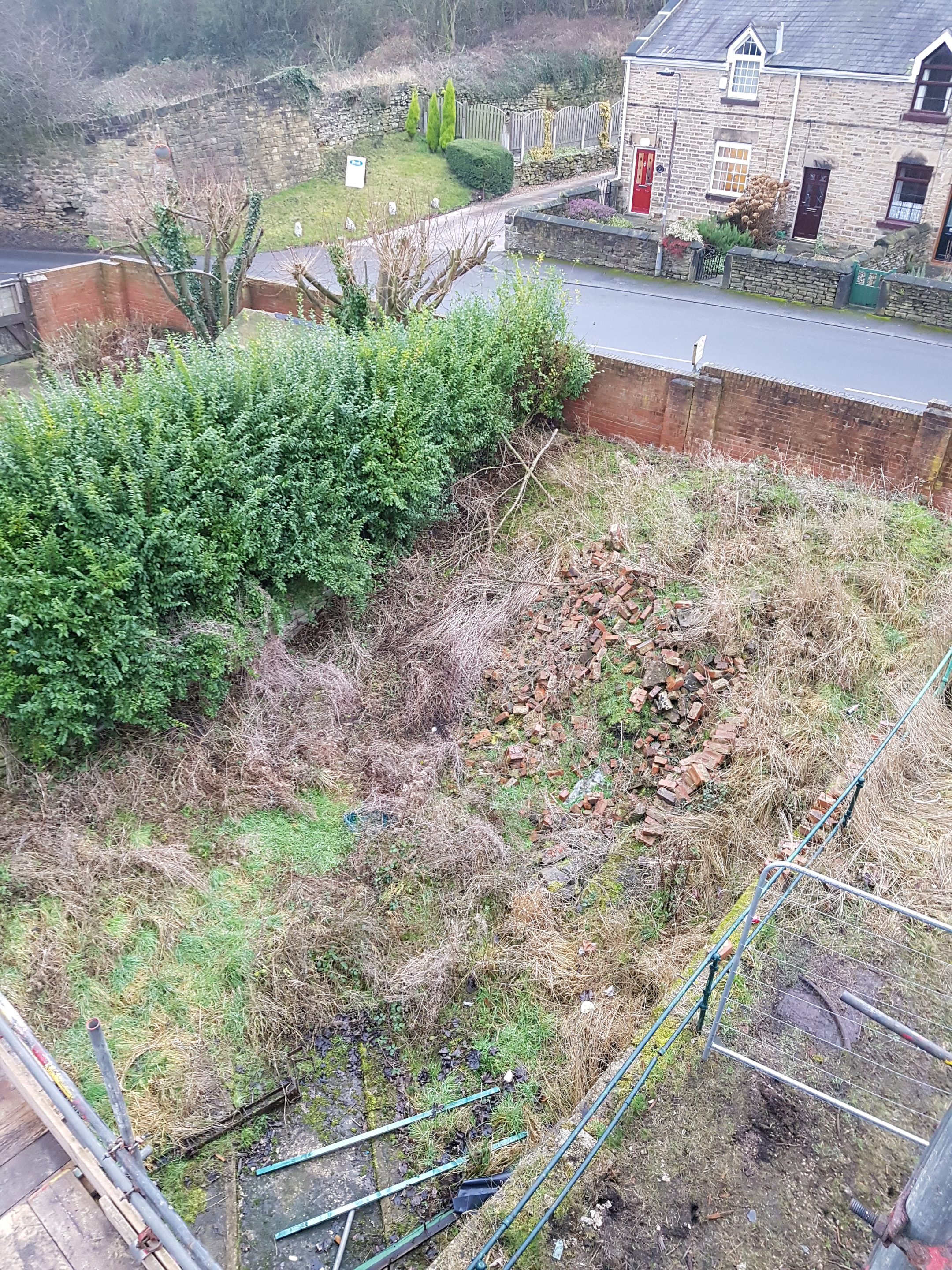
Viewed from the pumping station side, the two cherry trees peek over the the privet. Brick rubble from the demolished former boundary wall, brambles and dense undergrowth cover the foreground – the two sites of the old colliery remain physically divided.
Pre-emptive strikes
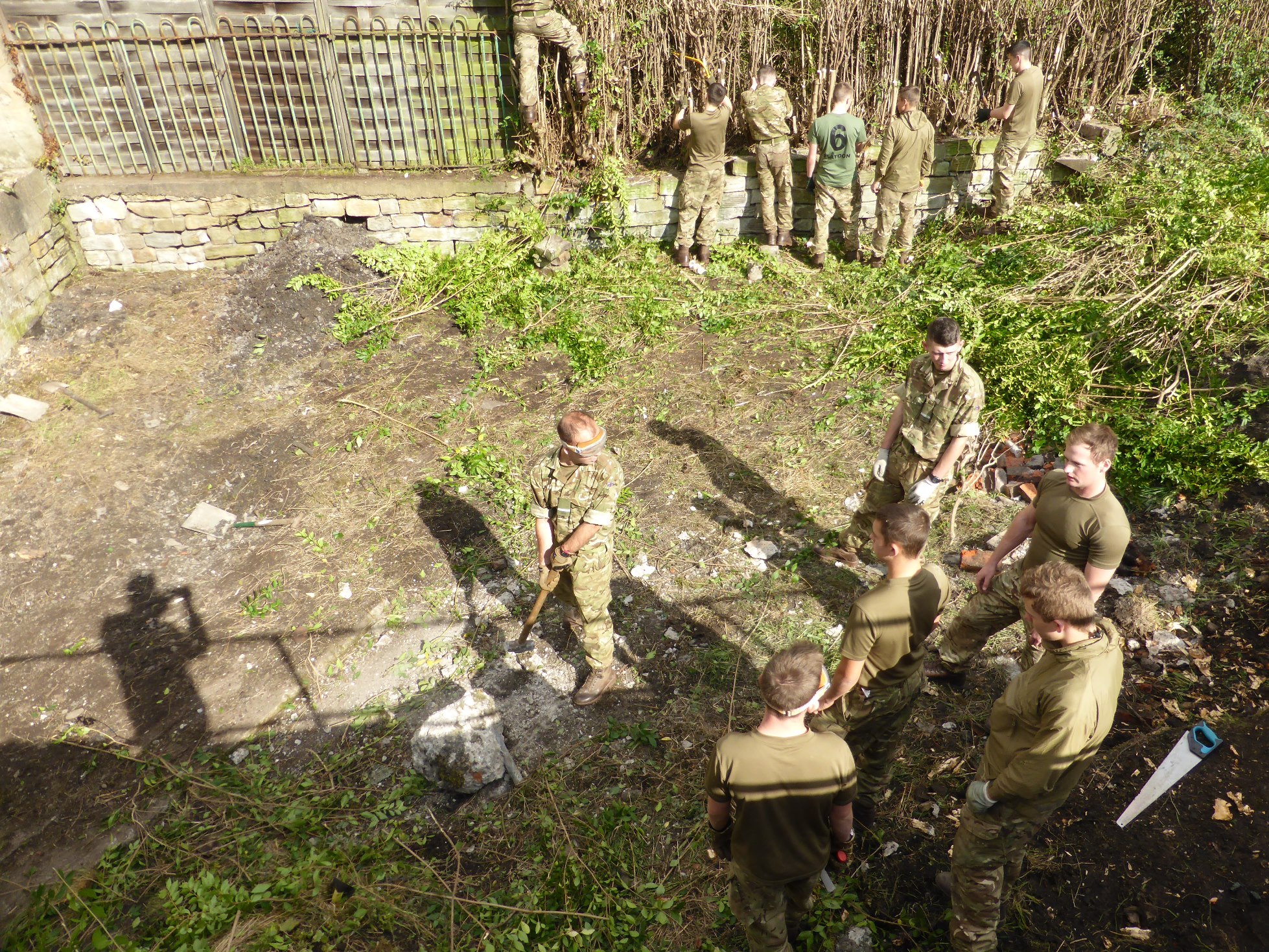
During this period, with Pump House Cottage empty, the Friends negotiated to do some limited improvement works – to take down the overgrown hedge, to keep the garden more tidy. On Saturday and Sunday 16-17th September 2017 junior soldiers from Waterloo Company, of the Army Foundation College at Harrogate provided many hands to make light work of the privet hedge.

After ‘opening up’ views of Pump House cottage, other activities on site (excavation, levelling and tidying elsewhere) took attention away from this area for a while in 2018 as proposals were made to acquire Pump House Cottage and ‘reunify’ the colliery site.
Clearing the way
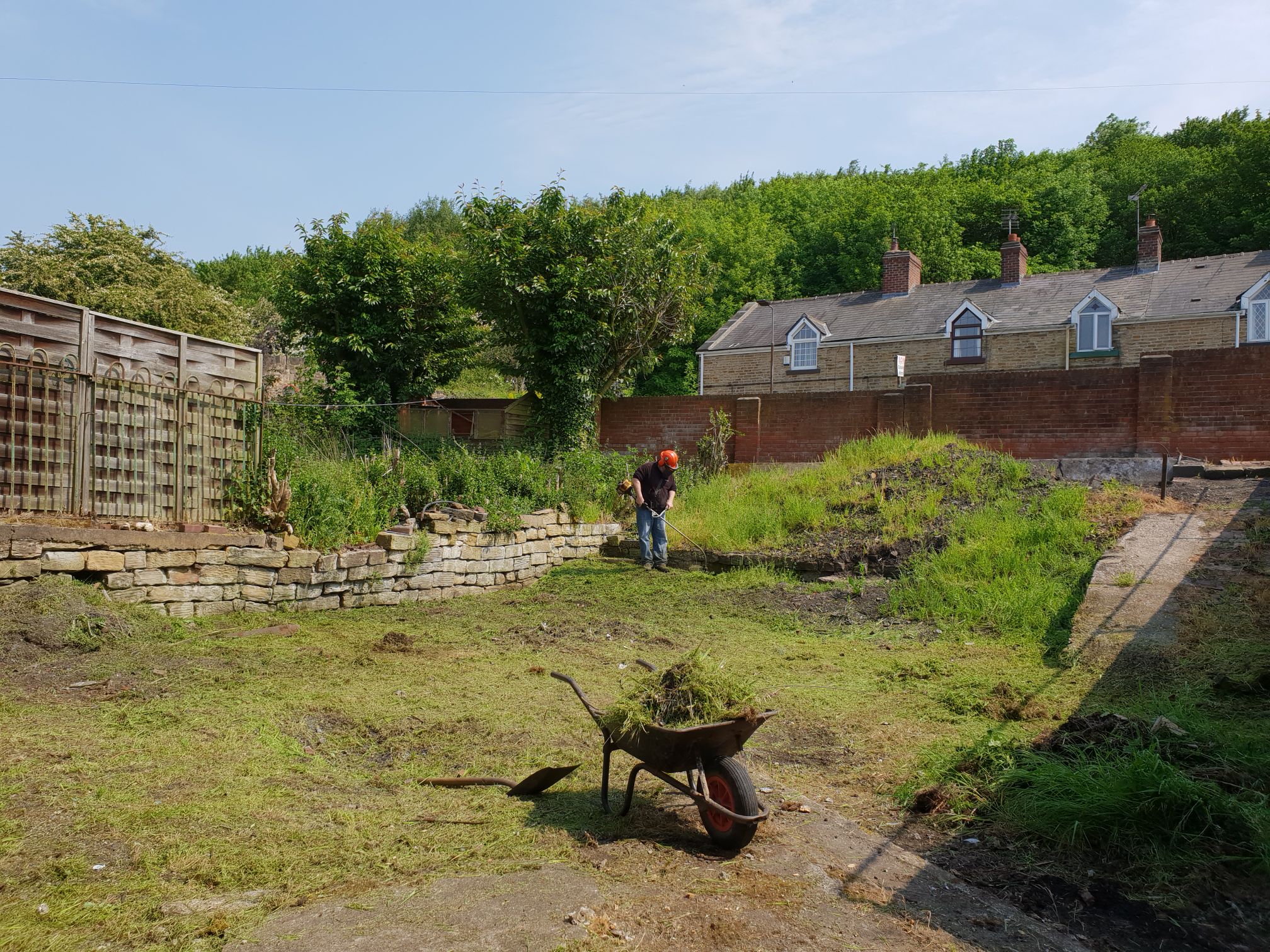
In April 2019, with the completion of the purchase of Pump House cottage approaching, work could really start on the garden proper. Starting from scratch, this is what we saw:


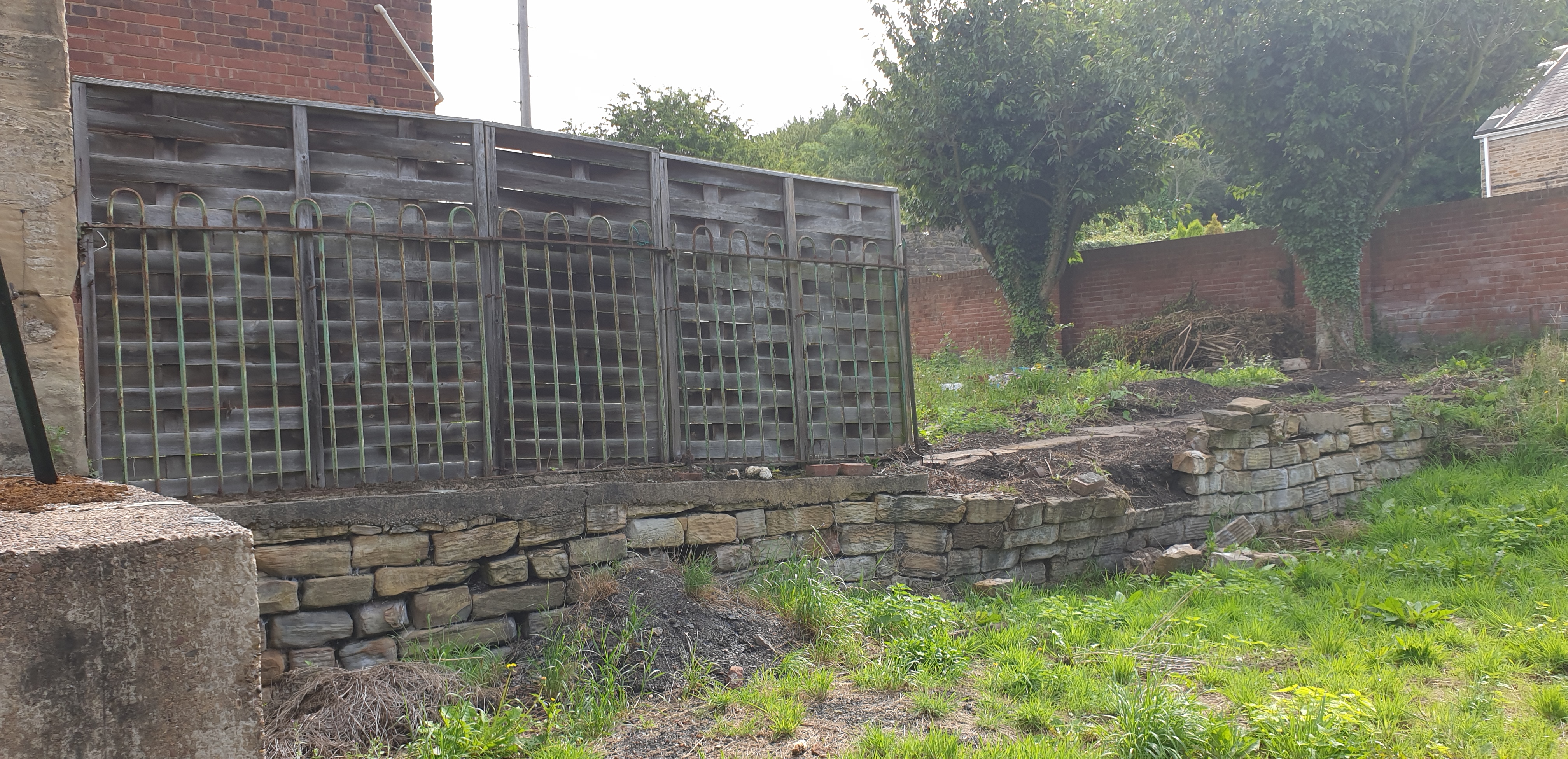
A period of stump removal then followed, with our resident root-extirpation expert John keen to dig, hack, lever and finally winch out the remnants:


Pandemic pauses
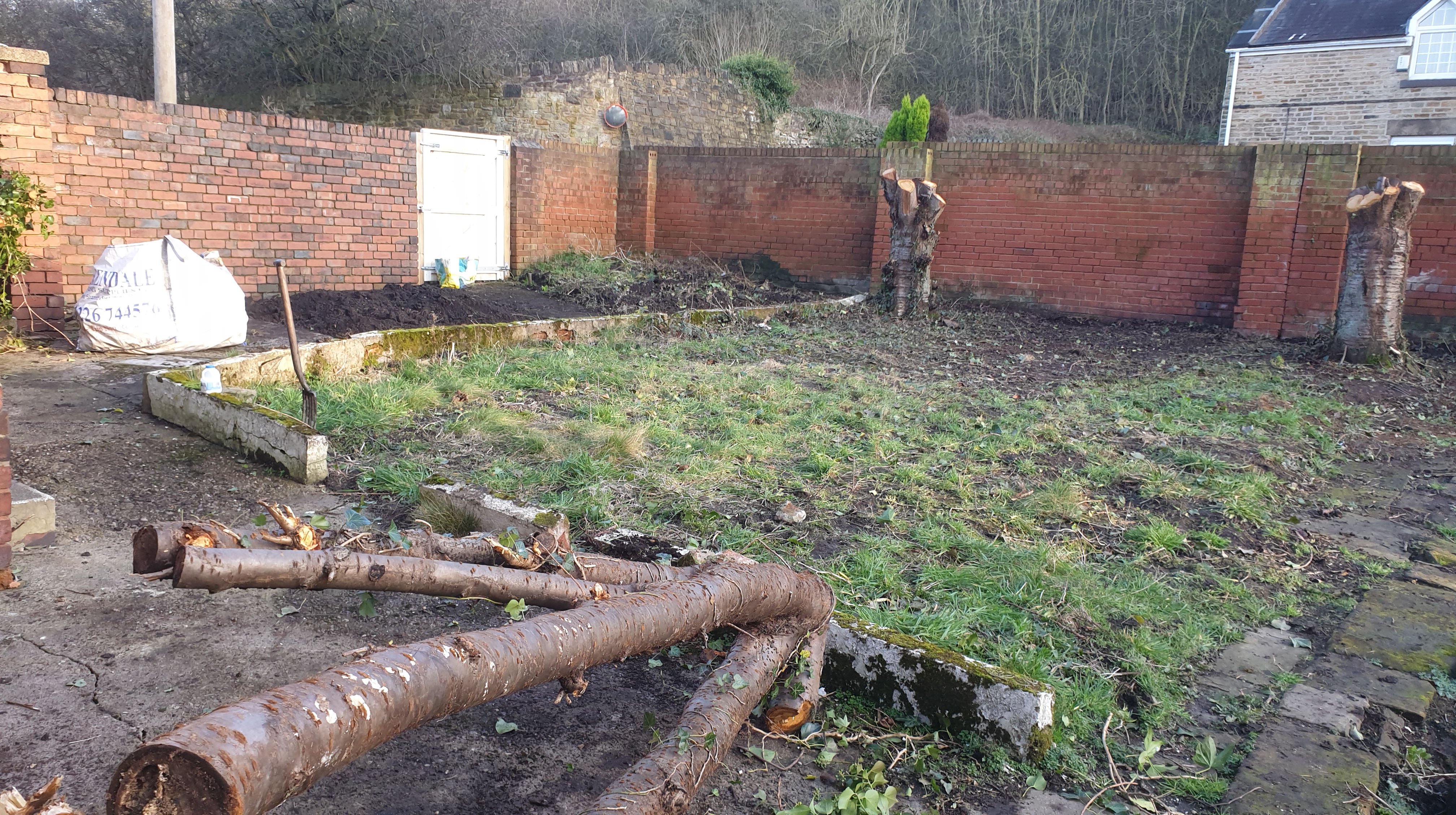
2020 began so well. Winter was the perfect time to cut back the two large cherry trees to open up the area around the front boundary wall.

But then, the Covid-19 global pandemic stepped in, and for a while things ground to a halt, at least until 2021.
New beginnings
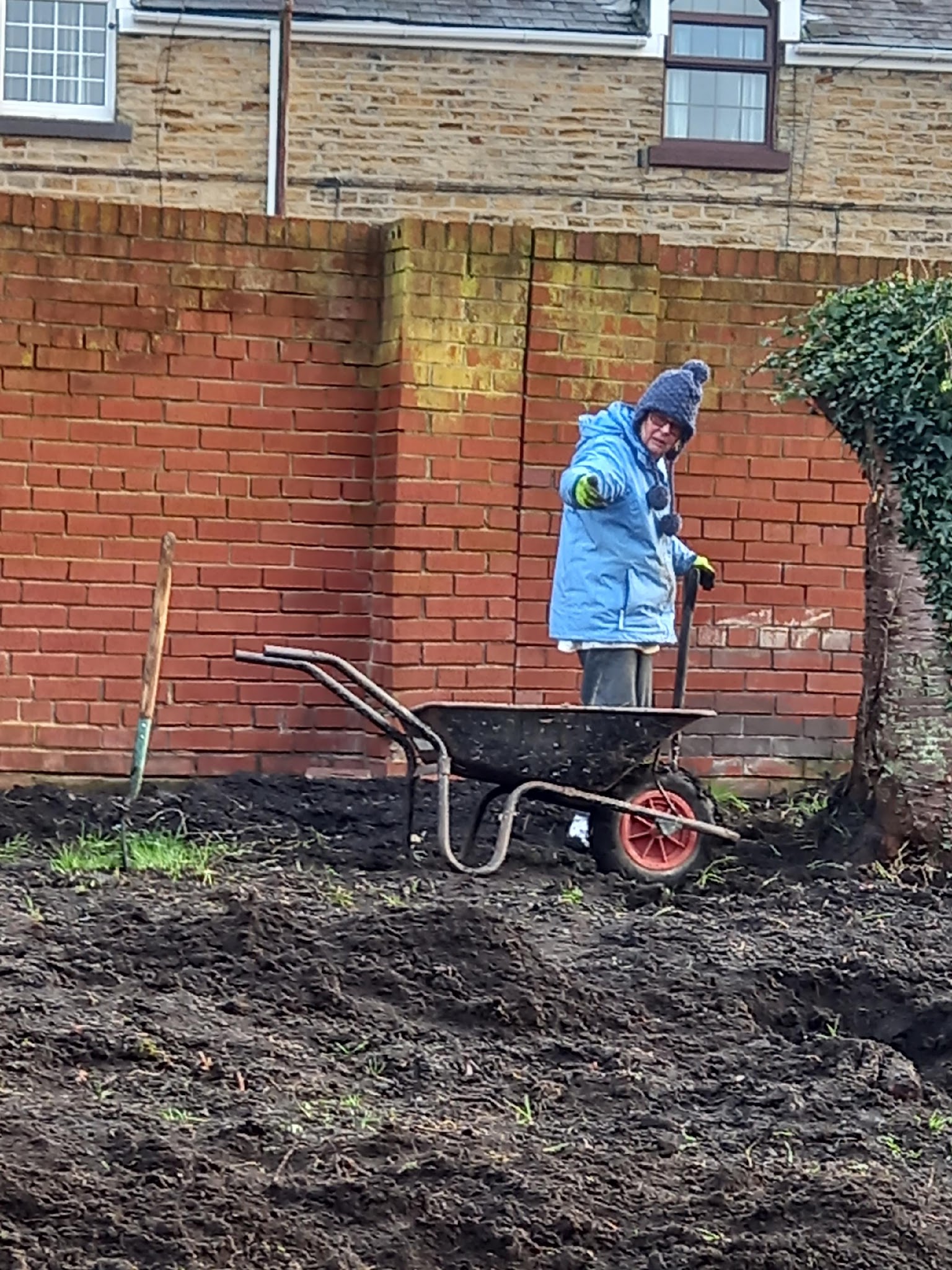
At the end of 2021 3 main areas of the garden were cleared of weeds and some new planting carried out – the first for very many years.

Week in and week out, the tireless efforts of volunteers to weed and maintain the developing garden become a weekly activity through all seasons – the most intense activity on site at any time since the Friends first secured the colliery in 2014.

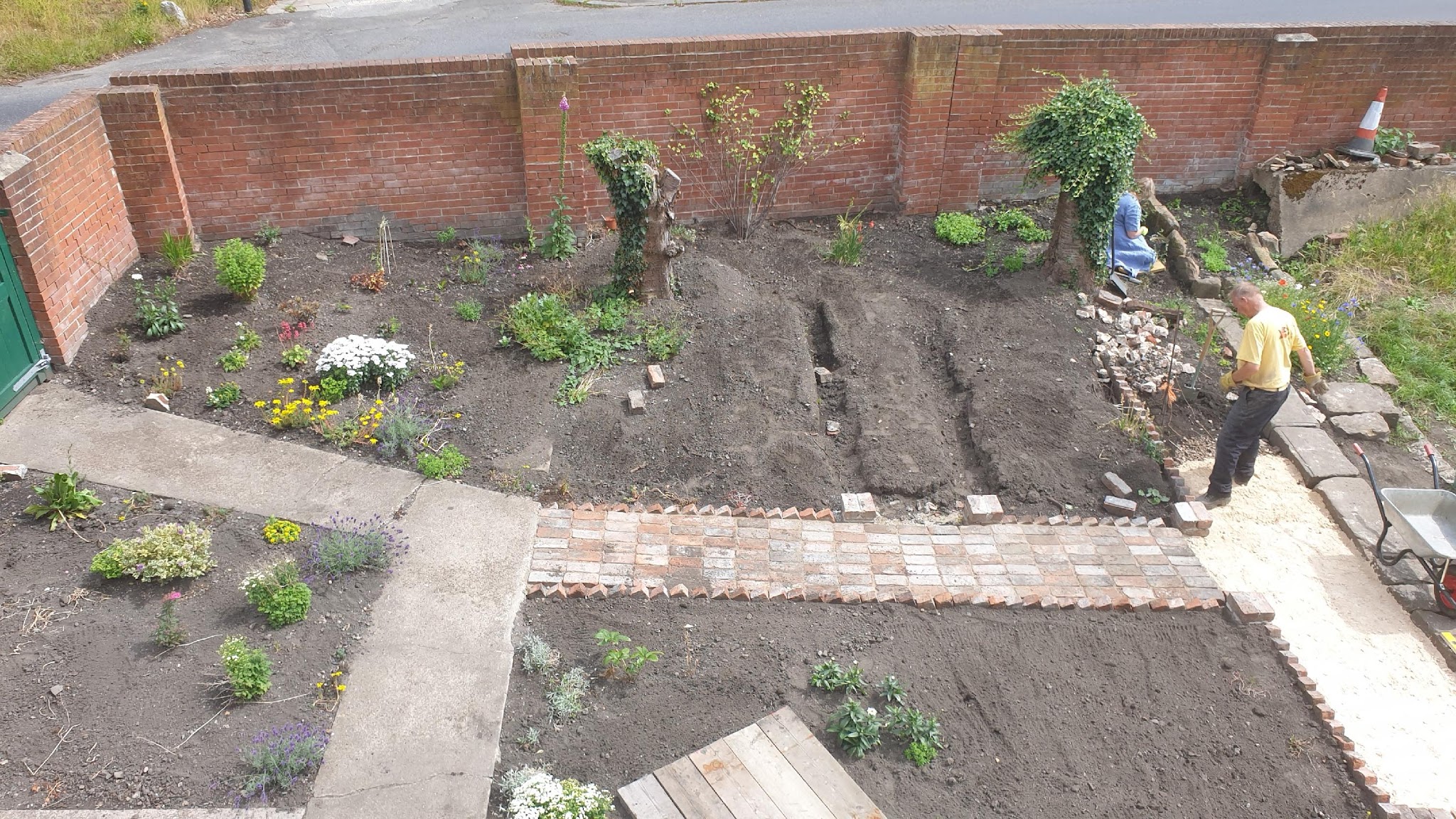

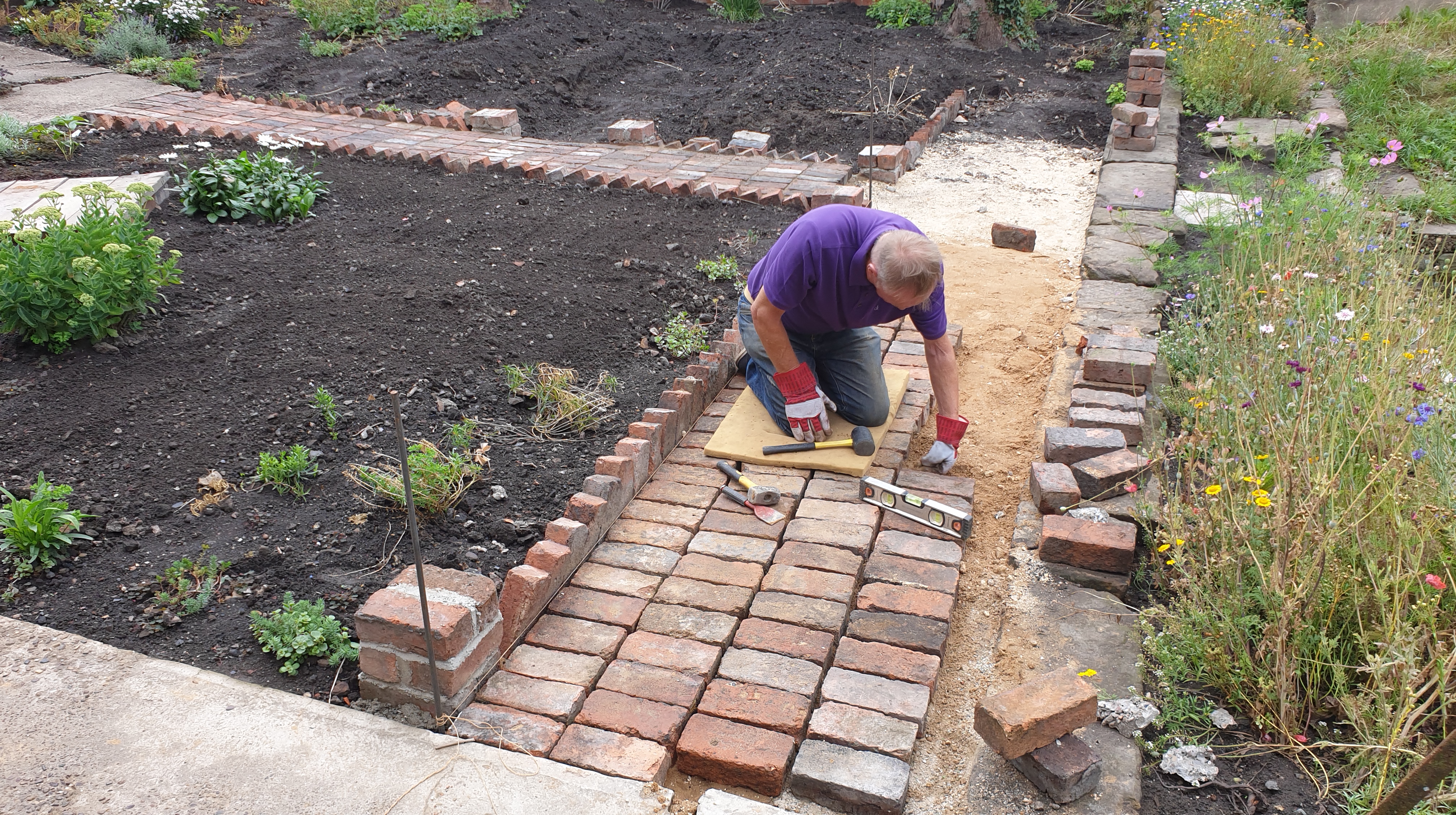


Planting
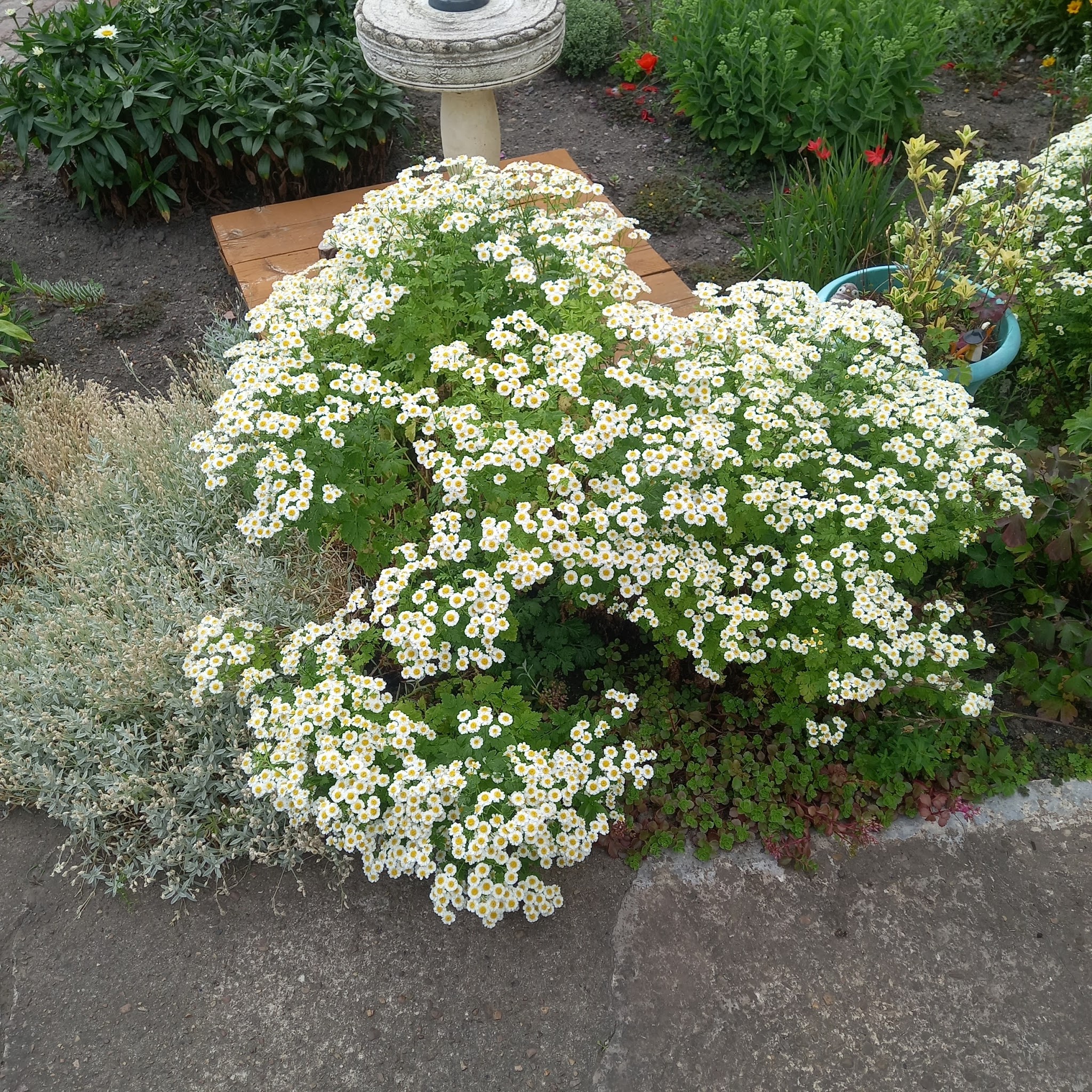
Zooming in, from the design and shape of the new garden, to the content – the plants and planting.


| Heathers | Shrubs | Perennials | Ground cover |
| Erica Summer Gold | Azalea | Bergenia | Various |
| Erica Eva Gold | Hebe Sutherlandii | Hellebores | |
| Rambling Rose American Pillar | Heuchera Palace Purple | ||
| Honeysuckle Red World | Campaula Alba | ||
| Cotoneaster | Phlox Mount Fugi | ||
| Leucanthemum | |||
| Penstemon | |||
| Aquilegia | |||
| Sedum |
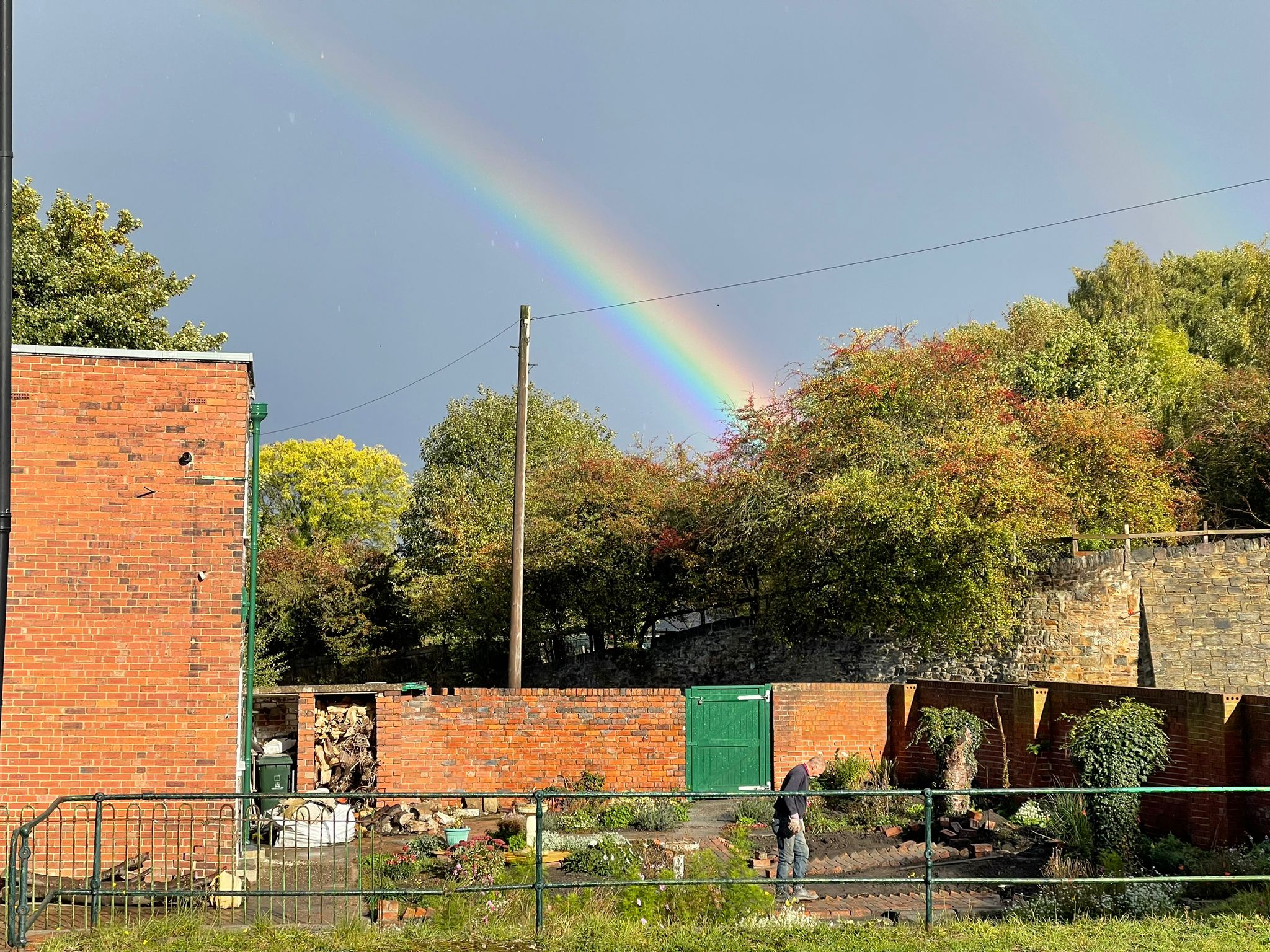
Pump House Cottage Garden reborn – 2023
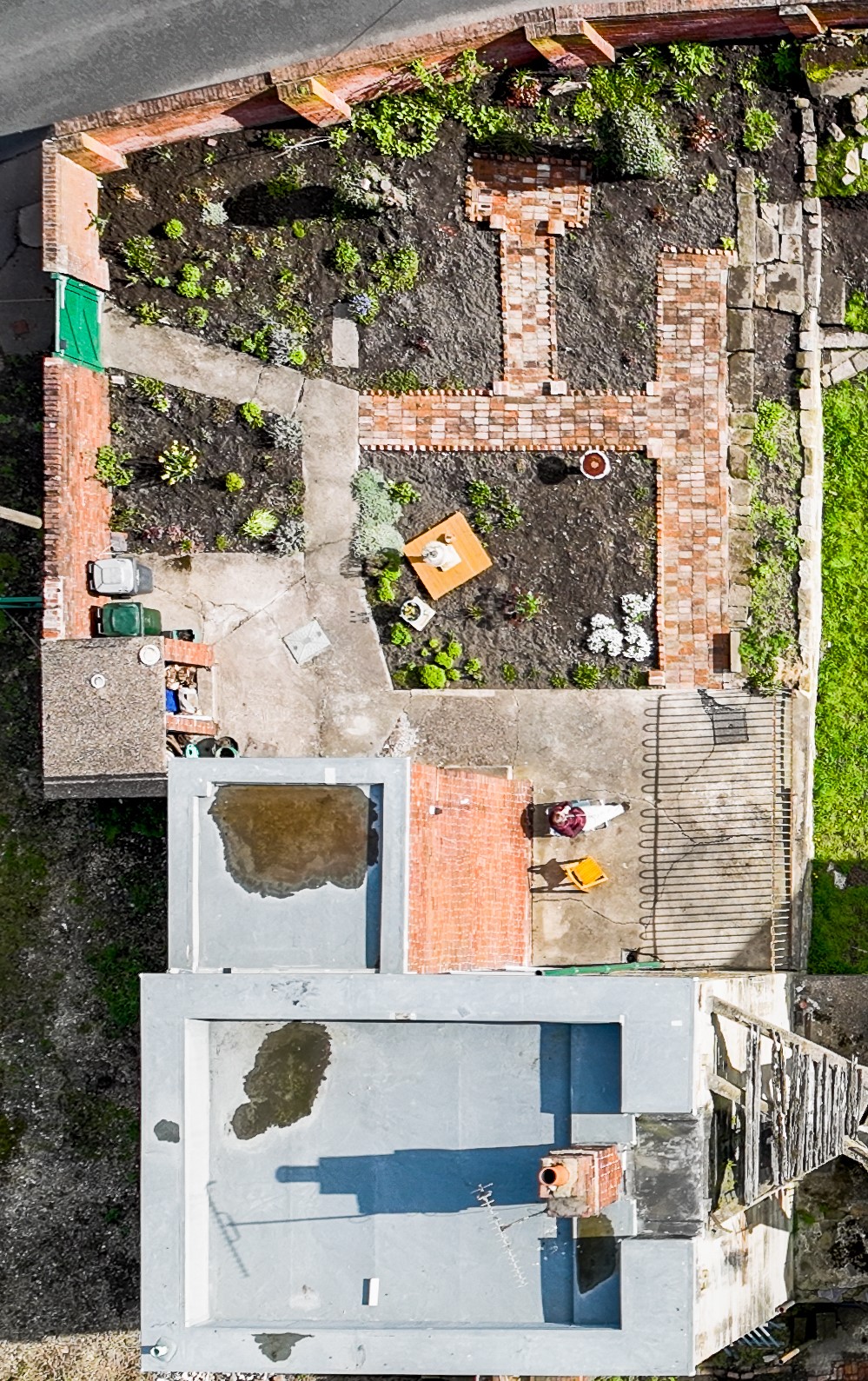
Summer 2023




 Friends of Hemingfield Colliery