
What a strange month. Changing climate or no, there was a distinct shortage of sunshine, and a more than moderate excess of the wet stuff. Summer struggled to poke through the weighty dark clouds, spreading only heavy downpours.
Glancing back in time, it sounded rather like the farmers’ lament from 1871:
The month of July has been extremely variable, with but little of real Midsummer weather in it. There has in fact been much of the cold and wet of April. The rain at first was welcome, being greatly needed; but it soon came in such quantities, and so frequently, that haymakers have had an unusually trying time, and but little has been gathered perfectly sweet and dry, while much has been discoloured and seriously damaged, with a good portion yet on the field.
The Farmer’s Magazine, July 1871, Vol XL, 3rd series, p.180
Making progress (when the sun shone)
With stop-start weather, the Friends fought a rearguard action throughout the month, bitting and batting with jobs onsite and outdoors. Of course the grass continued to grow and so we continued to mow between showers.

At the start of the month progress was made stripping down the rusted railings by Pump House Cottage, brushing back layers of flaky paint and oxidised metal to be able to repair the structure and start to prime it ready for a fresh coat of paint.

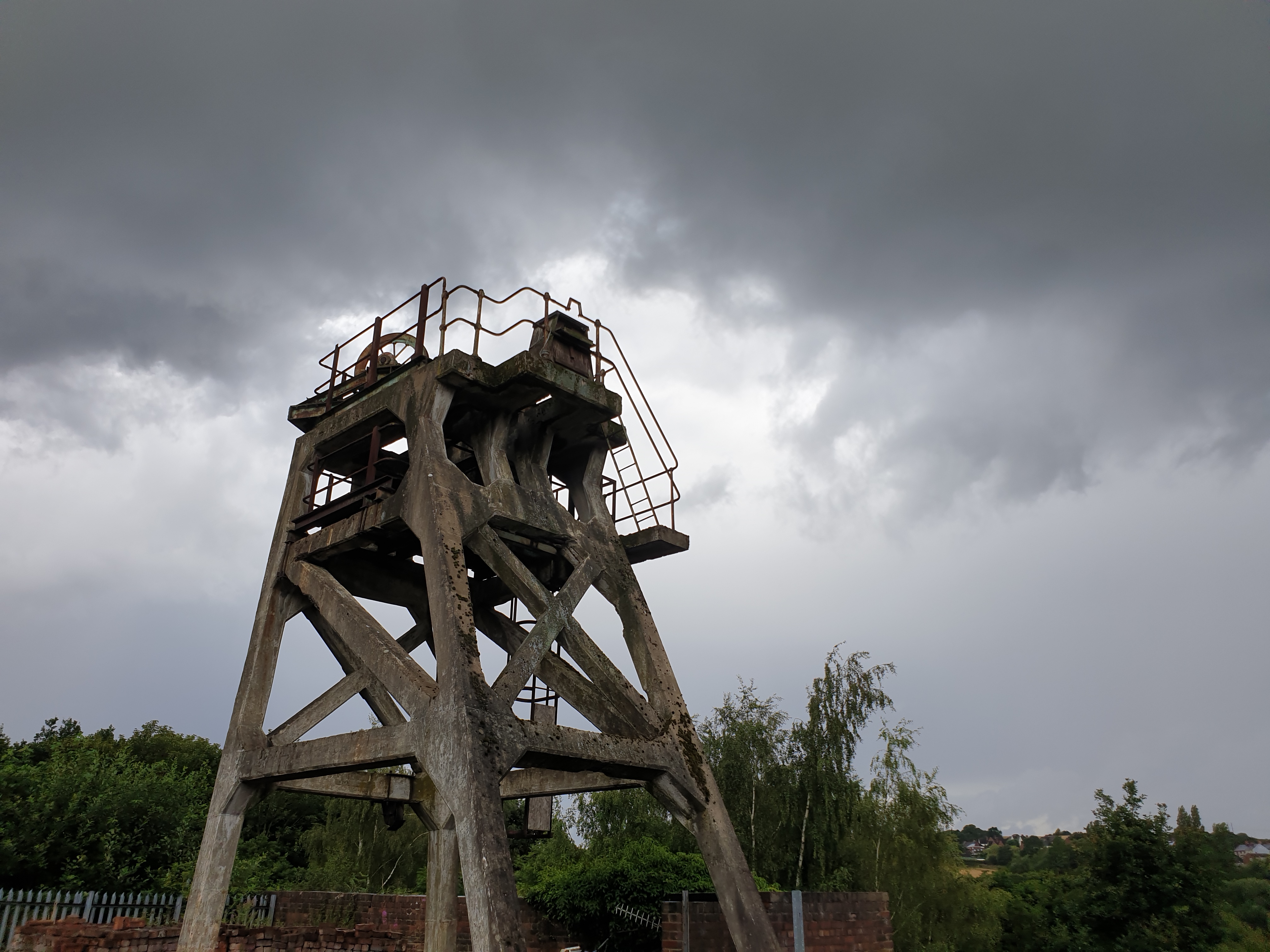
Meanwhile the site continued to share the magic of nature, with young sparrowhawks emerging into view on the main concrete headgear.

All eyes were turned up to view the cautious group of youngsters perching on the high beams.

Wall work
Despite the elements being against us most of the month, the hardy volumteers struck out on a campaign of further repairs on the rear retaining wall.
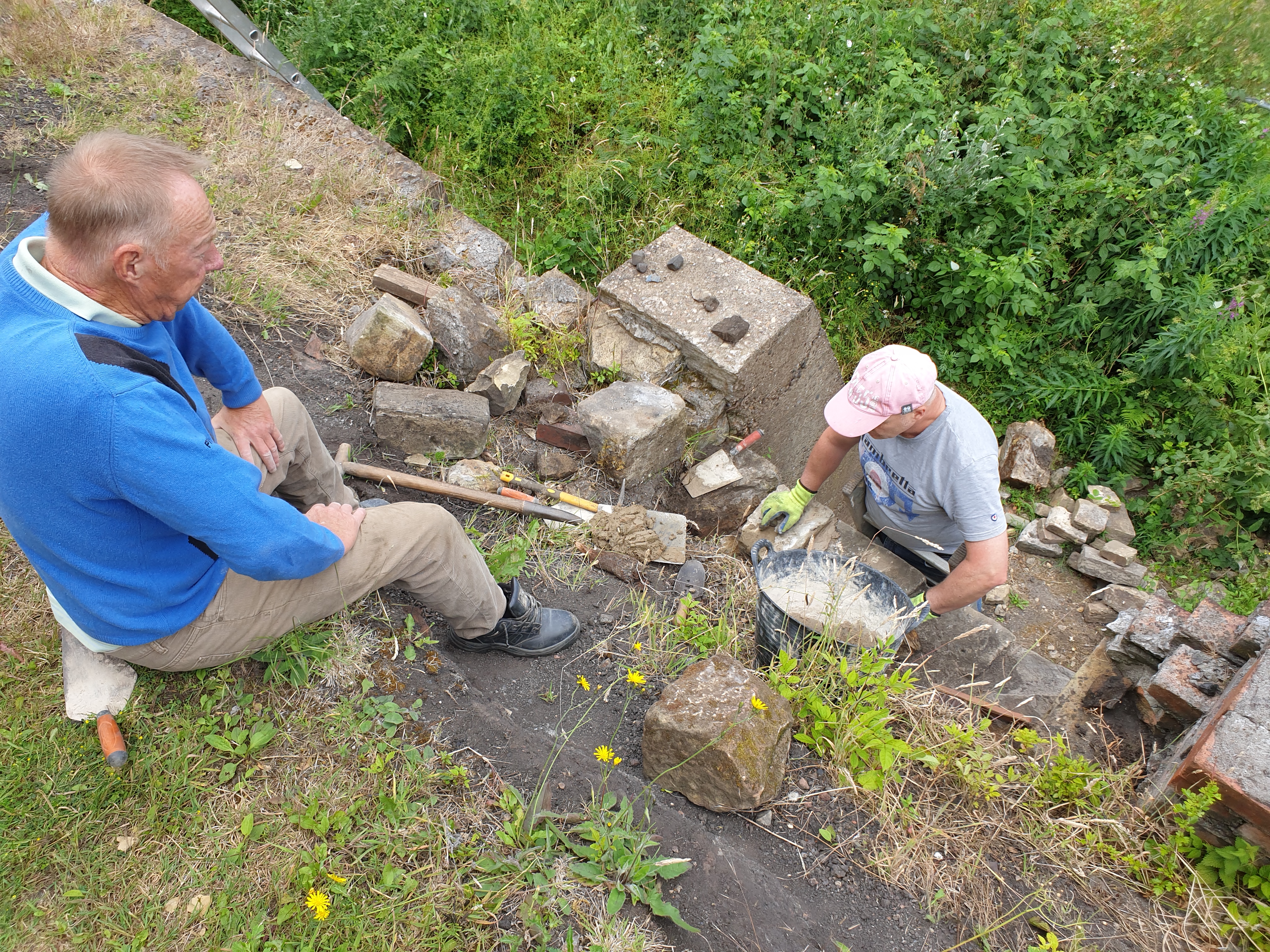
Patching up damaged stonework; removing shattered and collapsed sections is no small task. Finding stones to fill the gaps and slowly rebuilding and stabilising the whole face.

Oasis of calm
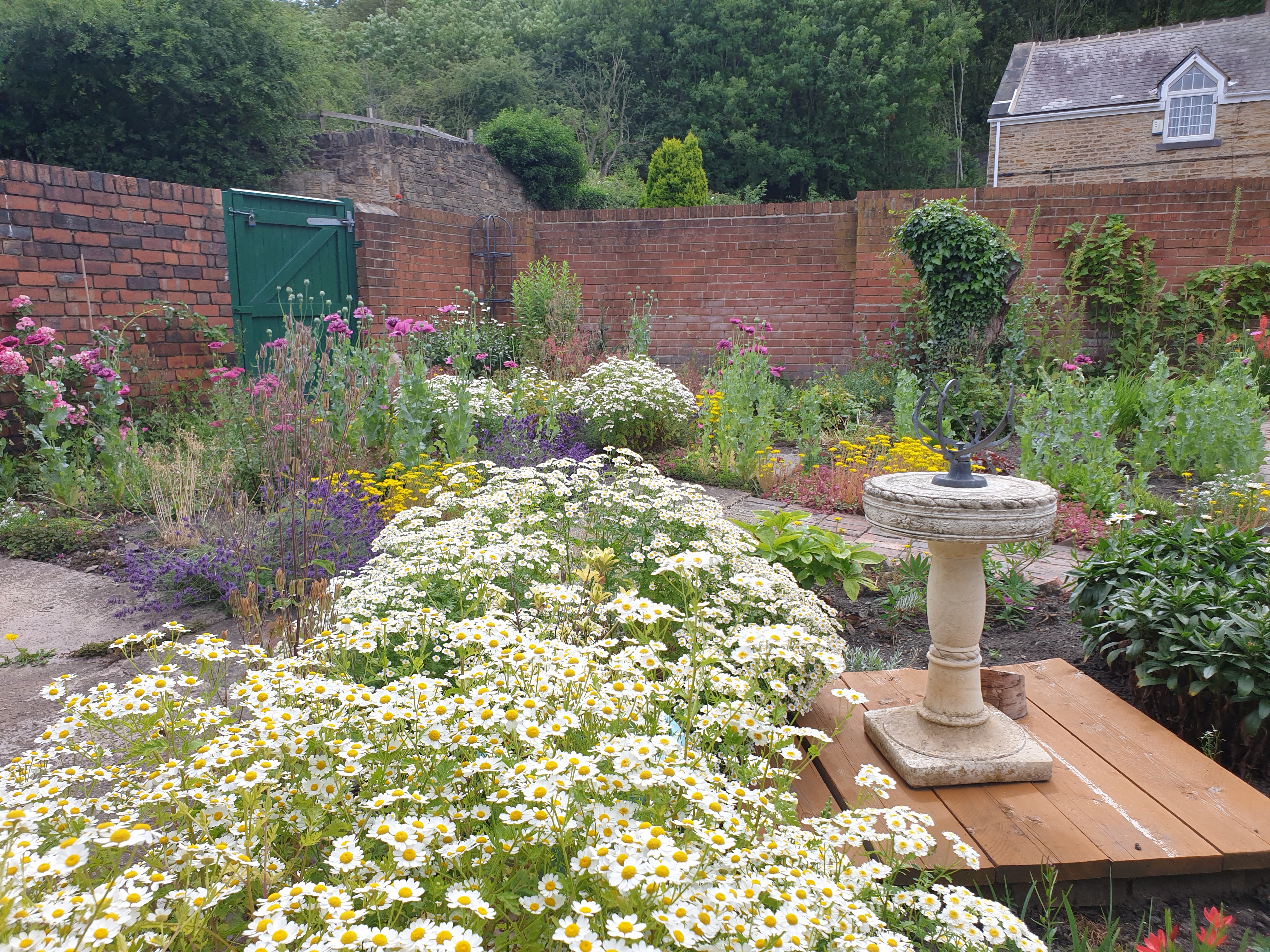
Amid it all, the haven of Pump House Cottage garden continued to flourish. Fed and watered both by the heavens above and our own volunteers’ almighty hands, this space brings joy in its details and the beauty of the flowers surprises at every turn.

Rain stopped play on several occasions during the month, and frustrated progress through what should have been warm temperate summertime working days.

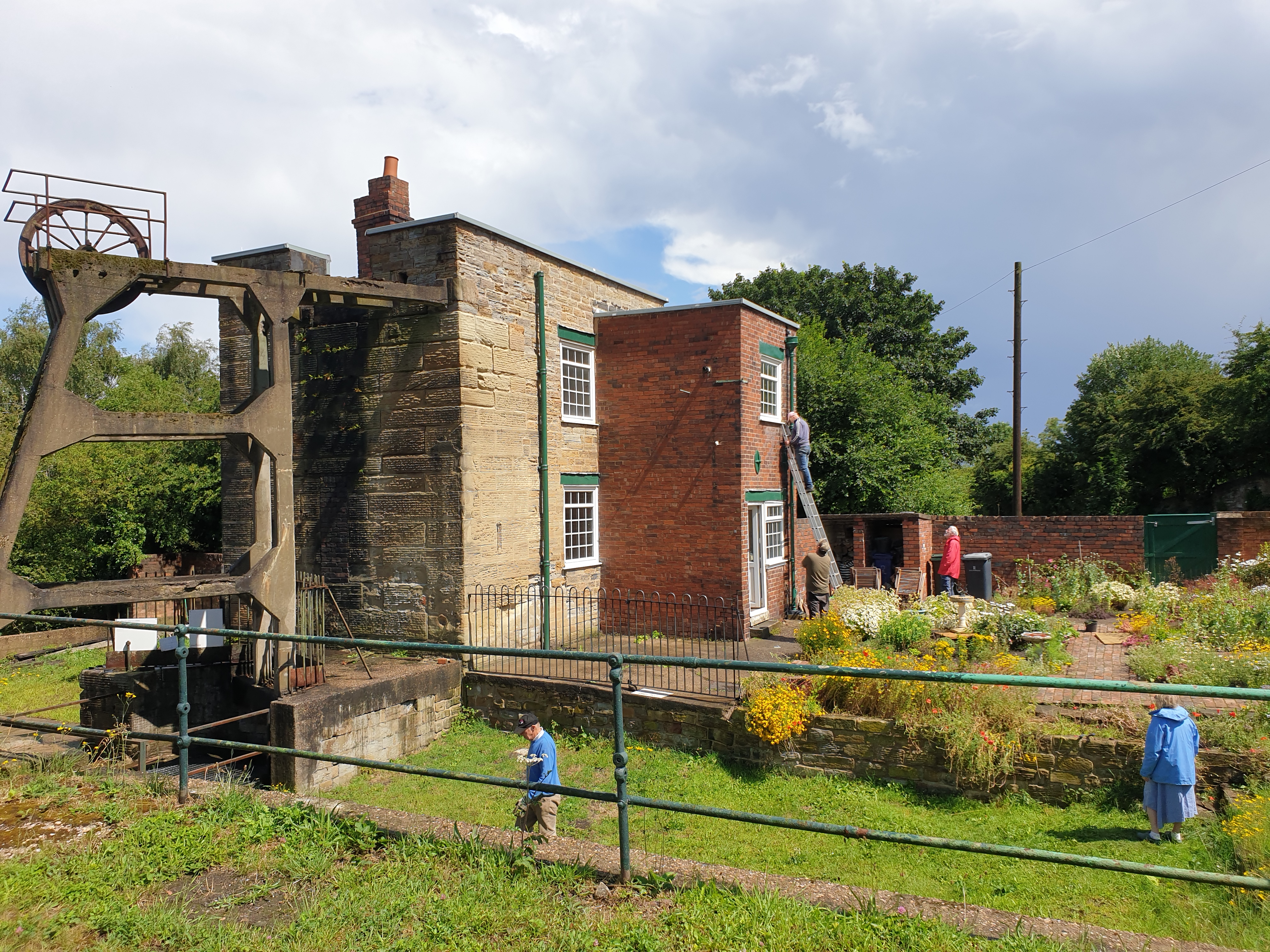
The sheer volume of water also pointed out the ongoing roof and drainage challenges we face at Pump House Cottage, as some water ingress caused additional damage.
Water water everywhere… but not in the canal
From too much water in July 2023, we step back to all too little of the wet stuff in July 1889, as 40,000 tons of coal per year were sent from Earl Fitzwilliam’s pits at Elsecar and Parkgate out along the Dearne and Dove Canal towards the Humber.
Long managed by the Manchester, Sheffield and Lincolnshire Railway Company, the canal had been somewhat run down. The Elsecar branch suffered from poor maintenance, such that the navigable depth of water was less than it should have been in order to keep the loaded boats afloat, and allow the traffic to pass up and down the canal.
William Arthur Durnford, commercial manager of Earl Fitzwilliam’s Collieries gave evidence to parliament on the problems of canal navigation 90 years on from the commencement of Elsecar’s link to the sea:
…these boats are quite incapable of going to sea; none of them have ever been near the Humber; they probably would not swim in any sort of weather. ..in no one instance have we been able to load a keel up to its full capacity.
W.A.Durnford evidence 29th July 1889, House of Commons. Minutes of Evidence taken before the HoC (Railway Bills, Group 8) on the Sheffield & South Yorkshire Navigation Bill
No wonder the railway out-carried the waterways at this time.
 Friends of Hemingfield Colliery
What a beautiful garden! You should be proud of yourselves!
LikeLike