November, the awkward month; no longer light, no proper time of day. The harbinger of winter gloom and colder comforts, but with festive frolics to follow. And yet, through it all, the volunteers’ job is never done. The Friends of Hemingfield Colliery are friends for all seasons!
Stamina and sunlight

The Friends of Hemingfield Colliery are particularly blessed with their regular volunteers. Hardy, good-humoured and highly adaptable, they regularly travel to site to get stuck in, whatever the weather (within reason!).
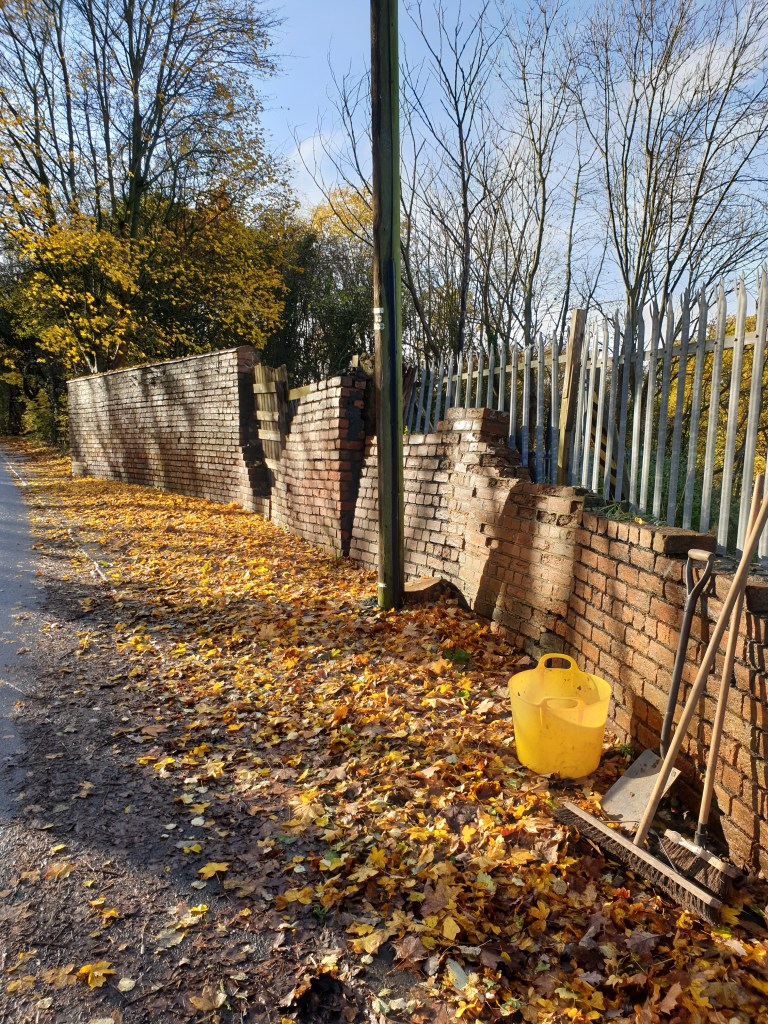
Not just with maintenance in mind, but to repair, restore and renew – ensuring the colliery is safe for future generations to visit and understand.
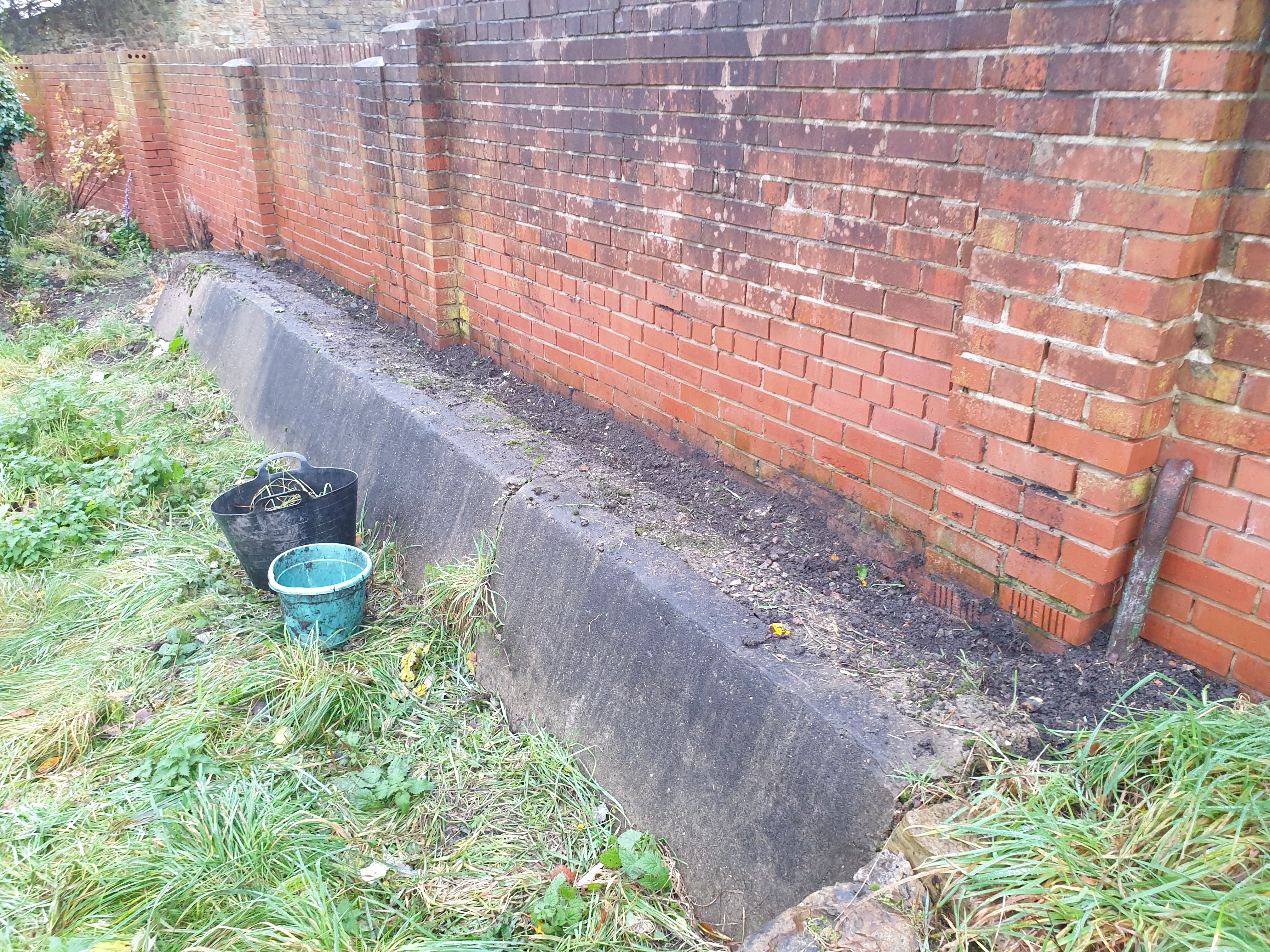
Nowhere is this commitment clearer than in how they nuture nature – the gardening and wildlife care activity on site. This is an important part of our work. One which brings not just increased biodiversity, but beauty and well-being throughout the year.
The changing sounds and colours through the seasons lift the spirits, even as flower-heads may shrivel and migrant birds fly to warmer climes. A figurative feast for the eyes and ears, and literally so for busy flocks of wild birds; rounds of robins, clouds of blackbirds, voleries of wagtails and banditries of bluetits descending on the feeder.
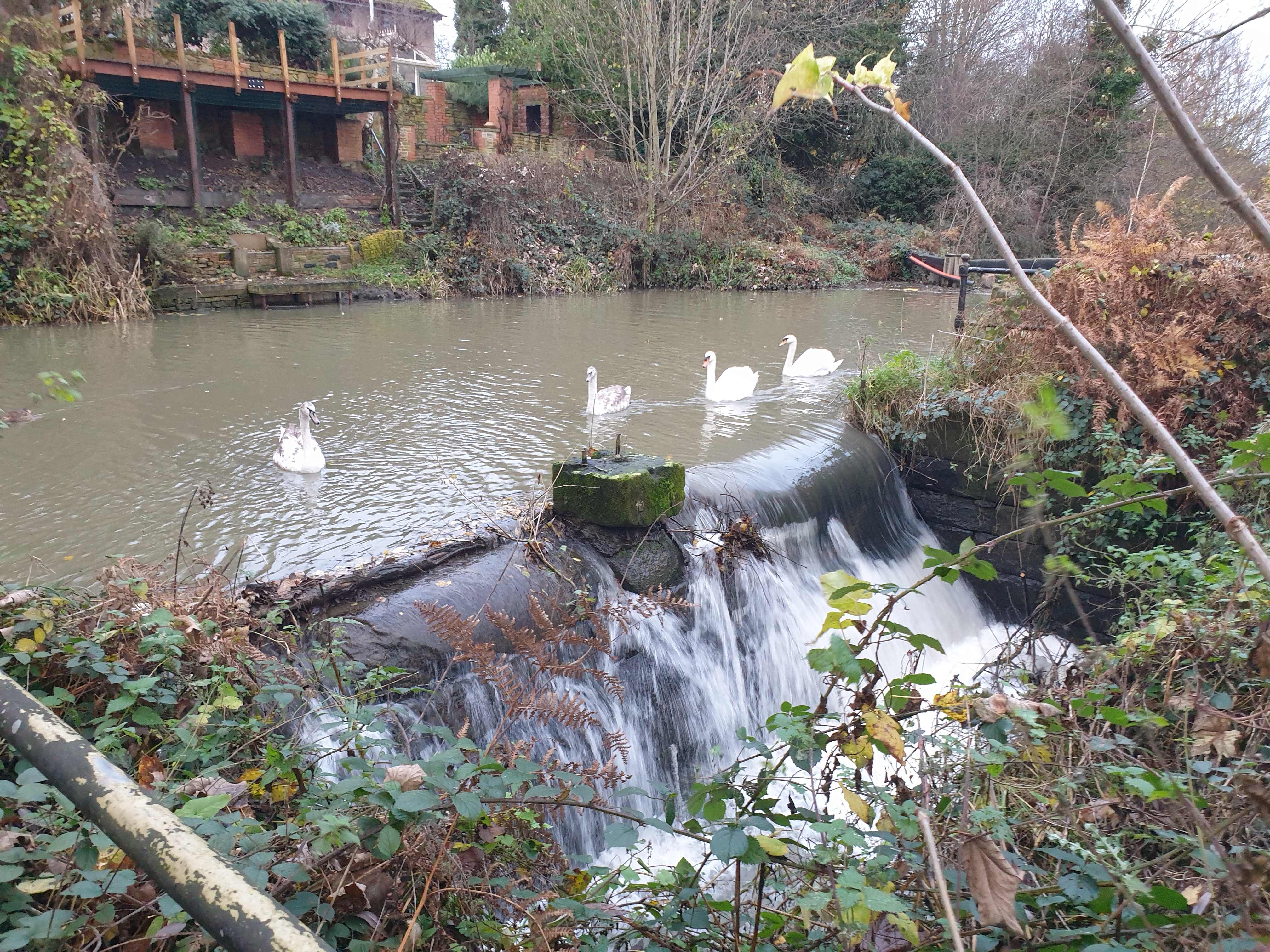
Damp Punks

Bad weather stole days from us in early November, so rear wall work was limited, but not brick reclamation, or mortar chipping.
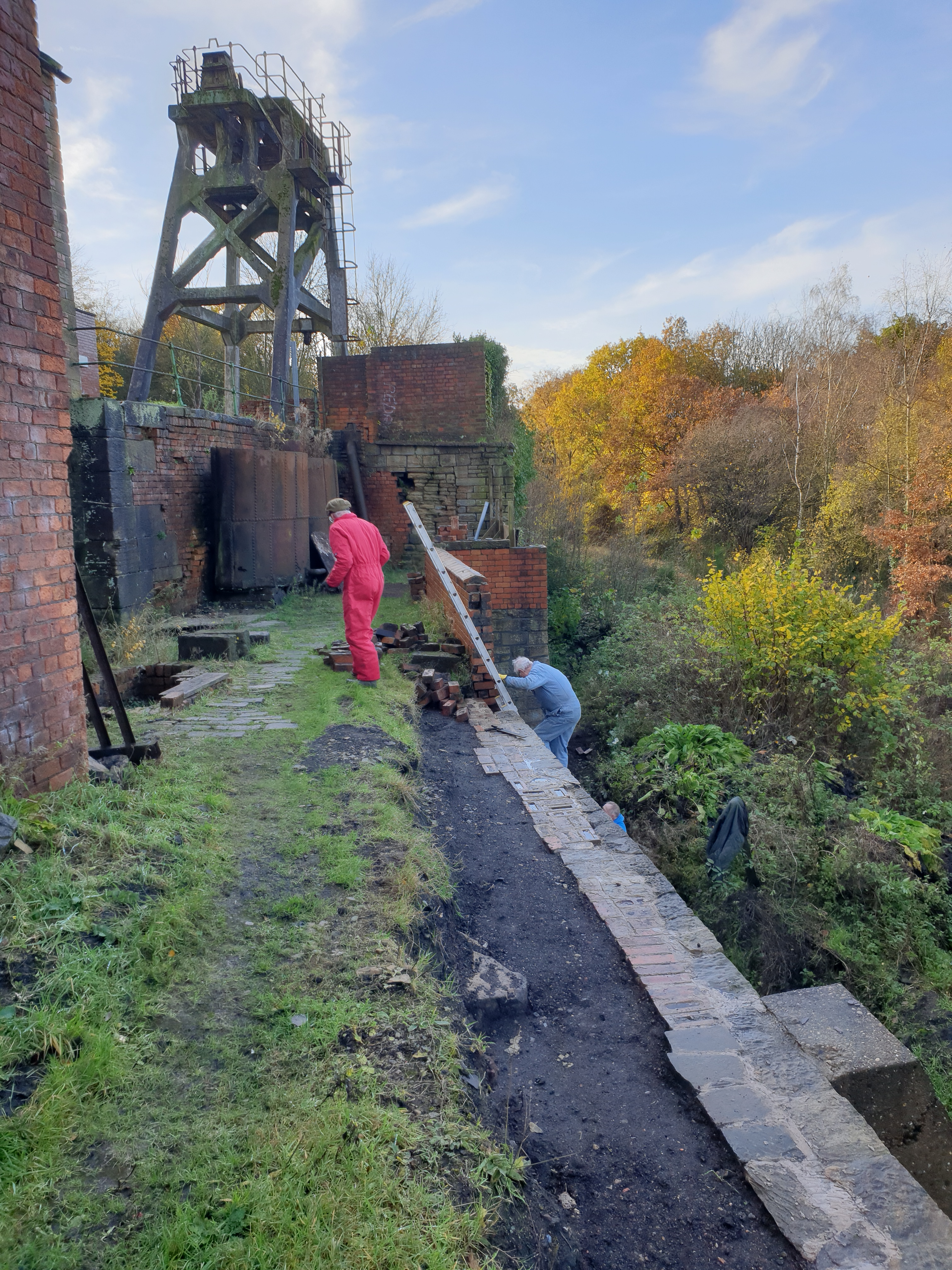
In the same working day we saw sunlight and downpours. Still sweeping, weeding, bird-feeding, brick-chipping and no shortage of good cheer continued.

Thanks-giving
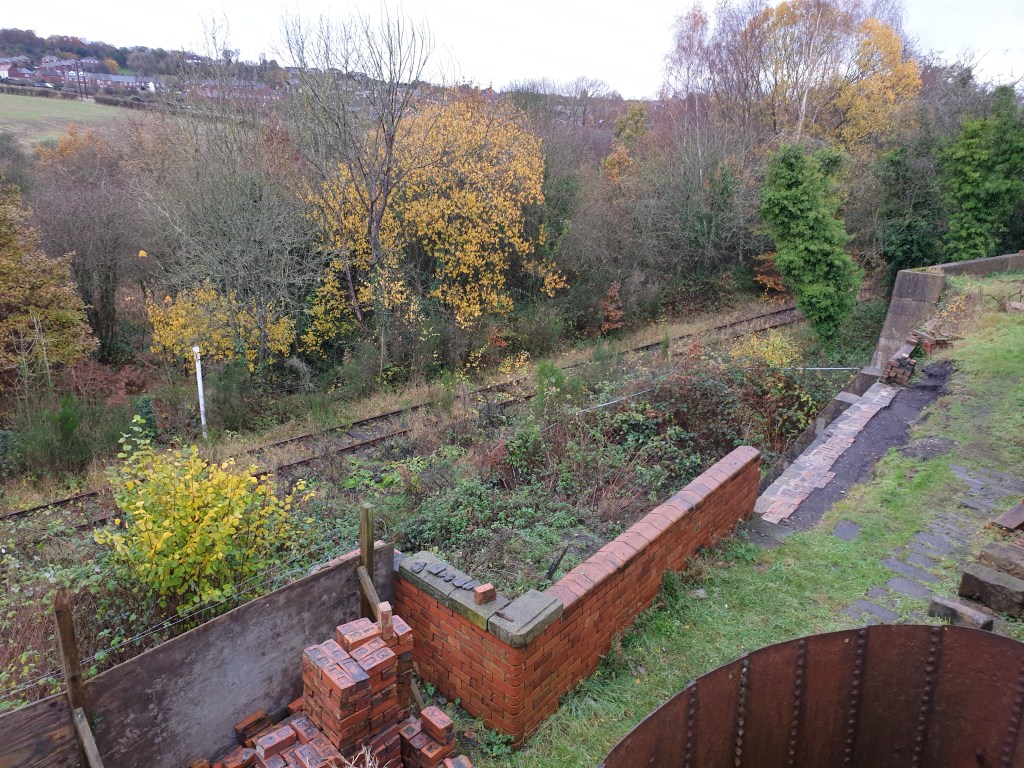
We were also pleased to welcome a group of visitors on 25th November who had an in-depth introduction to the site, its history, and surviving built archaeology. An inspiring visit for us too as it is easy to lose sight of the significance of the surviving structures as well as remind us that there are a lot of mysterious elements still to be explored (of which, more anon!).
We are grateful too to Barnsley Museums and the Elsecar Heritage Centre for the latest updates on their their exciting plans under the Forging Ahead and Building Bridges project work over the next year. Something we happily discussed by the fireside in Pump House Cottage.
Thanks, as always, must go to Janet, Jeff, John, Paul, Andy, Jamie, Paul, Mitch, Chris, Andy, Steve and Glen.
Remember Remember these days in November
Blasting off, November 1849
In November 1849 William Henry Dawes (1805-1878) an ironmaster from the firm of John Dawes & Sons in the West Midlands, and his brother George Dawes (1817-1888) were welcomed to Elsecar as saviours when they took possession of both the Milton & Elsecar Ironworks as tenants of the 5th Earl Fitzwilliam of Wentworth Woodhouse. Their lease, dating from 29th September 1849, was for 21 years initially.

In March 1850 W.H. & G. Dawes commenced a new partnership to run the works together. In addition to paying heavy deposits, minimum rental payments and fixed charges for coal and ironstone, there were large payments for the existing engines and machinery both at Milton (£8727) and Elsecar (£3266) works. In 1853 they signed a new lease, with reduced charges for coal and ironstone due to difficult trading conditions – a boon to them and bane to the Earl in later years.
Casting doubts – November 1854
In 1854 the Dawes brothers began extending their works at Elsecar, setting up facilities for a new forge and plate mill.

The 5th Earl Fitzwilliam was not impressed, instructing his Agent, William Newman to address the Dawes:
Letter dated 3rd November 1854, quoted from Earl Fitzwilliam’s steward, the solicitor William Newman to Messrs William Henry and George Dawes, partners and lessees of the Milton and Elsecar iron works. (Chancery action, 1861, D.73 Dawes vs Earl Fitzwilliam)Dear Sirs, Lord Fitzwilliam has stated to me that on his present visits to Elsecar his attention has been strongly attracted by the appearance of the new and extensive buildings upon your premises his Lordship observes that he has never been informed respecting the objects you have in view but that appearances indicate the probability of a considerable increase in the generation of smoke I have reason to believe that Lord Fitzwilliam contemplates sending a circular on this latter subject to all his lessees of minerals &c. but the particular object of this communication is to request that through me you will give him information respecting the nature and object of the erections which he has noticed.
Frictions increased in the later years, especially after the death of the 5th Earl Fitzwilliam in 1857. From 1860 the Dawes took on a combative air, bringing a claim for damages against the Earl for non-delivery of large quantities of ironstone to which they were technically entitled under their original lease. The Earl fought back, rescinding any and all liberties beyond his lease obligations, causing massive problems for the Dawes, as they complained in a further counter-action in June 1861:
“… the Earl has tried by all means in his power to embarrass the Plaintiffs in carrying on their said works and notwithstanding the covenants contained in the said lease for delivery of the coal at Elsecar and notwithstanding the uniform practice up to the commencement of the said dispute of the Defendant the Earl delivering the coal required by the Plaintiffs at the part of the works at which the same were required to be delivered by the Plaintiffs the Defendant the Earl on or about the 4th of June 1860 for the first time insisted that he was only bound according to the true construction of the said covenants to deliver coals to the Plaintiffs at Elsecar on the weighing machine at the top of the Furnace Hill…”
Bill of Complaint of Messrs Dawes against the 6th Earl Fitzwilliam (pictured)

The Dawes’ damages claim due to breach of covenant was scheduled to be heard at the Liverpool Summer Assizes of August 1860. The action was not tried, being referred by consent to the arbitration and award of John Thomas Woodhouse, a noted mining and civil engineer of Overseal. He awarded the plaintiffs £14,436 on the damages against the Earl, and awarded the defendant £4,367 against the Dawes on a counter-claim on the coal supplied from Earl Fitzwilliam’s collieries. Relations calmed, and the works as well as the Earl’s pits prospered in the following decade, although the iron trade began to struggle from the growth of foreign competition and the rise of Bessemer steel.
Calling time – November 1880
On 29th November 1880, a cold Monday evening, a very large gathering of 700 people assembled at the Market Hall, Elsecar (now Milton Hall) and enjoyed a tea provided by Mr William Hutchinson (1824-1895), confectioner, of Elsecar.

The occasion was a testimonial presentation to George Dawes whose time at Elsecar was drawing to a close. In the chair was Reverend Henry Townsend Sale (1859-1910), vicar of St Peter’s Church, Hoyland Nether. The meeting was introduced with musical honours from Tom Bennett’s band of instrumentalists:
The Vicar honoured Dawes’s contribution to the area, and commended Messrs Henry Proctor, James Wadsworth, and James Hanson, local tradesmen and property owners who organised the local testimonial collection and arrangements. Their original circular spoke for itself:-
“The tradesmen and owners of property in Hoyland Nether and the surrounding neighbourhood, having heard with feelings of the deepest relief that the gloomy prospect of the stoppage of the iron trade here, with its consequent privations and hardships, has been dispelled by the joyful intelligence of the continuance of Mr. Dawes’s connection with, and management of the Milton and Elsecar Iron Works, feel this to be a fit and proper time to express their appreciation of the character of Mr. Dawes, and of the benefits which the neighbourhood has received from his management and development of these same Iron Works. A preliminary meeting of the tradesman and owners of property has already been held, and a suggestion made, that perhaps the best and most agreeable way of shewing the gratitude of the neighbourhood for what Mr. Dawes has done, and what he may still be spared to do, would be to present him with a painting of himself, in oil, by some eminent artist – a painting worthy to be handed down among his relations for generations to come. It is intended to raise the funds for this object by contributions from tradesmen and owners of property in the vicinity of the works, and from the workman employed by Mr. Dawes.”
Barnsley Chronicle, Sat 13th December 1879, p.8
The finished portrait, painted by established Sheffield portraitist Richard Smith (1818-1890), was formally presented to George Dawes.
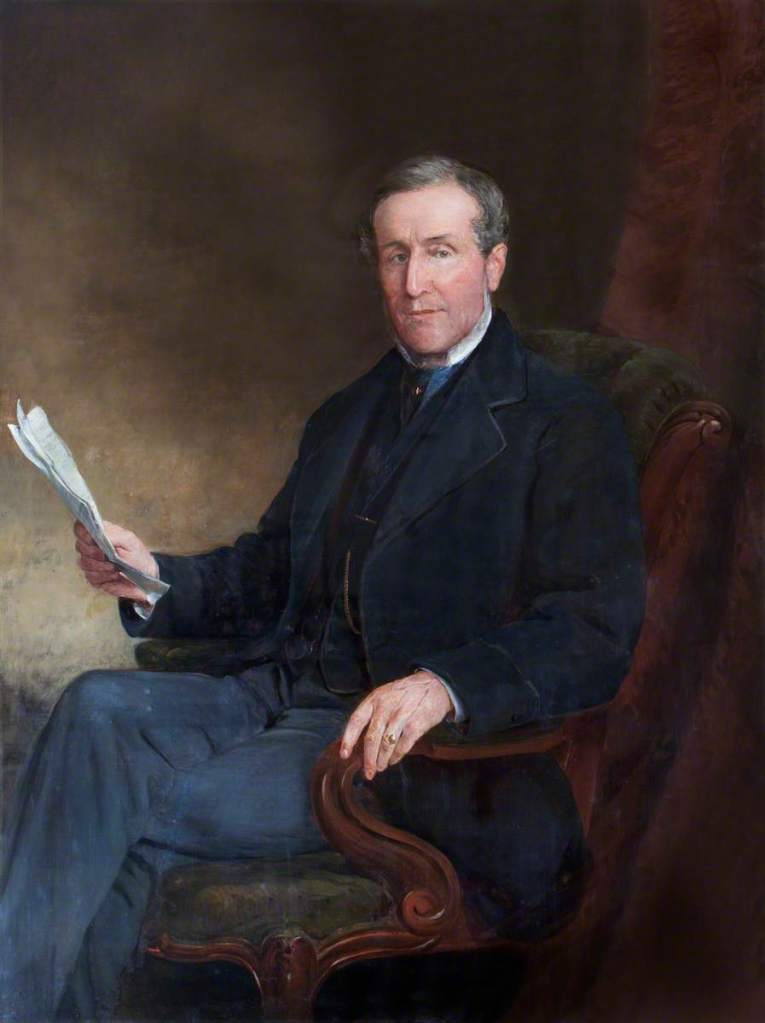
For his part, George Dawes was grateful, but rather blunt:

”There are many here who will say, “You know he has a bad temper.” So he has. He admits it. I should like to know – if I were a Job – if there were a Job on earth now, if his temper would not be ruffled if he were connected with the iron trade. I have a bad temper I admit, but I bear no malice. It is very easily roused, but it is very soon done with. Well now, gentlemen, I must just say that no testimonial you could have given me could have pleased me better than putting this physiognomy of mine before me.”
George Dawes speaking at his testimonial, 29th Nov 1880, reported in the Barnsley Chronicle, 4 December 1880, p.3
Out of blast – November 1885
On the 5th November 1885, the Honorable Admiral George Henry Douglas (1821-1905), Agent to the 6th Earl Fitzwilliam (1815-1902) wrote to the Editor of the Barnsley Chronicle to dispel some rumours of what had happened since 1880 with the closure of Milton and Elsecar Iron Works and the departure of the Dawes.
… I think it right to state that at the time of Mr. Dawes’ lease expiring in 1879 every endeavour was made to re-let the works, and, amongst others, Messrs. Newton and Chambers were invited to take them, but, after inspection and due consideration, they declined, stating that they could not be worked to advantage.
Letters to the Editor, Barnsley Chronicle, 7th November 1885
No distinct offer was made to either Earl Fitzwilliam or myself, and no terms were ever suggested or discussed.
With a view to enabling Mr. Dawes to find a successor, Earl Fitzwilliam allowed him to continue to hold the works on a yearly tenancy after his lease expired in Dec. 1879; but as at mid-summer, 1884, there appeared no prospect of re-letting, Mr. Dawes gave notice to give up the works, and Lord Fitzwilliam reluctantly came to the conclusion that they had better be dismantled.
I am, sir,
Yours faithfully,
G.H. Douglas
Estate Offices,
Wentworth Woodhouse,
Rotherham 5th Nov. 1885.
 Friends of Hemingfield Colliery