
Saturday 17th August, the Friends of Hemingfield Colliery head down to site, unawares: the forecast fibbed. Early in the day at least, with a downpour catching out many a shorts-clad fun-seeker from Sheffield to Barnsley.
People associated with the site and its history.
Saturday 17th August, the Friends of Hemingfield Colliery head down to site, unawares: the forecast fibbed. Early in the day at least, with a downpour catching out many a shorts-clad fun-seeker from Sheffield to Barnsley.
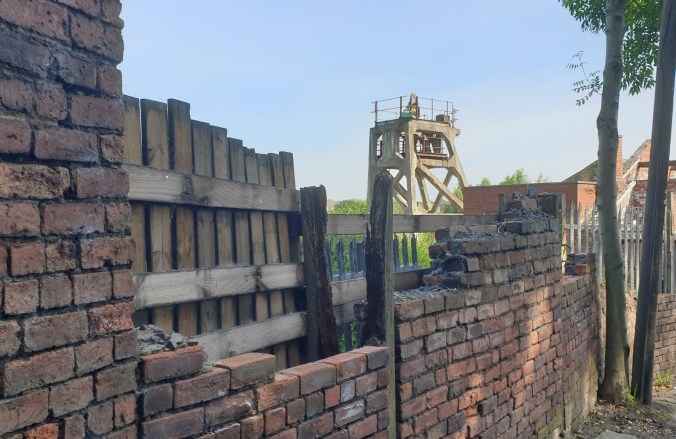
A nice prospect: the pit opening up, but tinged with frustration at criminal damage
It was an absolutely cracking day at Hemingfield for the Open Day. Compared to the previous fortnight when rain stopped play. The sun was beating down, baking the ground, drawing all the greenery higher. Set against the bright blue sky it was beautiful; still the crew were eager to get back on site and stuck in once more. Friends Chair Steve, and Site Manager Glen opened up, joined by regular volunteers John, Paul, Chris and Keith during the day which was equal parts glorious sunshine and hard yacker.

Site manager Glen opened the gates to regular volunteers Chris, Paul and John, together with new volunteer Sean on a searingly bright and simmering morning up at Hemingfield.
A hundred years ago today, 31st December 1918, two agreements were signed which effectively saved important parts of our mining heritage in South Yorkshire, and specifically what is now the site of Hemingfield Colliery.

 At 1.30 pm on 22nd December 1852 an explosion underground at Hemingfield Colliery (also known as Low Elsecar Colliery) claimed 10 lives and injured a further 12 miners.

As we mentioned in a recent blog post, a collection of local community groups, charities and educational bodies have joined together to create Elsecar Remembers, a project to commemorate the memory of 72 local lives lost in the First World War.
The Friends of Hemingfield Colliery arrived early on site, swinging the gates wide open and stepping into the pit yard. Expecting rain, but finding mostly dry terrain and pleasant working conditions in the mild autumnal air. Looking over across the valley over to Hemingfield proper, the sky was cloudy but blue, and the farmed fields in the distance contrasted with the dense and beautifully dis-colouring trees nearby. It is a turning point in the year when days shorten, clocks go back and woolly jumpers emerge. American poet Robert Frost put it crisply:
O hushed October morning mild,
Thy leaves have ripened to the fall;
Tomorrow’s wind, if it be wild,
Should waste them all.(From ‘October’, published in A Boy’s Will, 1913)

The End of June 2018 was marked by a series of fascinating and impressive events, part of the Experience Barnsley Festival, arranged to celebrate the 5th anniversary of the opening of Experience Barnsley, museum and discovery centre which has really transformed how local people access and experience the cultural heritage of Barnsley.
Far and away in May

Photo credit: Andrew Jones
Heading to the colliery on foot from the green hills beyond the village of Hemingfield itself, the pit first appears as a wooded hollow.

Photo credit: Andrew Jones
The huddle of cottages at Pit Row guide the eye to the right level, on the far side of the canal bank, at the foot of a densely wooden hillside – really the landscaped spoil heap of Hemingfield’s younger sibling, Elsecar Main Colliery.
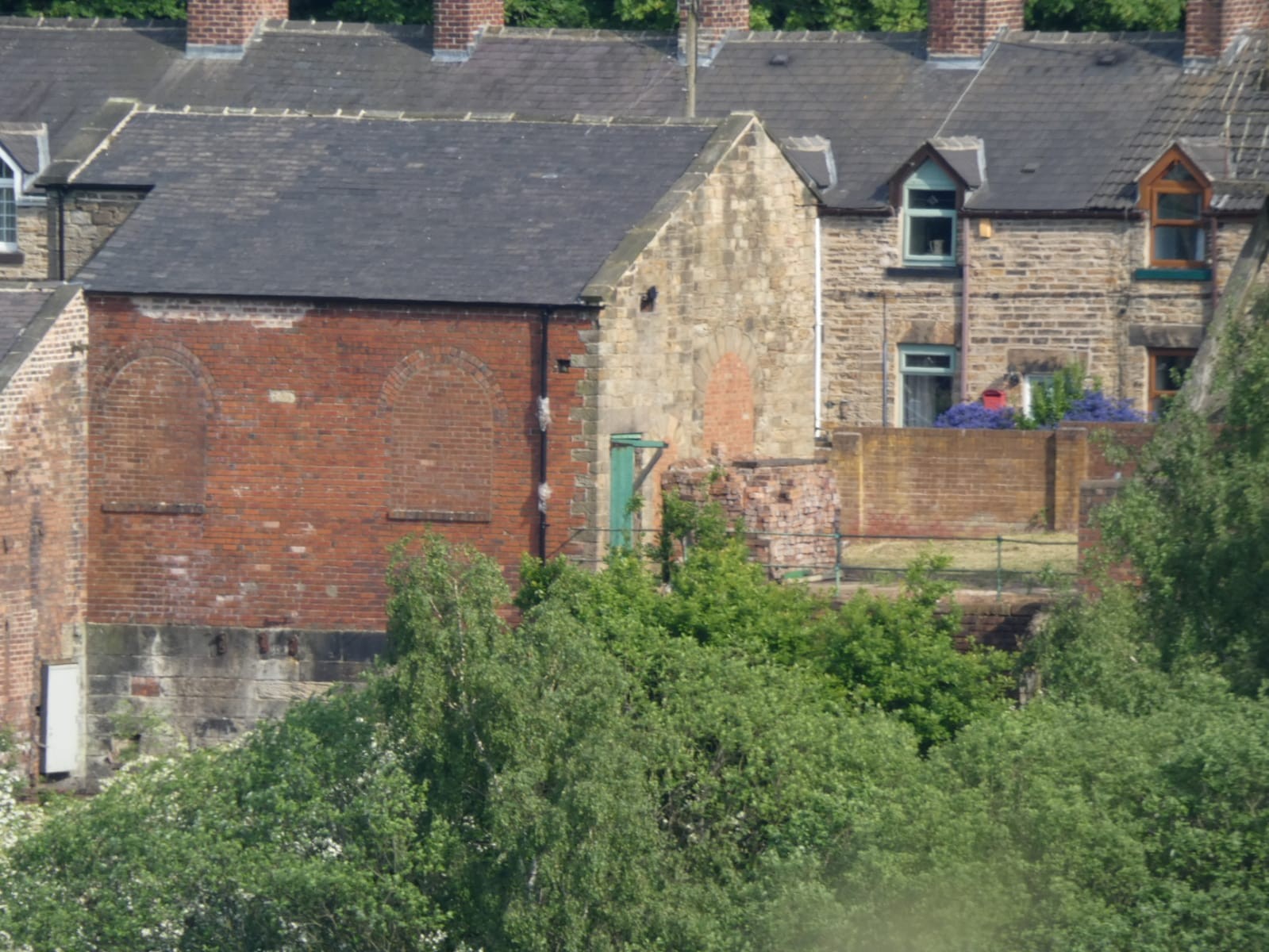
Photo credit: Andrew Jones
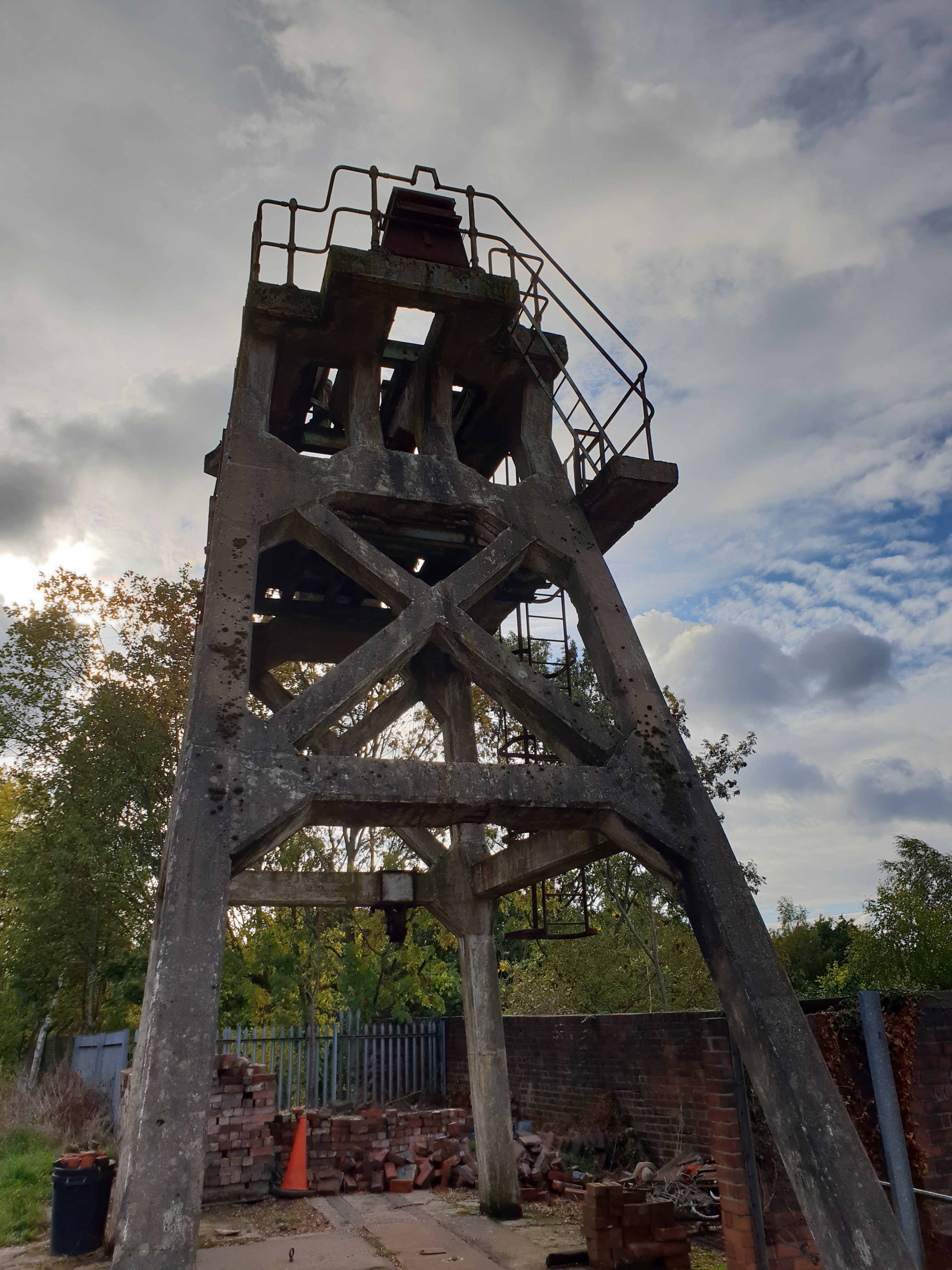
Standing proudly over the canal and railway line is the main headgear, its concrete geometry contrasting with the lush green leaves swaying in the breeze.

Photo credit: Andrew Jones
Standing in the distinctive lines of its shadow, the Friends and regular volunteers collected tools and headed out around the site to get to work.

Keep it clean
A big part of the Friends’ work is taking pride in looking after the pit; taking care of this remarkable survival of the Victorian age is a privilege, and as a survivor, the site has been no stranger to the effects of neglect and vandalism. Stepping out of the gates, and grabbing a brush, shovel and take, it is good to keep the gateway to the site clean and tidy.

Before

After: looking smart.
Elsewhere around the yard, Site Manager Glen powered up the strimmer and got to grips with the long grass, whilst regular volunteer Chris raked up the cuttings and cleared the lower level by the pumping shaft.

Feeling Hot
The sun was fierce on Saturday, but the working party on site were still a little cooler than the firemen on the footplate of the steam engine racing by on the Elsecar Heritage Railway line below.
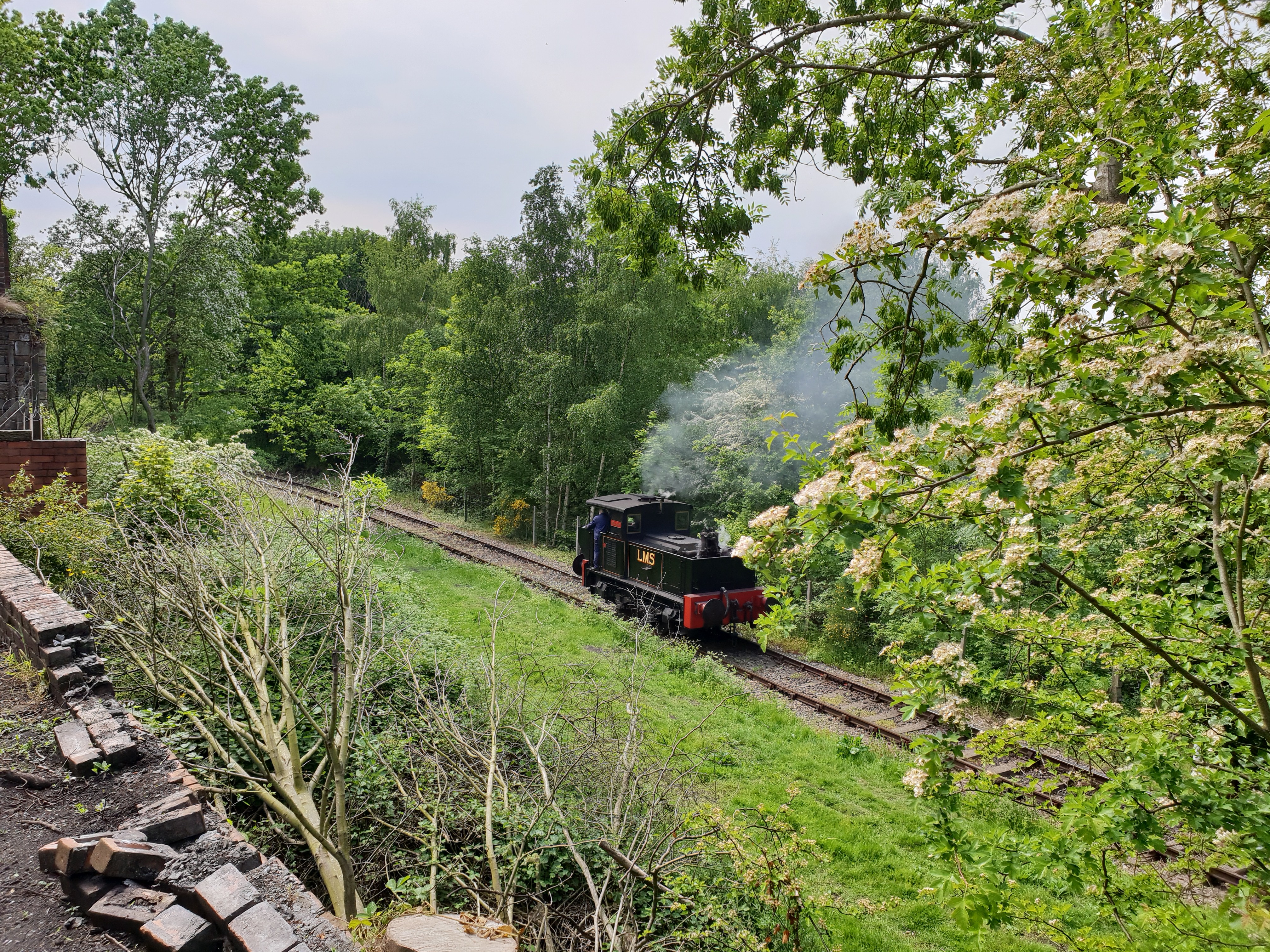
Boiling away: William looking great in the lush vegetation
A Hole New World
Keeping cool in the moderate shade of the winding engine house were ‘the crew’ – regular volunteers Nigel, Alan, John and Keith returned to the fray, excavating the pit feature which is now two metres down from where we once stood a couple of years ago.
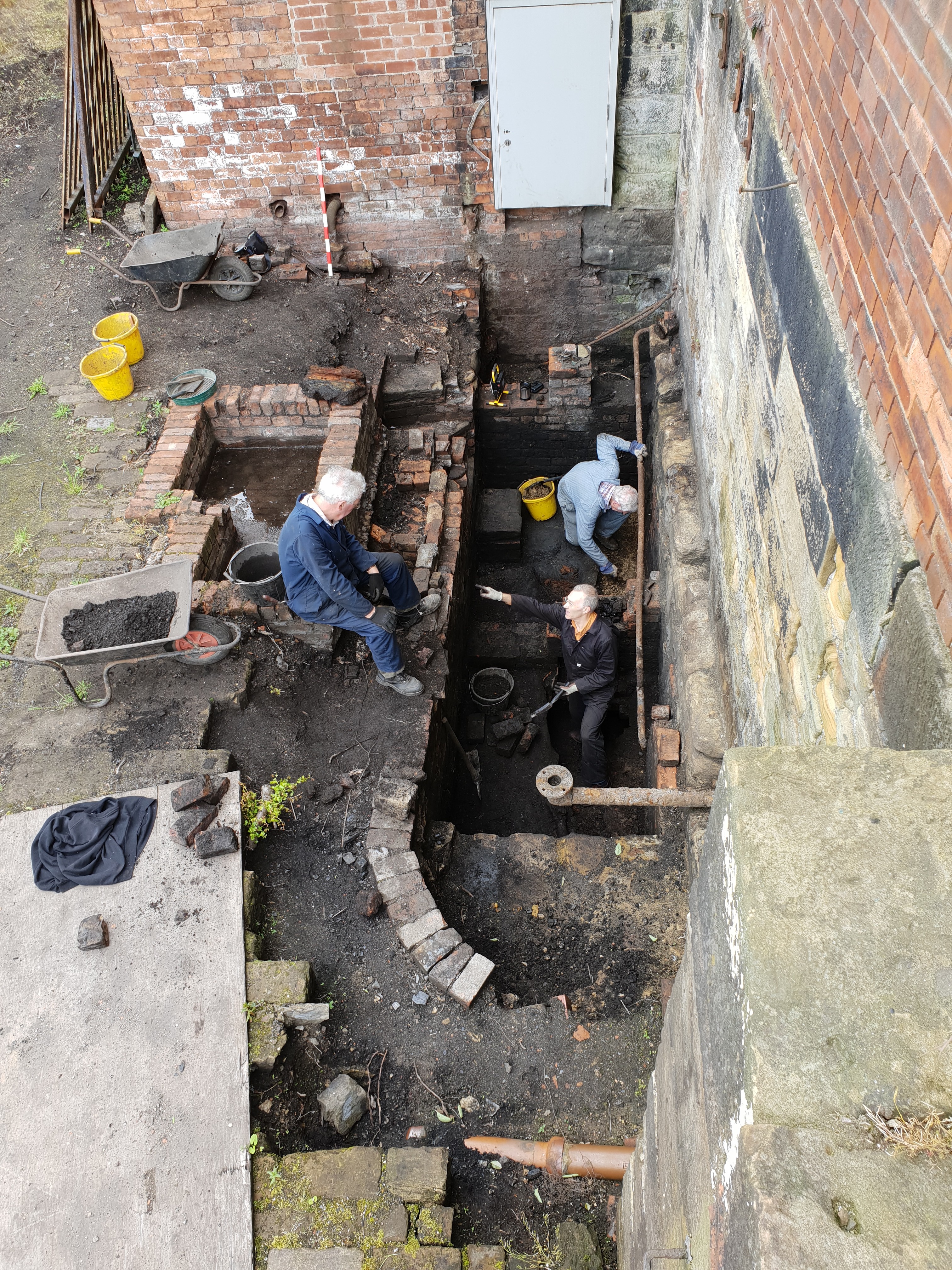
As features emerge, trowel work takes the place of the shovels of demolition rubble, as we seek to assess and interpret what the pit was used for, and record it’s features including compacted coal, and the tantalising drainage feature which suggests we have hit the bottom.
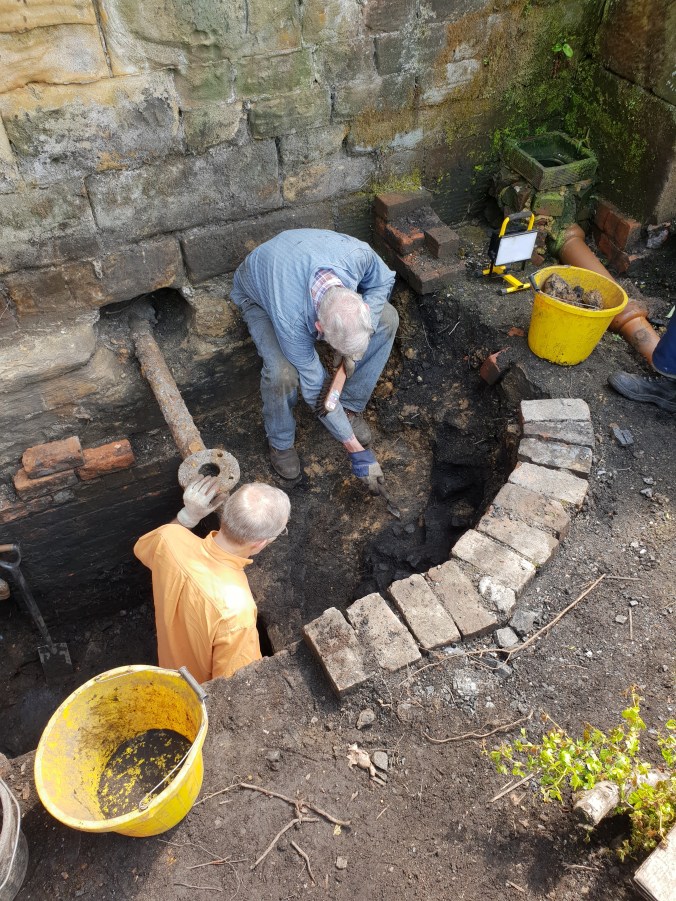
Trowels and tribulations, carefully excavating compacted coal, possibly a pile for a boiler?
Pausing for lunch before rounding off the digging, strumming, raking, sweeping, narrowing and brick chipping. The Friends returned home to a well earned glass of water/pop/juice/beer [delete as applicable]. All pleased with another pleasant day spent on site at Hemingfield under blue skies with hopefully none-too-reddening necks!

The Friends of Hemingfield Colliery were keen to return to site this Saturday – to open the gates, collect tools, and return to the dig at the rear of the winding engine house.
Friends Chair Steve welcomed regular volunteers John, Keith and Paul, followed by Chris. The crew returned to the scene of the earlier discovery of the coal tub, and picked up where they left off, removing the spoil in what is quickly becoming a fascinating area of hidden features.
 Friends of Hemingfield Colliery